




Practice Questions and Answers for Grade 4 Reading Passages
Read the story below and answer the questions that follow.
“Leo was an ingenious ten-year-old boy who could build almost anything from spare parts. He could make a doorbell that sang opera and a toaster that buttered the toast. There was just one thing Leo disliked more than anything: cleaning his room. His floor was a treacherous landscape of forgotten toys, balled-up socks, and comic books. One Tuesday, his mother gave him an ultimatum. "Leo," she said, "this room must be clean by dinnertime, or you will have no video games for a month!"
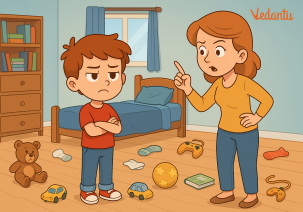
An idea sparked in Leo's creative mind. Instead of cleaning the room himself, he would build a robot to do it for him! He gathered an old shoebox for the body, the motor from a broken fan, and bristles from a worn-out broom. After a few hours of tinkering, his contraption, the "Tidy-Bot 3000," was ready. It was a funny-looking machine with wheels made from bottle caps and two clumsy arms made from kitchen tongs.

With great excitement, Leo flicked the 'on' switch. The Tidy-Bot whirred to life. At first, it seemed to work perfectly. It rolled around, its bristle-feet sweeping dust into a neat pile. But then, things started to go wrong. The Tidy-Bot’s programming was too simple. It began grabbing everything it could reach—his favorite action figure, a stack of homework, and even the seeds for his pet hamster, Pip. It shoved everything under his bed, creating a giant, hidden mess. The room was in complete havoc!
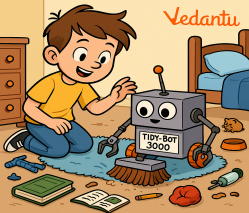
Leo scrambled to turn off the robot before it could grab Pip’s water bottle. He looked at the chaos. His room was messier than when he started. With a sigh, he realized some jobs couldn't be solved with a quick invention. He spent the rest of the afternoon sorting, folding, and tidying everything by hand. By dinnertime, the room was spotless. He kept the Tidy-Bot on his desk, not as a failure, but as a reminder that sometimes the best way to do a job is the simple way.”

Section A: Multiple Choice Questions
1. What is the main problem Leo faces at the beginning of the story?
A. He doesn't know how to build a robot.
B. His mother wants him to clean his messy room.
C. His pet hamster, Pip, has run away.
D. He has no more spare parts for his inventions.
2. Which of the following was NOT used to build the Tidy-Bot 3000?
A. A shoebox
B. Kitchen tongs
C. A broken fan motor
D. An old radio
3. Why did the Tidy-Bot create more of a mess?
A. It ran out of battery power.
B. Leo’s mother turned it off.
C. Its programming was too simple and it grabbed everything.
D. It was designed to make a mess.
4. What does the word "havoc" mean in the sentence,"The room was in complete havoc!"?
A. Perfect order
B. Quiet and peaceful
C. Widespread confusion and mess
D. A type of cleaning robot
Section B: True or False
Read the following statements and write 'True' or 'False'.
1. Leo enjoyed cleaning his room. __________
2. The Tidy-Bot successfully cleaned Leo's room perfectly. __________
3. Leo's mother was happy with his invention. __________
4. In the end, Leo cleaned the room himself. __________
Section C: Short Answer Questions
Answer the following questions in one or two complete sentences.
1. What ultimatum did Leo's mother give him?
_____________________________________________________________________
_____________________________________________________________________
2. What lesson did Leo learn by the end of the story?
_____________________________________________________________________
_____________________________________________________________________
Section D: Vocabulary Match
Match the words in Column A with their correct meanings in Column B.
Section E: Sequence the Events
Number the following sentences from 1 to 4 to show the correct order of events in the story.
( ) The Tidy-Bot started grabbing everything and putting it under the bed.
( ) Leo's mother told him to clean his room or lose video game privileges.
( ) Leo decided to build a robot to clean his room for him.
( ) Leo cleaned his room by hand and kept the robot as a reminder.
Answer Key
Section A: Multiple Choice Questions
1. B. His mother wants him to clean his messy room.
2. D. An old radio
3. C. Its programming was too simple and it grabbed everything.
4. C. Widespread confusion and mess
Section B: True or False
1. False
2. False
3. False (The story doesn't say how she felt, but the primary outcome was that Leo had to clean it himself.)
4. True
Section C: Short Answer Questions
1. Leo's mother told him that he had to clean his room by dinnertime or he would not be allowed to play video games for a month.
2. Leo learned that some jobs cannot be solved with a quick invention and that sometimes the simple, direct way of doing things is the best.
Section D: Vocabulary Match
1. D
2. A
3. B
4. C
Section E: Sequence the Events
( 3 ) The Tidy-Bot started grabbing everything and putting it under the bed.
( 1 ) Leo's mother told him to clean his room or lose video game privileges.
( 2 ) Leo decided to build a robot to clean his room for him.
( 4 ) Leo cleaned his room by hand and kept the robot as a reminder.
Class 4 English Stories – Reading Comprehension Practice with Answers
By practicing with this Class 4 English Reading Comprehension on children’s stories, young learners grow confident answering story-based questions. This worksheet helps students understand characters, settings, and moral lessons while developing skills in finding answers in the text. Parents can support their child’s progress by reading together and discussing each story.
Discovering New Words and Story Ideas Together
This worksheet invites Class 4 students to explore exciting children’s stories in their English subject. Learners practice reading comprehension and pick up new vocabulary through short passages and “read and answer” exercises.
Working with this Class 4 reading comprehension worksheet encourages curious questions and lively discussions at home. Activities like identifying story morals and sequencing events help make comprehension worksheets engaging and useful, reflecting popular searches such as “Class 4 English story questions with answers.”
FAQs on English Reading Comprehension Stories for Class 4 Students
1. What is a reading comprehension worksheet for class 4?
A class 4 reading comprehension worksheet is a practice resource that provides children's stories and passages for students to read, followed by a range of questions. These worksheets help improve comprehension skills, vocabulary, and critical thinking through multiple choice, short answer, and vocabulary-based tasks, all in line with the Grade 4 English syllabus.
2. How do you teach reading comprehension in Grade 4?
To teach reading comprehension in Grade 4, use structured worksheets featuring age-appropriate stories, direct questions, and vocabulary practice. Steps include:
- Read the story aloud or silently
- Discuss the main idea and key details
- Encourage students to answer questions using evidence from the text
- Practice sequence of events and context clues
- Use images and character-focused questions for greater engagement
3. Are there printable comprehension worksheets for class 4?
Yes, printable comprehension worksheets for class 4 are available as PDF downloads. These worksheets include story passages, questions, vocabulary activities, and often an answer key to help parents and teachers check learning progress.
4. Which stories are good for 9–10 year olds?
Stories for 9–10 year olds should feature age-appropriate vocabulary, relatable characters, and moral lessons. Examples include:
- Folk tales with clear settings and characters
- Short adventure stories
- Stories with animal protagonists
- Passages focusing on everyday experiences
5. What types of questions are in a Grade 4 reading comprehension worksheet?
Grade 4 reading comprehension worksheet questions include:
- Multiple choice (MCQs)
- Short answer questions
- Vocabulary meaning
- Main idea
- Sequencing story events
- Personal response
6. How can I use this worksheet at home?
You can use this worksheet at home for daily reading practice, homework support, or revision. Simply download and print the PDF, let your child read the passage, and answer the questions independently or with guidance.
7. Does this include an answer key?
Many class 4 English reading comprehension worksheets include an answer key for all questions.
This helps parents and teachers check answers quickly and support the child's learning.
8. Is this worksheet printable?
Yes, these worksheets are fully printable in PDF format. The design includes large fonts, clear section headings, and space to write answers, making them ideal for offline practice.
9. What age group is it best for?
This reading comprehension worksheet is best suited for 9–10 year olds in Grade 4. The stories and questions match the expected reading level and syllabus for this age.
10. How does this worksheet reinforce concept retention?
These worksheets reinforce concept retention by combining engaging stories with varied questions, repeated vocabulary exposure, and activities that require referencing the text.
This supports long-term comprehension and literacy growth.
11. Can I use this worksheet digitally on a tablet?
Yes, most PDF reading comprehension worksheets can be used digitally on a tablet or computer.
Students can read the story and type their answers or use drawing tools for image-based tasks.
12. What skills are built by this activity?
Class 4 English comprehension worksheets help students build skills such as:
- Reading fluency
- Attention to detail
- Vocabulary development
- Critical thinking
- Making inferences and drawing conclusions
- Answering in complete sentences
13. Can I modify or combine this with other worksheets?
Yes, you can modify or combine this worksheet with others for a customised practice session. Teachers and parents may adapt questions, add images, or sequence multiple passages to support specific learning goals for Grade 4 English.
