






How to Tell and Draw Half-Hour Time on the Clock
Section 1: What Time Will It Be?
1. Look at the clock. It shows 6:00. What time will it be in half an hour?
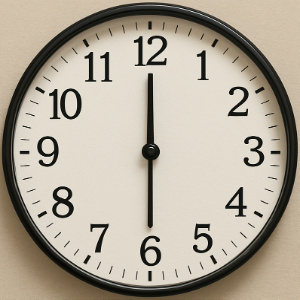
Answer: _______________
2. Look at the clock. It shows 4:30. What time will it be in 30 minutes?
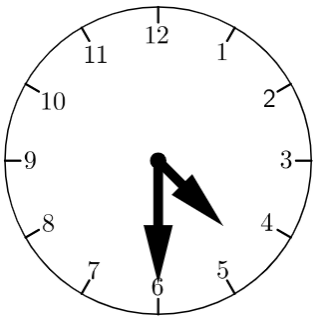
Answer: _______________
3. The time is 11:00. What time will it be in half an hour?
Answer: _______________
4. The time is 1:30. What time will it be in 30 minutes?
Answer: _______________
Section 2: What Time Was It?
1. The time is 6:30. What time was it half an hour ago?
Answer: _______________
2. The time is 10:00. What time was it 30 minutes ago?
Answer: _______________
3. The time is 3:30. What time was it half an hour ago?
Answer: _______________
4. The time is 12:00. What time was it 30 minutes ago?
Answer: _______________
Section 3: Tick the Correct Option
1. If the time is 5:00, what time will it be in 30 minutes?
( ) 5:15
( ) 5:30
( ) 6:00
2. If the time is 9:30, what time was it half an hour ago?
( ) 9:00
( ) 8:30
( ) 10:00
3. "Half an hour" is the same as how many minutes?
( ) 15 minutes
( ) 60 minutes
( ) 30 minutes
4. Priya's cartoon starts at 7:30. It is half an hour long. When does it finish?
( ) 7:00
( ) 8:00
( ) 8:30
Section 4: True or False
1. Half an hour after 1:30 is 2:00.
Answer: _______________
2. Half an hour before 11:00 is 11:30.
Answer: _______________
3. 30 minutes is shorter than half an hour.
Answer: _______________
4. If you start lunch at 12:30 and eat for half an hour, you finish at 1:00.
Answer: _______________
Section 5: Match the Columns
Match the time description in Column A with the correct time in Column B.
Answers:
1. -> _______
2. -> _______
3. -> _______
4. -> _______
Section 6: Short Answer Questions
1. Rohan started reading a book at 3:00 PM. He read for half an hour. What time did he stop reading?
Answer: __________________________________________________________________
2. The school bus arrives at 8:30 AM. Anika left her house half an hour before the bus arrived. What time did Anika leave her house?
Answer: __________________________________________________________________
Answer Key
Section 1: What Time Will It Be?
1. 6:30
2. 5:00
3. 11:30
4. 2:00
Section 2: What Time Was It?
1. 6:00
2. 9:30
3. 3:00
4. 11:30
Section 3: Tick the Correct Option
1. (✓) 5:30
2. (✓) 9:00
3. (✓) 30 minutes
4. (✓) 8:00
Section 4: True or False
1. True
2. False
3. False (they are the same)
4. True
Section 5: Match the Columns
1. -> d
2. -> a
3. -> b
4. -> c
Section 6: Short Answer Questions
1. Rohan stopped reading at 3:30 PM.
2. Anika left her house at 8:00 AM.
How This Worksheet Helps You Learn?
The Class 2 Maths Changes In Time: Half Hours worksheet is designed to help young learners master telling time in half-hour intervals. With practice tasks like drawing hands on clock faces, matching times, and identifying “half past,” this printable worksheet builds essential time concepts for grade 2 students. Parents and teachers can use this free PDF practice sheet to reinforce math lessons at home or in the classroom, supporting strong time-telling skills for CBSE and NCERT curricula.
How This Worksheet Helps
Using this telling time worksheet, children improve their understanding of reading clocks to the nearest half hour and recognizing time intervals. The activities are age-appropriate, visually engaging, and aligned with class 2 maths concepts. Interactive tasks in the worksheet boost student confidence while making practice enjoyable and effective.
Usage Tips for Parents/Teachers
- Use the printable worksheet for daily homework or revision sessions to reinforce the “half past” concept.
- Encourage your child to read aloud both written and clock times for better verbal skills.
- Pair the PDF practice sheet with a real clock for hands-on learning and drawing exercises.
- Check progress using the included answer key for immediate feedback and correction.
Explore Related Worksheets
- Class 2 Maths Worksheets Chapter 13 (Time) – Extend your child’s understanding of time to hours, sequences, and more.
- Class 2 Maths Worksheets (All Topics) – Access a variety of printable worksheets for every maths chapter in Grade 2.
- Missing Number Worksheet for Class 2 – Build number sequencing skills that are essential for telling time.
- Count and Write Worksheets – Strengthen basic numeracy alongside time concepts.
- Place Value Worksheets – Deepen understanding of numbers for reading digital and analog clocks.
What You Learned
This page provides a free, printable class 2 maths worksheet focused on telling time in half-hour intervals. Students will learn how to draw clock hands for half-hours, match times, and confidently identify “half past” on both analog and digital clocks. By practicing with this CBSE-aligned PDF, learners gain confidence and accuracy in reading time—a key life skill. Both teachers and parents can easily integrate this worksheet into lessons or revision routines, making maths learning practical and enjoyable.
FAQs on Changes in Time: Half Hours Worksheet for Class 2
1. How can this worksheet help teach half-hour time to a Class 2 student?
This worksheet helps teach half-hour time to a Class 2 student by reinforcing the concept through varied, engaging activities. It is designed to build confidence and mastery of telling time to the half hour.
- Visual Practice: Students get to draw the hands on clocks for different half-hour times, connecting the visual representation with the written time.
- Concept Reinforcement: Activities like matching clock faces to written times and filling in blank clocks solidify their understanding of where the hour and minute hands should be.
- Independent Learning: Clear instructions allow students to work with minimal help, making it a great tool for homework or practice.
2. What is the easiest way to explain 'half past'?
The easiest way to explain 'half past' is to show that it means 30 minutes have passed since the beginning of the hour. On an analog clock, this is when the long minute hand points directly down to the number 6.
- The minute hand (the long hand) is always on the 6.
- The hour hand (the short hand) will be halfway between two numbers. For example, at 2:30 (half past two), the hour hand is between the 2 and the 3.
3. Is this time worksheet for Class 2 printable?
Yes, this time worksheet for Class 2 is fully printable and available as a downloadable PDF. You can easily print it for free to use for classroom activities, home learning, or holiday revision, making it a convenient resource for parents and teachers.
4. Does this worksheet on telling time to the half hour include an answer key?
Yes, this telling time to the half hour worksheet includes a complete answer key. The answer key allows for quick and easy checking, which helps parents review their child's work and enables students to self-correct and learn from their mistakes effectively.
5. How do you draw the hands on a clock for half-hour times?
To draw the hands on a clock for half-hour times like 4:30, you need to place the minute and hour hands correctly. Follow these simple steps for this important clock face activity:
- Draw the Minute Hand: The long minute hand should always point directly at the number 6. This shows that 30 minutes have passed.
- Draw the Hour Hand: The short hour hand should be drawn exactly halfway between two numbers. For 4:30, it goes between the 4 and the 5.
6. What skills does this Class 2 maths worksheet on time build?
This Class 2 maths worksheet builds several foundational skills related to time and numeracy. It goes beyond simple memorisation to develop deeper conceptual understanding.
- Time-Telling: Core skill of reading and writing time on an analog clock to the hour and half hour.
- Visual Analysis: Students learn to interpret the position of the hour and minute hands.
- Number Sequencing: Reinforces the sequence of numbers on a clock face and the concept of time intervals.
- Fine Motor Skills: The activity of drawing hands on clocks helps improve hand-eye coordination.
7. Is this worksheet aligned with the CBSE and NCERT syllabus for Grade 2 Maths?
Yes, this worksheet is fully aligned with the learning objectives outlined in the CBSE and NCERT syllabus for Grade 2 Maths. It specifically targets the chapter on Time, focusing on the core concept of identifying and representing half-hour intervals, which is a key part of the curriculum.
8. What types of activities are included in this 'Changes In Time: Half Hours' worksheet?
This Changes In Time: Half Hours worksheet includes a variety of activities designed to keep Grade 2 students engaged. The exercises practice both recognizing and writing time.
- Drawing Clock Hands: Students are given a digital time (e.g., 7:30) and must draw the correct hands on a blank clock face.
- Writing the Time: Students look at a clock showing a half-hour time and must write it down in digital format.
- Matching Clocks to Times: This activity involves drawing lines to connect analog clocks with their corresponding written times.
9. What is the difference between the hour hand and the minute hand at a half-hour mark?
At any half-hour mark, the positions of the hour and minute hands are very specific and different. Understanding this is key to learning how to tell time to the half hour.
- The Minute Hand: This is the longer hand. At the half-hour mark (e.g., :30), it will always point directly down to the number 6.
- The Hour Hand: This is the shorter hand. It will not point directly at a number but will be positioned exactly halfway between two hour numbers. For instance, at 9:30, it is halfway between the 9 and the 10.
10. How can I use this half-hour practice worksheet at home for my child?
This half-hour practice worksheet is an excellent resource for home learning and can be used in several ways to support your child. It is designed for easy use outside the classroom.
- Homework Support: Use it to provide extra practice on the concept of time being taught in school.
- Regular Revision: Print a few copies and have your child complete one periodically to keep their skills sharp.
- Holiday Learning: It serves as a great educational activity to keep your child engaged during school breaks.
- Assessment: Use the answer key included to check your child's understanding and identify areas that may need more attention.
