






How to Solve Doubles and Near Doubles Addition Problems
Section A: Adding Doubles
"Doubles" means adding the same number to itself. For example, 2 + 2 is a double fact. Look at the images and solve the problems.
1. Fill in the blanks to complete the double facts.
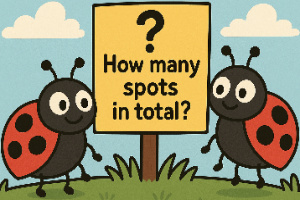
a) 3 + 3 =
b) 5 + 5 =
c) 1 + 1 =
d) 4 + 4 =
e) 6 + 6 =
2. Match the doubles fact in Column A with its correct answer in Column B.
3. Tick the correct statement.
a) The double of 8 is 15.
b) The double of 8 is 16.
c) The double of 8 is 17.
Section B: Adding Near Doubles
"Near Doubles" are numbers that are next to each other, like 4 and 5. You can solve them by thinking of the double and adding one more! For example, to solve 4 + 5, think of 4 + 4 = 8, then add 1 to get 9.
4. Use the double fact to solve the near double fact.
a) If 2 + 2 = 4, then 2 + 3 =
b) If 6 + 6 = 12, then 6 + 7 =
c) If 8 + 8 = 16, then 8 + 9 =
d) If 5 + 5 = 10, then 5 + 6 =
5. Write 'True' or 'False' for the following statements.
a) 3 + 4 is the same as 3 + 3 + 1. ___________
b) The sum of 7 + 8 is 14. ___________
c) To find 9 + 10, we can double 9 and add 1. ___________
6. Solve this short problem.
Ravi has 7 red balls and 8 blue balls. How many balls does he have in total?
Answer: balls.
Section C: Mixed Practice
Now, let's practice both doubles and near doubles together. Read each question carefully!
7. Choose the correct answer (MCQ).
What is the sum of 9 + 9?
(a) 17
(b) 18
(c) 19
8. Choose the correct answer (MCQ).
What is the sum of 7 + 6?
(a) 12
(b) 13
(c) 14
9. Circle the addition problem that is the "odd one out".
(Hint: Three are doubles, and one is a near double.)
4 + 4 8 + 8 5 + 6 3 + 3
10. Complete the sentences.
a) The double of 10 is .
b) One more than the double of 4 is . (This is the answer to 4 + 5).
Answer Key
1. Fill in the blanks to complete the double facts.
a) 6
b) 10
c) 2
d) 8
e) 12
2. Match the doubles fact in Column A with its correct answer in Column B.
a) -> iii) 14
b) -> iv) 4
c) -> ii) 18
d) -> i) 10
3. Tick the correct statement.
b) The double of 8 is 16.
4. Use the double fact to solve the near double fact.
a) 5
b) 13
c) 17
d) 11
5. Write 'True' or 'False' for the following statements.
a) True
b) False
c) True
6. Solve this short problem.
Answer: 15 balls.
7. Choose the correct answer (MCQ).
(b) 18
8. Choose the correct answer (MCQ).
(b) 13
9. Circle the addition problem that is the "odd one out".
5 + 6
10. Complete the sentences.
a) 20
b) 9
How This Worksheet Helps You Learn?
Class 1 Maths Adding Doubles and Near Doubles worksheets provide young learners with easy and engaging activities to master basic addition. By working through this printable worksheet, students develop mental math skills and understand the patterns found in doubles (like 4+4) and near doubles (such as 4+5). This practice worksheet is ideal for grade 1 children, supporting confidence in addition strategies both in the classroom and at home.
Each PDF practice sheet includes bright visuals and clear instructions, helping first graders learn how to solve doubles and near doubles problems quickly. Using this class 1 maths worksheet regularly helps reinforce key concepts in addition, builds number sense, and supports step-by-step self-learning.
Usage Tips for Parents and Teachers
- Preview the worksheet on your device before printing to ensure age-appropriate content and font size for grade 1 students.
- Use real-life objects (blocks, counters) alongside the worksheet to make doubles and near doubles more visual and hands-on.
- Encourage children to say each math fact aloud as they write, supporting number sense and math vocabulary development.
- Check answers together using the provided key, promoting independent learning and confidence in solving practice worksheets.
Explore Related Worksheets
- Grade 1 Maths Worksheets – Practice more grade 1 maths topics to strengthen skills.
- Addition Worksheets – Broaden your understanding with a variety of addition methods.
- 1st Grade Addition and Subtraction Worksheets – Build a strong foundation in both addition and subtraction concepts.
- Count and Write Worksheets – Improve number sense skills, perfect for beginners in doubles strategies.
- Free Printable Math Worksheets for Kids – Access more printable options for continued math practice.
What You Learned
This page offers a free, printable worksheet on Class 1 Maths Adding Doubles Near Doubles, designed to help young students practice basic addition facts using proven strategies. The worksheet features child-friendly layouts, visual aids, and simple instructions that make learning addition fun and effective. By using this PDF practice sheet, students build confidence, speed, and understanding in class 1 addition, setting a strong foundation for further maths learning.
FAQs on Adding Doubles and Near Doubles in Class 1 Maths
1. What are near doubles and addition doubles in Class 1 Maths?
Doubles and near doubles are simple mental math strategies for Grade 1 students to make addition easier. They help kids solve problems quickly by recognizing patterns.
- Adding Doubles: This is when you add the same number to itself. Examples include 3 + 3 = 6, 5 + 5 = 10, and 7 + 7 = 14. These are also known as doubles facts.
- Near Doubles: This is when you add two numbers that are next to each other (consecutive). Examples include 3 + 4, 5 + 6, and 7 + 8.
2. What is the strategy of doubles and near doubles?
The doubles and near doubles strategy helps students use known facts to solve new problems. This is a key mental math skill taught in Grade 1 to build addition fluency.
- For doubles, the strategy is memorizing the sums (e.g., knowing that 4 + 4 is always 8).
- For near doubles, the strategy is to use a known double fact. For example, to solve 4 + 5, a student can think of the double 4 + 4 = 8 and then add 1 more to get 9.
3. How do you solve near doubles problems?
To solve a near doubles problem, you can use the 'double plus one' or 'double minus one' method. This makes solving sums like 6 + 7 much faster for a first-grade student.
Here is an example for 6 + 7:
- Step 1: Find the smaller number, which is 6.
- Step 2: Double it: 6 + 6 = 12.
- Step 3: Add 1 to the result: 12 + 1 = 13.
- So, 6 + 7 = 13.
4. How can I teach adding doubles in first grade?
Teaching adding doubles to first graders works best with visual and interactive methods. Using a practice worksheet is an excellent way to reinforce the concept.
- Use Visuals: Show pictures of objects, like two groups of 3 apples for 3 + 3.
- Repetition: Regularly practise doubles facts (1+1, 2+2, 3+3) so they become memorised math facts.
- Hands-on Activities: Use dice or building blocks to create doubles.
- Worksheets: Use a doubles addition worksheet PDF with fun activities like filling in the blanks and circling answers.
5. What skills are built by using this addition worksheet?
This worksheet helps build essential foundational math skills for Grade 1 students. It goes beyond simple addition by teaching effective problem-solving techniques.
- Mental Math: Improves the speed and accuracy of solving problems without using fingers.
- Number Sense: Strengthens a child's understanding of how numbers relate to each other.
- Addition Fluency: Builds confidence and mastery of basic addition facts.
- Problem-Solving: Teaches a structured addition strategy that can be applied to other math problems.
6. Is this Class 1 Maths worksheet printable for free?
Yes, this Class 1 Maths Adding Doubles and Near Doubles worksheet is a free printable PDF. You can easily download and print it for use at home or in the classroom to give students extra practice.
7. What age group is this worksheet best for?
This worksheet is specifically designed for Grade 1 students, who are typically between 6 and 7 years old. The layout, font size, and use of visuals are all age-appropriate to help young learners master addition strategies like doubles and near doubles.
8. How can I use this worksheet at home with my child?
This worksheet is a great tool for parents to support their child's math learning at home. It is designed for quick study sessions and requires minimal supervision.
- Homework Practice: Use it to reinforce what was taught in school.
- Revision: Go over the worksheet before a class test to review addition strategies.
- Timed Drills: Make it a fun challenge by timing your child to improve their mental math speed.
9. Does this adding doubles and near doubles worksheet include an answer key?
Yes, our printable addition worksheets typically come with an answer key. This allows parents and teachers to quickly check the answers and provide immediate feedback to the student, which is crucial for effective learning and concept reinforcement.
10. Why is learning doubles and near doubles important?
Learning the doubles and near doubles strategy is a critical step in developing number sense and mental math skills. It helps children move from counting on their fingers to using more efficient methods, building a strong foundation for more complex math operations in higher grades.
