




Write the IUPAC name of the following:
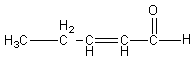
Answer
 Verified
558.6k+ views
Hint: IUPAC gave some rules to give a name to a chemical molecule. The name following the IUPAC rules is known as IUPAC name. According to IUPAC rules, a name of organic structure contains the name of the longest carbon chain, name of all substituents with their positions and the suffix used for the functional group. So, we have to identify the functional group.
Complete step-by-step answer:The IUPAC rules are used for the naming of compounds.
The IUPAC rules for the naming of aldehyde are as follows:
We have to determine the longest carbon chain and determine the substituents attached to the chain.
If two same long chains are present then we will select the more substituted chain.
We will give the numbering to the carbon atoms of the chains so, all the substituents get the lowest numbering.
Then we will arrange the substituents in alphabetical order with their position in the chain.
If the same substituent is present more than one, then add ‘di’ for two, ‘tri’ for three, and so on.
Finally we will write the parent chain name. We will replace the ‘ene’ of parent chain with ‘enal’. Between the parent chain name and suffix ‘al’ we will show the substitutes.
The longest parent chain as follows:
The longest carbon chain is of five carbon atoms. The name of five carbon atom having alkane is pentane.
The substituents as follows:The longest chain has only one double bond.
The numbering to the chain as follows:
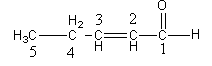
So, the double bond is present at carbon-2.
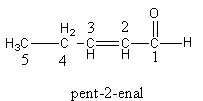
So, the name of the given compound will be pant$ - 2 - $enal.
Note:The functional group in the given structure is aldehyde represented by ${\text{ - CHO}}$. The suffix used for aldehyde is ‘enal’. Parent chain is the alkane containing the maximum number of carbon atoms of the structure. In the name of alkane, suppose pentane, the word, ‘ane’ shows that it is an alkane and word ‘pent’ shows the carbon atoms are five so, we replace the suffix ‘ane’ with suffix ‘enal’ to show that the given structure is an aldehyde.
Complete step-by-step answer:The IUPAC rules are used for the naming of compounds.
The IUPAC rules for the naming of aldehyde are as follows:
We have to determine the longest carbon chain and determine the substituents attached to the chain.
If two same long chains are present then we will select the more substituted chain.
We will give the numbering to the carbon atoms of the chains so, all the substituents get the lowest numbering.
Then we will arrange the substituents in alphabetical order with their position in the chain.
If the same substituent is present more than one, then add ‘di’ for two, ‘tri’ for three, and so on.
Finally we will write the parent chain name. We will replace the ‘ene’ of parent chain with ‘enal’. Between the parent chain name and suffix ‘al’ we will show the substitutes.
The longest parent chain as follows:
The longest carbon chain is of five carbon atoms. The name of five carbon atom having alkane is pentane.
The substituents as follows:The longest chain has only one double bond.
The numbering to the chain as follows:
So, the double bond is present at carbon-2.
So, the name of the given compound will be pant$ - 2 - $enal.
Note:The functional group in the given structure is aldehyde represented by ${\text{ - CHO}}$. The suffix used for aldehyde is ‘enal’. Parent chain is the alkane containing the maximum number of carbon atoms of the structure. In the name of alkane, suppose pentane, the word, ‘ane’ shows that it is an alkane and word ‘pent’ shows the carbon atoms are five so, we replace the suffix ‘ane’ with suffix ‘enal’ to show that the given structure is an aldehyde.
Recently Updated Pages
Master Class 11 Computer Science: Engaging Questions & Answers for Success

Master Class 11 Business Studies: Engaging Questions & Answers for Success
Master Class 11 Economics: Engaging Questions & Answers for Success
Master Class 11 English: Engaging Questions & Answers for Success
Master Class 11 Maths: Engaging Questions & Answers for Success
Master Class 11 Biology: Engaging Questions & Answers for Success
Trending doubts
There are 720 permutations of the digits 1 2 3 4 5 class 11 maths CBSE
Discuss the various forms of bacteria class 11 biology CBSE
Draw a diagram of a plant cell and label at least eight class 11 biology CBSE
Explain zero factorial class 11 maths CBSE
What organs are located on the left side of your body class 11 biology CBSE
Draw a diagram of nephron and explain its structur class 11 biology CBSE