




Which one of the following is surrounded by a callose wall?
(a) Microspore mother cell
(b) Male gamete
(c) Egg
(d) Pollen grain
Answer
 Verified
613.5k+ views
Hint: The callose wall acts as a temporary wall and prevents the cell from cohesion. This callose wall also provides an isolation period for the development of the cell reproductive organs of a flower. A stamen consists of anther with two microsporangia in each lobe while the pistil consists of an ovary with one or more than one megasporangium.
Complete answer:
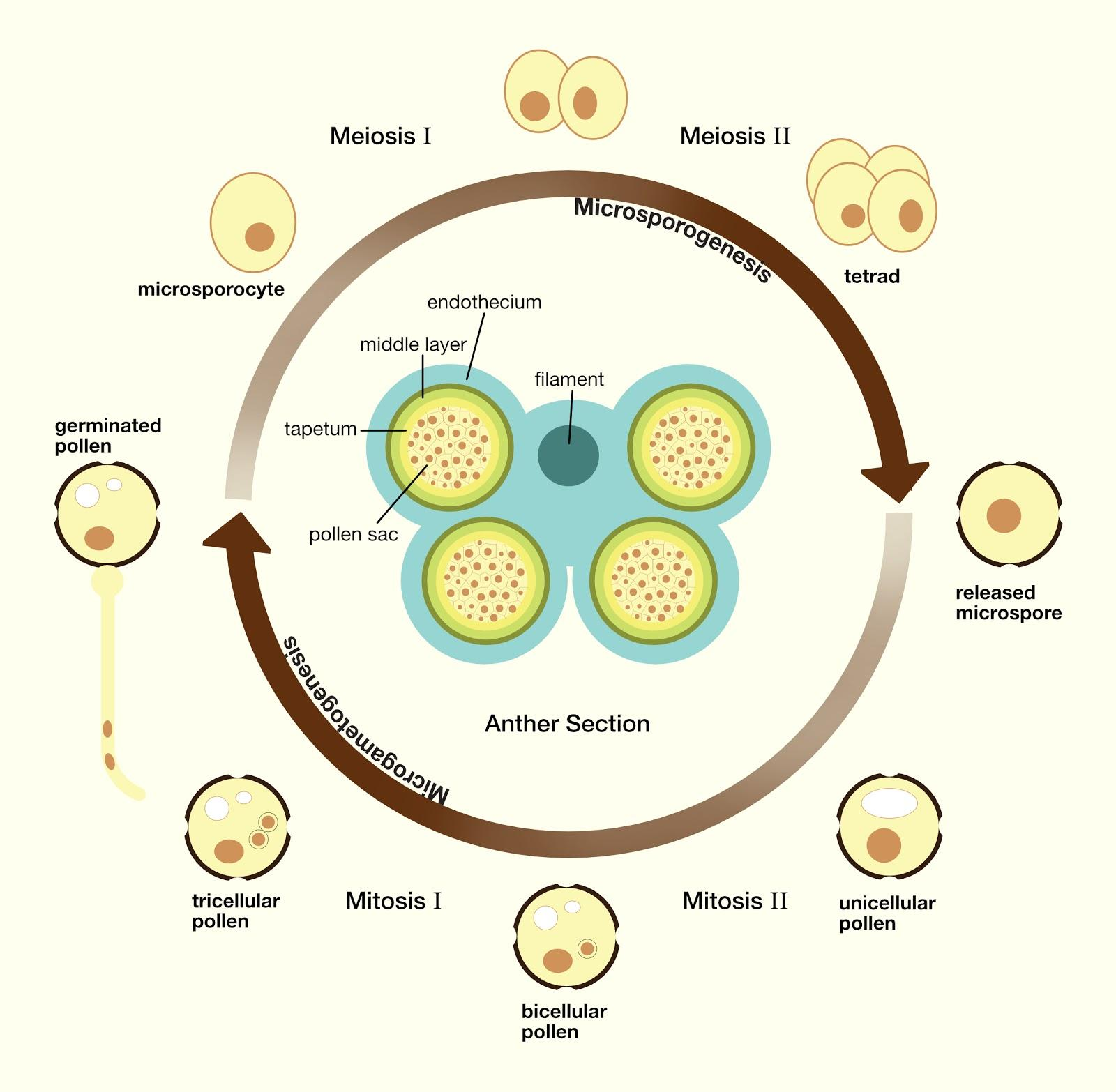
The anther is the fertile part of the stamen which consists of two long parallelly arranged microsporangia. Each microsporangium consists of a haploid microspore and each anther lobe consists of two microsporangia. The sporogenous tissue fills the interior of microsporangium with similar sporogenous cells. These sporogenous cells divide to form diploid microspore mother cells or pollen mother cells. Microspore mother cell consists of plasmodesmata on the surface of a cell which break to form callose in the inner layer of the cell wall. These separated mother cells undergo meiosis to form four haploid microspores. These microspores grow and differentiate to form pollen grains.
Additional information:
The pollen grain is a young male gametophyte which presents inside the anther. It shows a different type of structure and colour. Initially formed pollen are unicellular with dense uninuclear cytoplasm. Most of the pollen grain consists of two cells, large vegetative and small generative while in some cases pollen grain consists of three cells where generative cells divide to form two male gametes. Each pollen grain shows two covering inner intine and outer exine. Intine is made up of cellulose and pectin with some enzymatic proteins whereas extine is made up of sporopollenin which is similar to suberin. Sporopollenin is the most resistant organic substance which is absent on some of the surfaces of pollen grain where germ pores are formed.
So, the correct answer is ‘Microspore mother cell’.
Note:
Based on the number of germ pore pollen grain may be monocolpate, bicolpate, tricolpate, and multi colpate. In some flowers, the exine of pollen grain also consists of two extra layers, ektexine, and endexine. Exetine is the outer part of exine with foot layer, baculate layer, and tectum whereas endexine is an innermost smooth layer that forms cellulose-rich intine.
Complete answer:
The anther is the fertile part of the stamen which consists of two long parallelly arranged microsporangia. Each microsporangium consists of a haploid microspore and each anther lobe consists of two microsporangia. The sporogenous tissue fills the interior of microsporangium with similar sporogenous cells. These sporogenous cells divide to form diploid microspore mother cells or pollen mother cells. Microspore mother cell consists of plasmodesmata on the surface of a cell which break to form callose in the inner layer of the cell wall. These separated mother cells undergo meiosis to form four haploid microspores. These microspores grow and differentiate to form pollen grains.
Additional information:
The pollen grain is a young male gametophyte which presents inside the anther. It shows a different type of structure and colour. Initially formed pollen are unicellular with dense uninuclear cytoplasm. Most of the pollen grain consists of two cells, large vegetative and small generative while in some cases pollen grain consists of three cells where generative cells divide to form two male gametes. Each pollen grain shows two covering inner intine and outer exine. Intine is made up of cellulose and pectin with some enzymatic proteins whereas extine is made up of sporopollenin which is similar to suberin. Sporopollenin is the most resistant organic substance which is absent on some of the surfaces of pollen grain where germ pores are formed.
So, the correct answer is ‘Microspore mother cell’.
Note:
Based on the number of germ pore pollen grain may be monocolpate, bicolpate, tricolpate, and multi colpate. In some flowers, the exine of pollen grain also consists of two extra layers, ektexine, and endexine. Exetine is the outer part of exine with foot layer, baculate layer, and tectum whereas endexine is an innermost smooth layer that forms cellulose-rich intine.
Recently Updated Pages
Explain the structure of megasporangium class 12 biology CBSE

Why is chloroform kept in dark coloured bottles class 12 chemistry CBSE
Derive the balancing condition of a Wheatstone bri class 12 physics CBSE
Draw VI characteristics of a pn junction diode Explain class 12 physics CBSE
Is it possible to carry pride in ones language too class 12 english CBSE
In a population at Hardy Weinberg equilibrium the allele class 12 biology CBSE
Trending doubts
One megawatt is equal to how many units of electri class 12 physics CBSE
What is the Full Form of PVC, PET, HDPE, LDPE, PP and PS ?
Draw a well labelled diagram of the human brain class 12 biology CBSE
Differentiate between homogeneous and heterogeneous class 12 chemistry CBSE
What is the structural formula of Aspirin A B C D class 12 chemistry CBSE
Draw a labelled diagram of a female reproductive s class 12 biology CBSE