




Which one of the following describes blastula?
A. A tripled layer structure that has folded on itself with blastomeres as its opening
B. A solid ball of cells composed of three germ layers
C. A hollow ball of cells with a fluid-filled cavity called the blastocoel
D. A fertilized egg
E. An embryo with a folded crest
Answer
 Verified
599.1k+ views
Hint:Cleavage refers to a series of rapid mitotic divisions (without any growth i.e., reducing in size) of the zygote following fertilization, forming a many-celled blastula. The cleavage divisions are no doubt mitotic as they produce diploid cells, In this division occur in quick succession.
Complete answer:The first cleavage takes place about 30 hours after fertilization. It produces two blastomeres, one slightly larger than the other.
The second cleavage occurs within 60 hours after fertilization. The blastomeres divide mitotically sooner.
The morula 16-32 cells but it is not larger than the zygote. The morula reaches the uterus about 4- 6 days after fertilization.
After morula 64 celled stage formed which is called a blastula.
Blastula contains a fluid-filled cavity called a blastocyst.
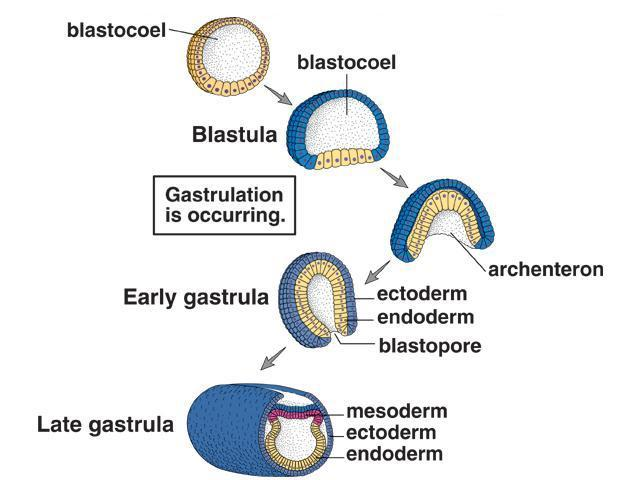
So the correct answer is option is C. A hollow ball of cells with a fluid-filled cavity called blastocoels.
Additional information:
The outer layer of cells of the morula now absorbs cells of the nutritive fluid secreted by the uterine mucous membrane called the trophoblast.
The fluid absorbed by the trophoblast collects in a cavity the blastomeres or blastocyst cavity that separates the trophoblast collects the blastocoel or blastocyst cavity that separates the trophoblast from inner cell mass except on one side.
As the quantity of fluid increases the morula enlarges rapidly and assumes the shape of the cyst. It is then called the blastocyst.
Note:Blastula formation is the last part of fertilization and after that implantation takes place. The blastula is 64 celled stages containing blastocoel which is fluid secrete by the uterine mucous membrane.
Complete answer:The first cleavage takes place about 30 hours after fertilization. It produces two blastomeres, one slightly larger than the other.
The second cleavage occurs within 60 hours after fertilization. The blastomeres divide mitotically sooner.
The morula 16-32 cells but it is not larger than the zygote. The morula reaches the uterus about 4- 6 days after fertilization.
After morula 64 celled stage formed which is called a blastula.
Blastula contains a fluid-filled cavity called a blastocyst.
So the correct answer is option is C. A hollow ball of cells with a fluid-filled cavity called blastocoels.
Additional information:
The outer layer of cells of the morula now absorbs cells of the nutritive fluid secreted by the uterine mucous membrane called the trophoblast.
The fluid absorbed by the trophoblast collects in a cavity the blastomeres or blastocyst cavity that separates the trophoblast collects the blastocoel or blastocyst cavity that separates the trophoblast from inner cell mass except on one side.
As the quantity of fluid increases the morula enlarges rapidly and assumes the shape of the cyst. It is then called the blastocyst.
Note:Blastula formation is the last part of fertilization and after that implantation takes place. The blastula is 64 celled stages containing blastocoel which is fluid secrete by the uterine mucous membrane.
Recently Updated Pages
Master Class 12 Economics: Engaging Questions & Answers for Success

Master Class 12 English: Engaging Questions & Answers for Success
Master Class 12 Social Science: Engaging Questions & Answers for Success
Master Class 12 Maths: Engaging Questions & Answers for Success
Master Class 12 Physics: Engaging Questions & Answers for Success
Master Class 9 General Knowledge: Engaging Questions & Answers for Success
Trending doubts
Which are the Top 10 Largest Countries of the World?
Draw a labelled sketch of the human eye class 12 physics CBSE
Differentiate between homogeneous and heterogeneous class 12 chemistry CBSE
Why is the cell called the structural and functional class 12 biology CBSE
Draw ray diagrams each showing i myopic eye and ii class 12 physics CBSE
Which is the correct genotypic ratio of mendel dihybrid class 12 biology CBSE