




Which one is an example of Parallel Cropping?
(a) Potato + Rice
(b) Wheat + Mustard
(c) Cotton + Wheat
(d) Sorghum + Potato
Answer
 Verified
579.3k+ views
Hint: In parallel cropping, two crops are grown simultaneously. The crops grown have zero competition between each other. They also have different natural habitats.
Complete Answer:
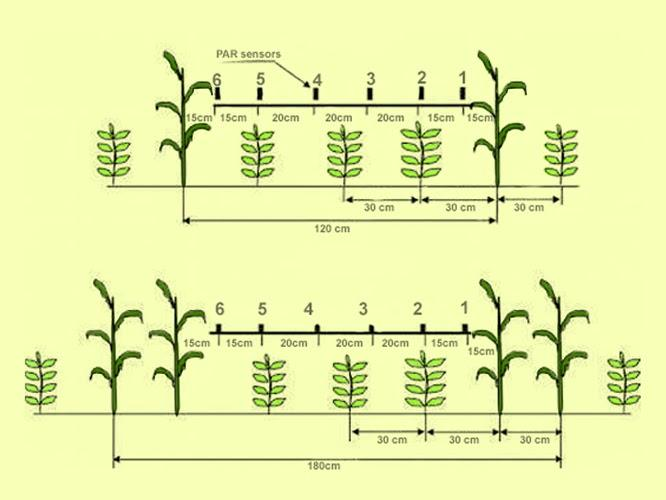
Parallel cropping is an agricultural method by which two crops are grown together, in the same land in parallel rows. Both crops grown do not compete for nutrients and have no effect on each other. They can express their maximum yield potential. They are grown in the same growing season.
This is done mainly due to the following reasons:
-Better utilization of resources - light, nutrients and moisture
-In the case where one crop fails, there is always yield from the other crop to depend on.
-This method helps in restoring soil fertility and helps prevent soil erosion.
The first option is the combination of Potato and Rice. Potato is a Rabi crop, while rice is a kharif crop. Since the crops belong to completely different growing seasons, this option is incorrect.
Again, in the case of Cotton and wheat (Option C) the crops belong to different growing seasons. Cotton is a kharif crop, while wheat is a rabi crop. So this option is incorrect as well.
In the last option Sorghum is a kharif crop, while potato is a Rabi crop.
The remaining option is Option B: Wheat and Mustard. Both of these are Rabi Crops.
So, the correct answer is option b. ‘Wheat + Mustard’.
Note:
There are some disadvantages to parallel cropping as well:
-It is a labor intensive method.
-Though there isn’t competition between the crops, they might be prone to different pests, which might get difficult to control.
-The crops might have different times at which they reach maturity, which might lead to two harvests.
Complete Answer:
Parallel cropping is an agricultural method by which two crops are grown together, in the same land in parallel rows. Both crops grown do not compete for nutrients and have no effect on each other. They can express their maximum yield potential. They are grown in the same growing season.
This is done mainly due to the following reasons:
-Better utilization of resources - light, nutrients and moisture
-In the case where one crop fails, there is always yield from the other crop to depend on.
-This method helps in restoring soil fertility and helps prevent soil erosion.
The first option is the combination of Potato and Rice. Potato is a Rabi crop, while rice is a kharif crop. Since the crops belong to completely different growing seasons, this option is incorrect.
Again, in the case of Cotton and wheat (Option C) the crops belong to different growing seasons. Cotton is a kharif crop, while wheat is a rabi crop. So this option is incorrect as well.
In the last option Sorghum is a kharif crop, while potato is a Rabi crop.
The remaining option is Option B: Wheat and Mustard. Both of these are Rabi Crops.
So, the correct answer is option b. ‘Wheat + Mustard’.
Note:
There are some disadvantages to parallel cropping as well:
-It is a labor intensive method.
-Though there isn’t competition between the crops, they might be prone to different pests, which might get difficult to control.
-The crops might have different times at which they reach maturity, which might lead to two harvests.
Recently Updated Pages
Explain the structure of megasporangium class 12 biology CBSE

Why is chloroform kept in dark coloured bottles class 12 chemistry CBSE
Derive the balancing condition of a Wheatstone bri class 12 physics CBSE
Draw VI characteristics of a pn junction diode Explain class 12 physics CBSE
Is it possible to carry pride in ones language too class 12 english CBSE
In a population at Hardy Weinberg equilibrium the allele class 12 biology CBSE
Trending doubts
Draw a labelled sketch of the human eye class 12 physics CBSE
Which are the Top 10 Largest Countries of the World?
Draw ray diagrams each showing i myopic eye and ii class 12 physics CBSE
One megawatt is equal to how many units of electri class 12 physics CBSE
Which is the correct genotypic ratio of mendel dihybrid class 12 biology CBSE
Give 10 examples of unisexual and bisexual flowers