




Which of these does not have a high energy phosphate bond?
(A) Creatine phosphate
(B) GTP
(C) ATP
(D) AMP
Answer
 Verified
603.6k+ views
Hint: The cell carries out many functions of metabolism for its growth and development. So, the energy must be required for it to do the metabolism. The mitochondria produce the energy in the form of ATP and hence they are known as the powerhouse of the cell.
Complete Answer:
(A) Creatine phosphate:
It is also known as phospho creatine. This generates the molecule of ATP by its combination with the molecule of ADP. In this process, it transfers its high energy phosphate bond to the ADP. And the end product is ATP and the creatine.
(B) GTP:
It is similar to the ATP molecules. These are energy rich and are involved in the process of energy transfer within the cell. Each turn of the Krebs’s cycle involves a single GTP molecule.
(C) ATP:
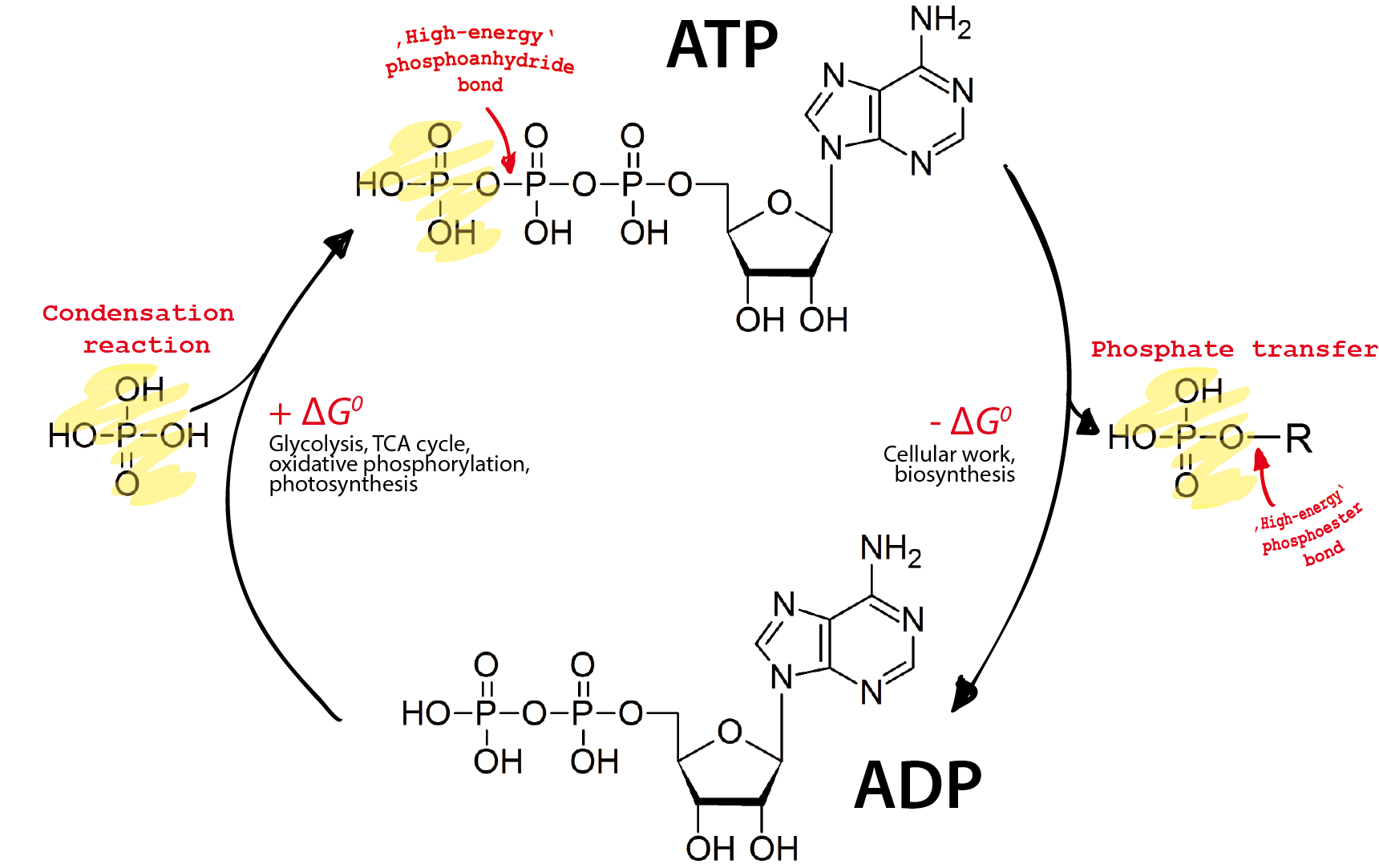
The full form of ATP is adenosine triphosphate. It is the energy rich molecule and it is called the energy currency of the cell. It has the adenine, ribose and the triphosphate molecule. They have the high energy bond between the triphosphate groups and release high energy when they break.
(D) AMP:
In the AMP molecule, there is the ester bond between the ribose sugar and the alpha phosphate groups. This bond does not possess high energy.
Of the given options, ATP, ADP and creatine phosphate have high energy phosphate bonds but AMP do not have this high energy bond.
Thus, the correct option is (D).
Note: All the energy molecules like ADP, AMP and the creatine phosphate at last convert into the ATP. Because ATP are the energy molecules which provide energy to the cell and its organelles to do all the functions necessary to carry out the process of metabolism.
Complete Answer:
(A) Creatine phosphate:
It is also known as phospho creatine. This generates the molecule of ATP by its combination with the molecule of ADP. In this process, it transfers its high energy phosphate bond to the ADP. And the end product is ATP and the creatine.
(B) GTP:
It is similar to the ATP molecules. These are energy rich and are involved in the process of energy transfer within the cell. Each turn of the Krebs’s cycle involves a single GTP molecule.
(C) ATP:
The full form of ATP is adenosine triphosphate. It is the energy rich molecule and it is called the energy currency of the cell. It has the adenine, ribose and the triphosphate molecule. They have the high energy bond between the triphosphate groups and release high energy when they break.
(D) AMP:
In the AMP molecule, there is the ester bond between the ribose sugar and the alpha phosphate groups. This bond does not possess high energy.
Of the given options, ATP, ADP and creatine phosphate have high energy phosphate bonds but AMP do not have this high energy bond.
Thus, the correct option is (D).
Note: All the energy molecules like ADP, AMP and the creatine phosphate at last convert into the ATP. Because ATP are the energy molecules which provide energy to the cell and its organelles to do all the functions necessary to carry out the process of metabolism.
Recently Updated Pages
Master Class 12 Business Studies: Engaging Questions & Answers for Success

Master Class 12 Chemistry: Engaging Questions & Answers for Success
Master Class 12 Biology: Engaging Questions & Answers for Success
Class 12 Question and Answer - Your Ultimate Solutions Guide
Master Class 11 English: Engaging Questions & Answers for Success
Master Class 11 Maths: Engaging Questions & Answers for Success
Trending doubts
Which is more stable and why class 12 chemistry CBSE
Which are the Top 10 Largest Countries of the World?
Draw a labelled sketch of the human eye class 12 physics CBSE
Differentiate between homogeneous and heterogeneous class 12 chemistry CBSE
What are the major means of transport Explain each class 12 social science CBSE
Sulphuric acid is known as the king of acids State class 12 chemistry CBSE