




Which of the following is used as a biofertilizer for the cultivation of soybean crop?
A. Azotobacter
B. Azospirillum
C. Rhizobium
D. Nostoc
Answer
 Verified
568.8k+ views
Hint: A biofertilizer is a substance which contains living microorganisms which, when applied to seeds, plant surfaces, or soil, colonize the rhizosphere or the interior of the plant and promotes growth by increasing the supply or availability of primary nutrients to the host plant.
Complete answer: Biofertilizers include Rhizobium, Azotobacter, Azospirillum, and blue-green algae (BGA). Rhizobium inoculant is used in leguminous crops. Azotobacter can be used with crops like wheat, maize, mustard, cotton, potato, and other vegetable crops. Azospirillum inoculations are recommended mainly for sorghum, millets, maize, sugarcane, and wheat. Blue-green algae belonging to a general Cyanobacteria genus, Nostoc or Anabaena or Tolypothrix or Aulosira, fix atmospheric nitrogen and are used as inoculations for paddy crop grown both under upland and lowland conditions. Rhizobium is a genus of gram-negative soil bacteria that fixes nitrogen. It forms an endosymbiotic nitrogen-fixing association with roots of legumes and Parasponia. It is used as a biofertilizer for the cultivation of soybean crops. The bacteria colonize plant cells within root nodules, where they convert atmospheric nitrogen into ammonia using the enzyme nitrogenase and then provide organic nitrogenous compounds such as glutamine or ureides to the plant. The plant, in turn, provides the bacteria with organic compounds made by photosynthesis. Rhizobium forms a symbiotic relationship with certain plants such as legumes, fixing nitrogen from the air into ammonia, which acts as a natural fertilizer for plants.
Hence, the correct answer is option C.
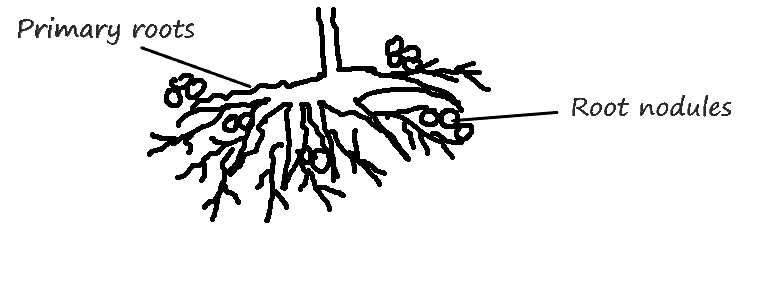
Note: The symbiotic nitrogen fixation by Rhizobium with legumes contribute substantially to total nitrogen fixation. Rhizobium inoculation is a well-known agronomic practice to ensure adequate nitrogen. Anabaena in association with water fern Azolla contributes nitrogen up to 60 kg/ha/season and also enriches soils with organic matter.
Complete answer: Biofertilizers include Rhizobium, Azotobacter, Azospirillum, and blue-green algae (BGA). Rhizobium inoculant is used in leguminous crops. Azotobacter can be used with crops like wheat, maize, mustard, cotton, potato, and other vegetable crops. Azospirillum inoculations are recommended mainly for sorghum, millets, maize, sugarcane, and wheat. Blue-green algae belonging to a general Cyanobacteria genus, Nostoc or Anabaena or Tolypothrix or Aulosira, fix atmospheric nitrogen and are used as inoculations for paddy crop grown both under upland and lowland conditions. Rhizobium is a genus of gram-negative soil bacteria that fixes nitrogen. It forms an endosymbiotic nitrogen-fixing association with roots of legumes and Parasponia. It is used as a biofertilizer for the cultivation of soybean crops. The bacteria colonize plant cells within root nodules, where they convert atmospheric nitrogen into ammonia using the enzyme nitrogenase and then provide organic nitrogenous compounds such as glutamine or ureides to the plant. The plant, in turn, provides the bacteria with organic compounds made by photosynthesis. Rhizobium forms a symbiotic relationship with certain plants such as legumes, fixing nitrogen from the air into ammonia, which acts as a natural fertilizer for plants.
Hence, the correct answer is option C.
Note: The symbiotic nitrogen fixation by Rhizobium with legumes contribute substantially to total nitrogen fixation. Rhizobium inoculation is a well-known agronomic practice to ensure adequate nitrogen. Anabaena in association with water fern Azolla contributes nitrogen up to 60 kg/ha/season and also enriches soils with organic matter.
Recently Updated Pages
Master Class 12 Economics: Engaging Questions & Answers for Success

Master Class 12 Physics: Engaging Questions & Answers for Success
Master Class 12 English: Engaging Questions & Answers for Success
Master Class 12 Social Science: Engaging Questions & Answers for Success
Master Class 12 Maths: Engaging Questions & Answers for Success
Master Class 12 Business Studies: Engaging Questions & Answers for Success
Trending doubts
Which are the Top 10 Largest Countries of the World?
What are the major means of transport Explain each class 12 social science CBSE
Draw a labelled sketch of the human eye class 12 physics CBSE
Why cannot DNA pass through cell membranes class 12 biology CBSE
Differentiate between insitu conservation and exsitu class 12 biology CBSE
Draw a neat and well labeled diagram of TS of ovary class 12 biology CBSE