




Which of the following is a connecting link between mammals and reptiles?
A. Balanoglossus
B. Ornithorhynchus
C. Peripatus
D. Archaeopteryx
Answer
 Verified
550.5k+ views
Hint: Duck-billed platypus is the connecting link between reptiles and mammals, as it has both reptiles and mammals’ features. Duck-billed platypus (Ornithorhynchus) is the connecting link. It shows mammalian characters like mammary glands, hair, diaphragm, single aortic arch etc. it shows reptilian characters in having a large coracoid in pectoral girdle.
Complete answer:
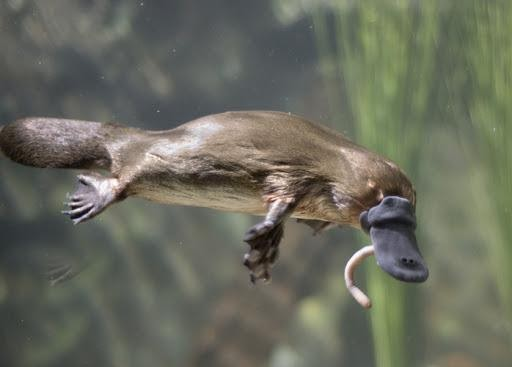
Platypus lays eggs like amphibians but shows the presence like mammals. It is a semi-aquatic egg laying mammal discovered in Tasmania and Australia is the duck-billed platypus. With the assistance of webbed feet and flattened tail it swims. It has mammary glands but its nipples are missing. The webbing on the feet is more significant on the front feet and is folded back when walking on land. The elongated snout, and lower jaw are covered in soft skin. Forming the bill. The nostrils are located on the dorsal surface.
Platypuses have been heard to emit growl when disturbed and a range of other vocalizations have been reported in captive specimens. The platypus has an average body size and temperature. The platypus has only three teeth. Both male and female platypuses are born with ankle spurs.
These spurs deliver venom composed of defensive like proteins. The function of these proteins makes pores in the raider body and lysis of animals happen. It is that powerful as it can kill small animals like dogs.
Hence, the correct answer to this question is option B. Ornithorhynchus
Note:
As we discussed and knew about the mammal in detail, it is an endangered species and found rare in regions like Australia. It has both the features of an amphibian as well as mammals. Hence it is known as the connecting link between the two successive organisms.
Complete answer:
Platypus lays eggs like amphibians but shows the presence like mammals. It is a semi-aquatic egg laying mammal discovered in Tasmania and Australia is the duck-billed platypus. With the assistance of webbed feet and flattened tail it swims. It has mammary glands but its nipples are missing. The webbing on the feet is more significant on the front feet and is folded back when walking on land. The elongated snout, and lower jaw are covered in soft skin. Forming the bill. The nostrils are located on the dorsal surface.
Platypuses have been heard to emit growl when disturbed and a range of other vocalizations have been reported in captive specimens. The platypus has an average body size and temperature. The platypus has only three teeth. Both male and female platypuses are born with ankle spurs.
These spurs deliver venom composed of defensive like proteins. The function of these proteins makes pores in the raider body and lysis of animals happen. It is that powerful as it can kill small animals like dogs.
Hence, the correct answer to this question is option B. Ornithorhynchus
Note:
As we discussed and knew about the mammal in detail, it is an endangered species and found rare in regions like Australia. It has both the features of an amphibian as well as mammals. Hence it is known as the connecting link between the two successive organisms.
Recently Updated Pages
Master Class 12 Business Studies: Engaging Questions & Answers for Success

Master Class 12 Biology: Engaging Questions & Answers for Success
Master Class 12 Chemistry: Engaging Questions & Answers for Success
Class 12 Question and Answer - Your Ultimate Solutions Guide
Master Class 11 English: Engaging Questions & Answers for Success
Master Class 11 Social Science: Engaging Questions & Answers for Success
Trending doubts
Which are the Top 10 Largest Countries of the World?
Draw a labelled sketch of the human eye class 12 physics CBSE
Differentiate between homogeneous and heterogeneous class 12 chemistry CBSE
Why is the cell called the structural and functional class 12 biology CBSE
Draw ray diagrams each showing i myopic eye and ii class 12 physics CBSE
Which is the correct genotypic ratio of mendel dihybrid class 12 biology CBSE