




Which of the following have sunken stomata?
(a)Nerium
(b)Mangifera
(c)Hydrilla
(d)Zea may
Answer
 Verified
634.8k+ views
Hint: Sunken stomata are stomata present in small pits in a leaf which helps reduce the rate of water loss due to transpiration.
Complete answer:
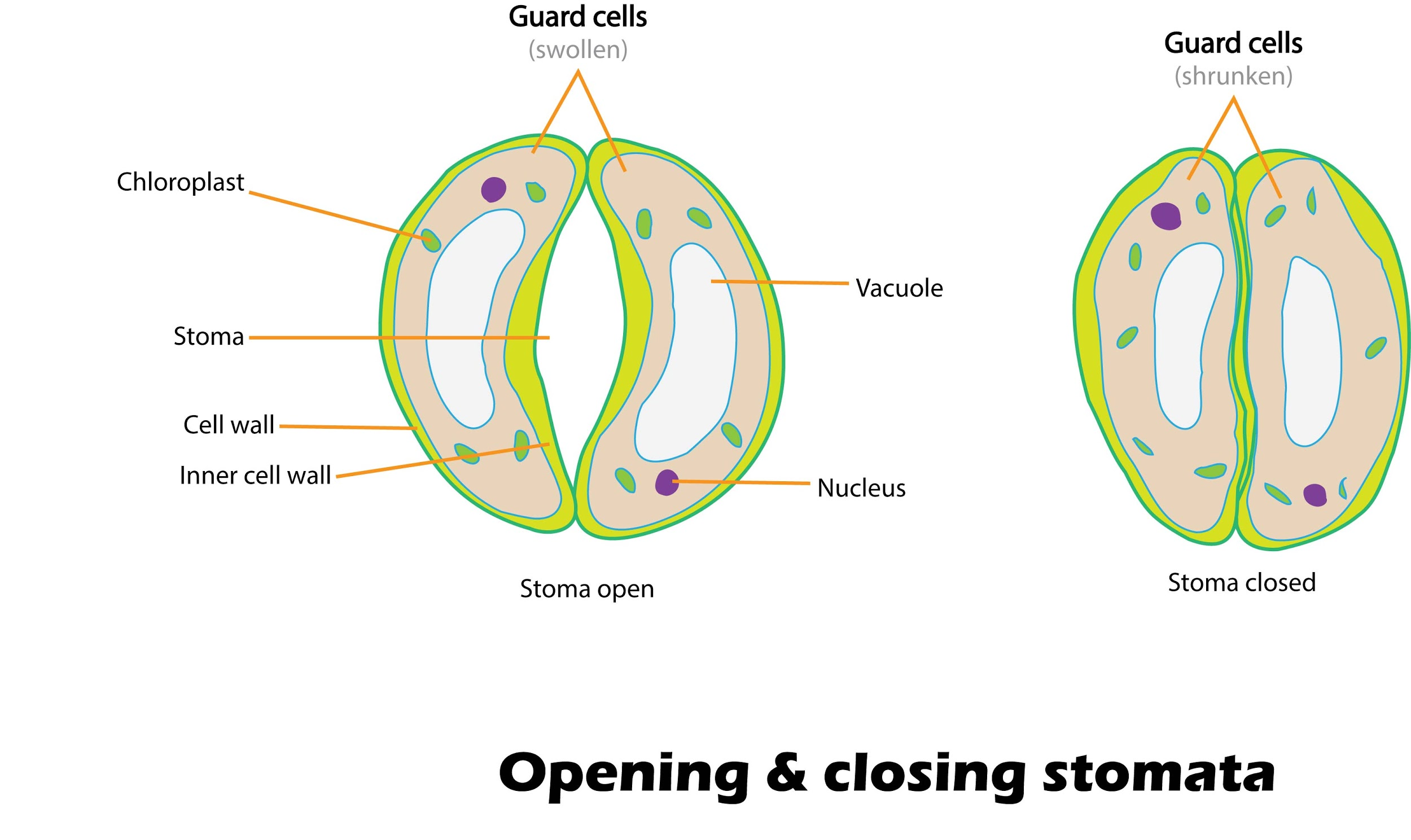
Sunken stomata are present in plants that are usually in areas of water scarcity i.e., arid areas or deserts where to prevent water loss due to transpiration. Plants generally have stomata on the surface of leaves, but sunken stomata are embedded in the left surface, also plants with sunken stomata have a fewer number of stomata on their leaves compared to regular plants. These sunken stomata are also surrounded by hair-like structures called trichomes to further prevent water loss. Plants with sunken stomata are usually xerophytes. This thus enables the plant to accomplish optimum gas exchange with minimal water loss since stomata can remain open longer and the $CO_2$ in the leaf or leave like structure can be maintained at required concentrations for these plants to be able to carry out photosynthesis throughout the day time.
So, the correct answer is ‘Nerium.’
Note:
- Leaves have different types of adaptations to tackle water loss due to transpiration:
-Leave are reduced to spines: Here spines reduce surface area thus drastically reducing the rate of transpiration.
-Reduction in the number of stomata: stomatal opening for gaseous exchange causes loss of water in arid conditions. Reduction in the number of stomata can help tackle this but almost maintain the gaseous exchange.
-Waxy cuticle on the leaves: Waxy cuticle physically stops water loss due to evaporation.
-Leaf rolling: this traps mist air which increases relative humidity and decreases exposed surface thus reducing the rate of transpiration.
Complete answer:
Sunken stomata are present in plants that are usually in areas of water scarcity i.e., arid areas or deserts where to prevent water loss due to transpiration. Plants generally have stomata on the surface of leaves, but sunken stomata are embedded in the left surface, also plants with sunken stomata have a fewer number of stomata on their leaves compared to regular plants. These sunken stomata are also surrounded by hair-like structures called trichomes to further prevent water loss. Plants with sunken stomata are usually xerophytes. This thus enables the plant to accomplish optimum gas exchange with minimal water loss since stomata can remain open longer and the $CO_2$ in the leaf or leave like structure can be maintained at required concentrations for these plants to be able to carry out photosynthesis throughout the day time.
So, the correct answer is ‘Nerium.’
Note:
- Leaves have different types of adaptations to tackle water loss due to transpiration:
-Leave are reduced to spines: Here spines reduce surface area thus drastically reducing the rate of transpiration.
-Reduction in the number of stomata: stomatal opening for gaseous exchange causes loss of water in arid conditions. Reduction in the number of stomata can help tackle this but almost maintain the gaseous exchange.
-Waxy cuticle on the leaves: Waxy cuticle physically stops water loss due to evaporation.
-Leaf rolling: this traps mist air which increases relative humidity and decreases exposed surface thus reducing the rate of transpiration.
Recently Updated Pages
If x a + bt + ct2 where x is in meters and t is in class 11 physics CBSE

A car covers the first half distance between two places class 11 physics CBSE
The resultant of two vectors overrightarrow P and overrightarrow class 11 physics CBSE
Find the value of cos 135 class 11 maths CBSE
A mass M is held in place by an applied force F and class 11 physics CBSE
A solution of glucose in water is labelled as 10 dfracwv class 11 chemistry CBSE
Trending doubts
One Metric ton is equal to kg A 10000 B 1000 C 100 class 11 physics CBSE
Find the value of the expression given below sin 30circ class 11 maths CBSE
What do you mean by retardation What is its SI uni class 11 physics CBSE
Draw a diagram of nephron and explain its structur class 11 biology CBSE
10 examples of friction in our daily life
Difference between physical and chemical change class 11 chemistry CBSE