



Which of the following can show somatogenic reproduction?
A) Paramecium
B) Amoeba
C) Hydra
D) All of the above
Answer
 Verified
628.5k+ views
Hint: In somatogenic reproduction, the new organisms are formed from the somatic or the body parts of the parent organism. It is also known as asexual reproduction.
Complete Answer:
- In living organisms, there are two kinds of cells present- the somatic cells or the body cells and the reproductive or the germ cells.
- The germ cells include the sperm and egg whereas the somatic cells can be any type of body cells. The germ cells are responsible for sexual reproduction whereas in the somatic cells, division takes place asexually.
The asexual reproduction takes place by
1) Budding- In this form, the new individual develops from some generative anatomical point of the parent. The initial protuberance is developed at the cytoplasm which forms a bud like structure that develops into a new organism.
Eg hydra.
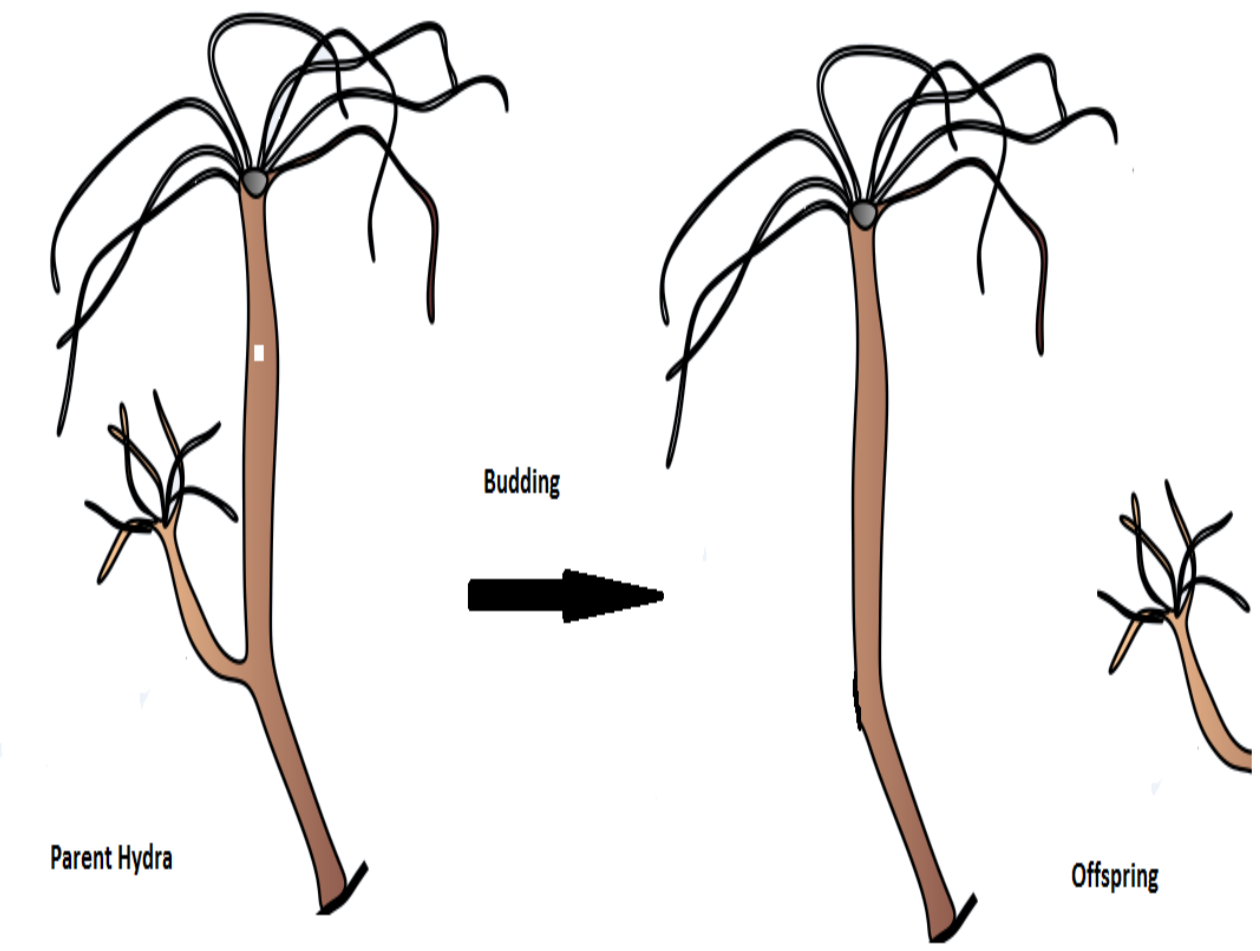
2) Binary fission- Amoeba reproduces through binary fission. In this the organism itself divides into two daughter cells which are genetically similar. Paramecium also shows asexual reproduction through binary fission.
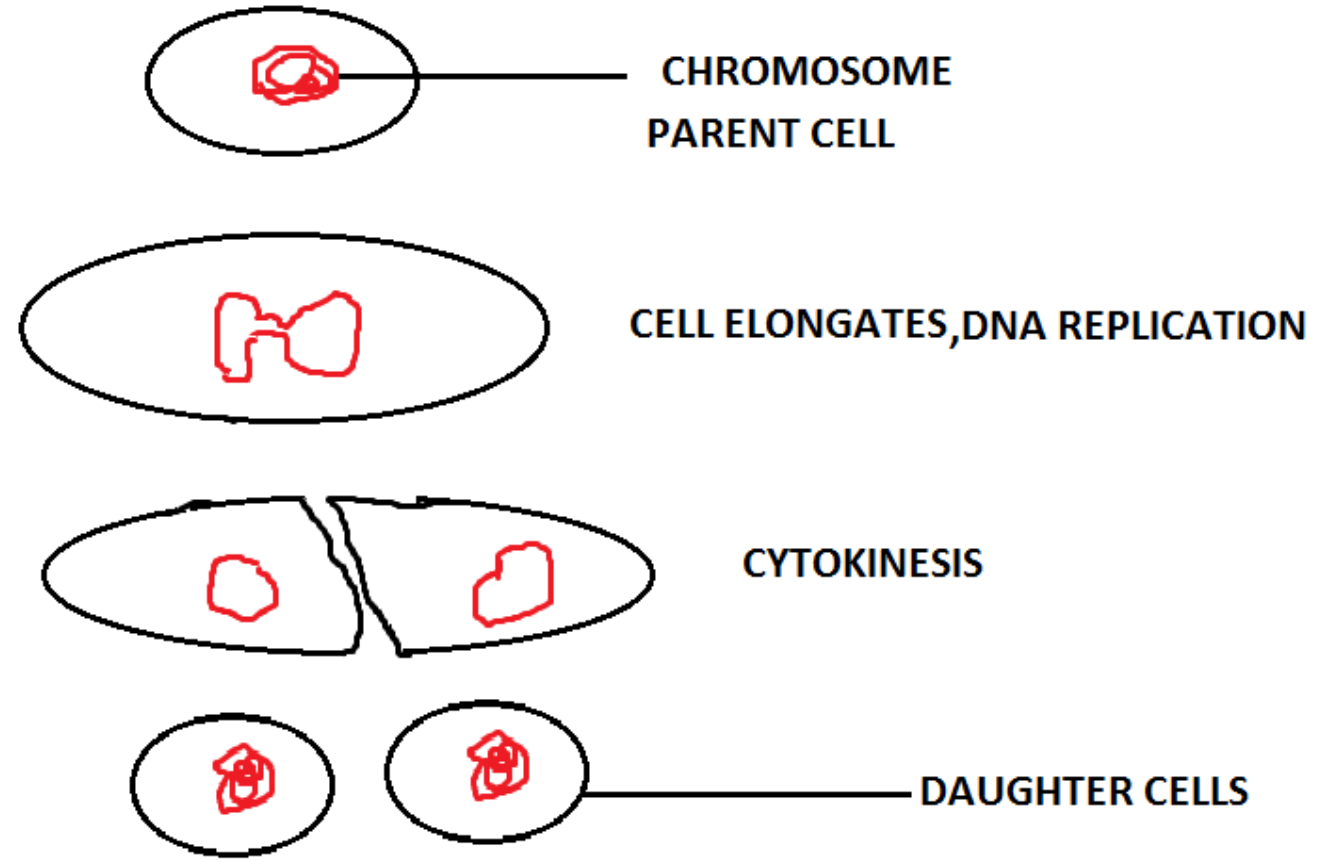
Fig: Binary fission
Other kinds of sexual reproduction can take place through vegetative propagation, spore formation, fragmentation.
Thus the correct answer is (D) All of the above.
Note: Somatic cells divide by mitosis. It gives birth to identical copies of progeny. Only the somatic parts of the parents are involved. Paramecium undergoes both sexual and asexual reproduction. It undergoes binary fission only under favourable conditions.
Complete Answer:
- In living organisms, there are two kinds of cells present- the somatic cells or the body cells and the reproductive or the germ cells.
- The germ cells include the sperm and egg whereas the somatic cells can be any type of body cells. The germ cells are responsible for sexual reproduction whereas in the somatic cells, division takes place asexually.
The asexual reproduction takes place by
1) Budding- In this form, the new individual develops from some generative anatomical point of the parent. The initial protuberance is developed at the cytoplasm which forms a bud like structure that develops into a new organism.
Eg hydra.
2) Binary fission- Amoeba reproduces through binary fission. In this the organism itself divides into two daughter cells which are genetically similar. Paramecium also shows asexual reproduction through binary fission.
Fig: Binary fission
Other kinds of sexual reproduction can take place through vegetative propagation, spore formation, fragmentation.
Thus the correct answer is (D) All of the above.
Note: Somatic cells divide by mitosis. It gives birth to identical copies of progeny. Only the somatic parts of the parents are involved. Paramecium undergoes both sexual and asexual reproduction. It undergoes binary fission only under favourable conditions.

Recently Updated Pages
Master Class 11 English: Engaging Questions & Answers for Success

Master Class 11 Social Science: Engaging Questions & Answers for Success
Master Class 11 Maths: Engaging Questions & Answers for Success
Master Class 11 Biology: Engaging Questions & Answers for Success
Master Class 11 Physics: Engaging Questions & Answers for Success
Master Class 11 Chemistry: Engaging Questions & Answers for Success
Trending doubts
In Indian rupees 1 trillion is equal to how many c class 8 maths CBSE
What is BLO What is the full form of BLO class 8 social science CBSE
What are the 12 elements of nature class 8 chemistry CBSE
Citizens of India can vote at the age of A 18 years class 8 social science CBSE
Which of the following leader has given the term insensate class 8 social science CBSE
Name the states through which the Tropic of Cancer class 8 social science CBSE