




Which of the following amino acids is neutral?
A.Aspartic acid
B.Glycine
C.Lysine
D.Arginine
Answer
 Verified
663.3k+ views
Hint: In this question, amino acids are defined as the organic compounds that possess carboxyl (-COOH) functional group and amine $( - N{H_2})$ functional group. It is the building block of proteins. It is of two types i.e. essential and nonessential amino acids. In which there are different side chain properties of amino acid that is acidic side chain, basic side chain and neutral side chain. Neutral side chains which are neutralized in the form of zwitterion.
Complete step by step answer:
Glycine is known for neutral amino acids. Glycine is hydrophilic in nature. It is one of the smallest molecules of the amino acid. It is also present inside or outside of the protein molecule.
Glycine is present predominantly or extremely as the zwitterion at aqueous solution. It acts as a derivative of amino ethane and also a derivative of acetic acid. Glycine is a non-chiral compound except for all amino acids.
The structure of glycine is:
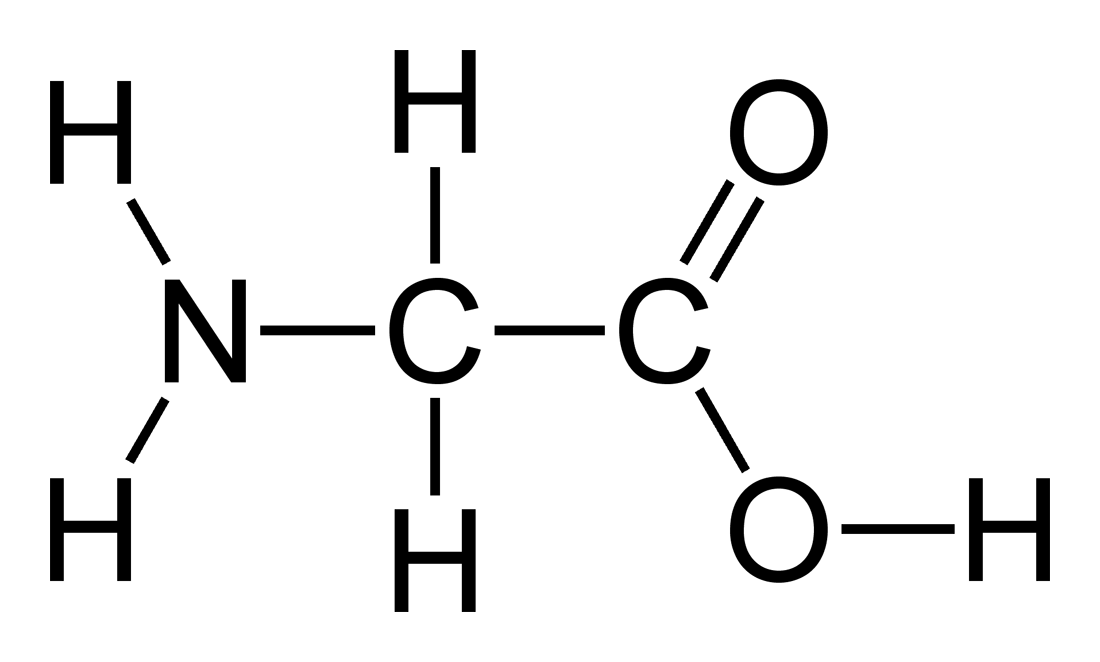
In which it is also denoted by gly and the physical property of glycine is that it is non-polar in nature. In the question the aspartic acid is the option 1 that is acidic in nature , which is an amino acid where it has acidic acid.
And the second option, Glycine which is a neutral amino acid and the third option, Lysine which are basic amino acids and the fourth option is Arginine, which is an amino acid that is basic in nature. So, hence it is proved that Glycine (Gly) amino acid is neutral.
Option B is the correct answer. The option B which is glycine is the amino acid is neutral and other a different nature amino acids which are acidic and basic.
Note:
It is interesting to know that Glycine has a unique feature or property which means that it plays an important role and adistivet function: it uses its side chain which is less backbone to bind the phosphate. It has flexibility which is configuration structure. It also contains hydrogen as its side chain.
Complete step by step answer:
Glycine is known for neutral amino acids. Glycine is hydrophilic in nature. It is one of the smallest molecules of the amino acid. It is also present inside or outside of the protein molecule.
Glycine is present predominantly or extremely as the zwitterion at aqueous solution. It acts as a derivative of amino ethane and also a derivative of acetic acid. Glycine is a non-chiral compound except for all amino acids.
The structure of glycine is:
In which it is also denoted by gly and the physical property of glycine is that it is non-polar in nature. In the question the aspartic acid is the option 1 that is acidic in nature , which is an amino acid where it has acidic acid.
And the second option, Glycine which is a neutral amino acid and the third option, Lysine which are basic amino acids and the fourth option is Arginine, which is an amino acid that is basic in nature. So, hence it is proved that Glycine (Gly) amino acid is neutral.
Option B is the correct answer. The option B which is glycine is the amino acid is neutral and other a different nature amino acids which are acidic and basic.
Note:
It is interesting to know that Glycine has a unique feature or property which means that it plays an important role and adistivet function: it uses its side chain which is less backbone to bind the phosphate. It has flexibility which is configuration structure. It also contains hydrogen as its side chain.
Recently Updated Pages
Explain the structure of megasporangium class 12 biology CBSE

Why is chloroform kept in dark coloured bottles class 12 chemistry CBSE
Derive the balancing condition of a Wheatstone bri class 12 physics CBSE
Draw VI characteristics of a pn junction diode Explain class 12 physics CBSE
Is it possible to carry pride in ones language too class 12 english CBSE
In a population at Hardy Weinberg equilibrium the allele class 12 biology CBSE
Trending doubts
Draw a labelled sketch of the human eye class 12 physics CBSE
Which are the Top 10 Largest Countries of the World?
Draw ray diagrams each showing i myopic eye and ii class 12 physics CBSE
One megawatt is equal to how many units of electri class 12 physics CBSE
Which is the correct genotypic ratio of mendel dihybrid class 12 biology CBSE
Give 10 examples of unisexual and bisexual flowers