




Which device is used to produce electricity? Describe with a neat diagram.
A) Electric Motor
B) Galvanometer
C) Electric Generator
D) Voltmeter
Answer
 Verified
568.5k+ views
Hint: Let us check the options of the question, there are other three instruments that are related to the measurement of the electrical properties and one instrument that is used to generate electricity. Describing each one of them one by one will specify which device is used to generate electricity and which are not.
Complete step by step solution:
Now let us see the options that are given in the question, the first option i.e. electric motor is a machine that is used to convert the electrical energy or current into mechanical energy motors that are used to pump water, oil from the depth of the earth.
The second option, galvanometer is a measuring machine that is used to detect any electrical current flowing, galvanometer also acts as an actuator and used in the experiments of a Wheatstone bridge.
The third option i.e. electric generator is a device which is used to convert mechanical energy into electrical energy i.e. to generate electricity like dynamo or water turbines or wind mill where external energy in form of mechanical energy in mass form of water, wind and pressure etc. are used to work on the device to produce electricity and the last option voltmeter is again a measuring device to measure voltage. Hence, a diagram of electric generator to shown the conversion of mechanical to electrical energy or electricity is drawn below:
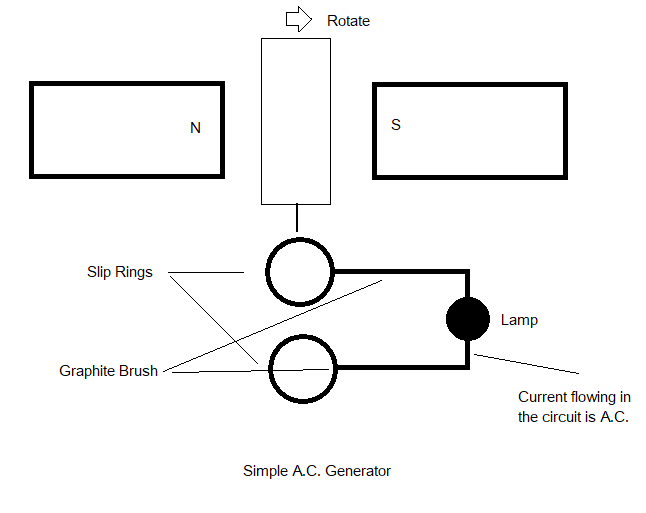
Note: The most common examples of electrical generator are hydro dams and wind turbine where the motor is run by the water pressure and air pressure which is a form of mechanical energy and then that mechanical energy is converted into electrical energy or electricity due to opposing magnets and that same electricity runs in our houses and factory. This electricity is also known as A.C. or alternate current.
Complete step by step solution:
Now let us see the options that are given in the question, the first option i.e. electric motor is a machine that is used to convert the electrical energy or current into mechanical energy motors that are used to pump water, oil from the depth of the earth.
The second option, galvanometer is a measuring machine that is used to detect any electrical current flowing, galvanometer also acts as an actuator and used in the experiments of a Wheatstone bridge.
The third option i.e. electric generator is a device which is used to convert mechanical energy into electrical energy i.e. to generate electricity like dynamo or water turbines or wind mill where external energy in form of mechanical energy in mass form of water, wind and pressure etc. are used to work on the device to produce electricity and the last option voltmeter is again a measuring device to measure voltage. Hence, a diagram of electric generator to shown the conversion of mechanical to electrical energy or electricity is drawn below:
Note: The most common examples of electrical generator are hydro dams and wind turbine where the motor is run by the water pressure and air pressure which is a form of mechanical energy and then that mechanical energy is converted into electrical energy or electricity due to opposing magnets and that same electricity runs in our houses and factory. This electricity is also known as A.C. or alternate current.
Recently Updated Pages
Master Class 12 Economics: Engaging Questions & Answers for Success

Master Class 12 Physics: Engaging Questions & Answers for Success
Master Class 12 English: Engaging Questions & Answers for Success
Master Class 12 Social Science: Engaging Questions & Answers for Success
Master Class 12 Maths: Engaging Questions & Answers for Success
Master Class 12 Business Studies: Engaging Questions & Answers for Success
Trending doubts
Which are the Top 10 Largest Countries of the World?
What are the major means of transport Explain each class 12 social science CBSE
Draw a labelled sketch of the human eye class 12 physics CBSE
Why cannot DNA pass through cell membranes class 12 biology CBSE
Differentiate between insitu conservation and exsitu class 12 biology CBSE
Draw a neat and well labeled diagram of TS of ovary class 12 biology CBSE