




Which are the three kingdoms put forth by Ernst Haeckel to classify living organisms?
Answer
 Verified
627k+ views
Hint: Until 1860, all the living organisms were classified into two kingdoms, either Plantae or Animalia. But following the discovery of microscopic organisms, a German investigator, Ernst Haeckel proposed a three kingdom classification, separating the microscopic organisms from those of Plants and Animals.
Complete answer:
In 1866, Ernst Haeckel classified the living organisms into three broad kingdoms, namely:
Animalia
Plantae
Protista
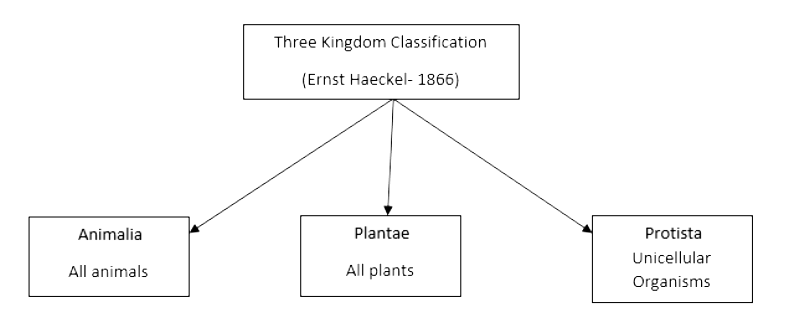
Fig: 3 Kingdom classification by Ernst Haeckel
Haeckel suggested a third kingdom to overcome the drawbacks of the two kingdom classification. The third kingdom, Protista was suggested to include organisms that either exhibited properties similar to both Plantae and Animalia or organisms that exhibited some properties unique to themselves.
The three kingdom classification was based on the following characters:
- Morphological complexities
- Organization level of the body (Cellular level, tissue level, organ level)
- Division of labor among the cells/tissue/organs
- Mode of Nutrition
> Kingdom Animalia was composed of all the animals that are eukaryotic heterotrophic organisms.
> Kingdom Plantae consisted of all the eukaryotic autotrophic organisms.
> Kingdom Protista included all the microorganisms that are either autotrophic or heterotrophic.
Kingdom Protista roughly included Fungi, Bacteria, Protozoa, and other microorganisms. Although three kingdom classification was intended to differentiate the microorganisms from Animalia and Plantae, it was not widely accepted. The 2 kingdom classification, with two broad groups of Animals and Plants, continued until more specialized classification systems emerged. Even the microorganisms were distributed in either Animalia or Plantae based on their mode of nutrition.
Note: The three kingdom classification by Ernst Haeckel, that paved way for the widely accepted 5 kingdom classification of Robert Whittaker. The idea of differentiating the microorganisms from the other complex ones, was introduced by Ernst Haeckel in the field of Taxonomy.
Complete answer:
In 1866, Ernst Haeckel classified the living organisms into three broad kingdoms, namely:
Animalia
Plantae
Protista
Fig: 3 Kingdom classification by Ernst Haeckel
Haeckel suggested a third kingdom to overcome the drawbacks of the two kingdom classification. The third kingdom, Protista was suggested to include organisms that either exhibited properties similar to both Plantae and Animalia or organisms that exhibited some properties unique to themselves.
The three kingdom classification was based on the following characters:
- Morphological complexities
- Organization level of the body (Cellular level, tissue level, organ level)
- Division of labor among the cells/tissue/organs
- Mode of Nutrition
> Kingdom Animalia was composed of all the animals that are eukaryotic heterotrophic organisms.
> Kingdom Plantae consisted of all the eukaryotic autotrophic organisms.
> Kingdom Protista included all the microorganisms that are either autotrophic or heterotrophic.
Kingdom Protista roughly included Fungi, Bacteria, Protozoa, and other microorganisms. Although three kingdom classification was intended to differentiate the microorganisms from Animalia and Plantae, it was not widely accepted. The 2 kingdom classification, with two broad groups of Animals and Plants, continued until more specialized classification systems emerged. Even the microorganisms were distributed in either Animalia or Plantae based on their mode of nutrition.
Note: The three kingdom classification by Ernst Haeckel, that paved way for the widely accepted 5 kingdom classification of Robert Whittaker. The idea of differentiating the microorganisms from the other complex ones, was introduced by Ernst Haeckel in the field of Taxonomy.
Recently Updated Pages
Master Class 11 English: Engaging Questions & Answers for Success

Master Class 11 Social Science: Engaging Questions & Answers for Success
Master Class 11 Maths: Engaging Questions & Answers for Success
Master Class 11 Biology: Engaging Questions & Answers for Success
Master Class 11 Physics: Engaging Questions & Answers for Success
Master Class 11 Chemistry: Engaging Questions & Answers for Success
Trending doubts
Difference Between Plant Cell and Animal Cell
Fill the blanks with the suitable prepositions 1 The class 9 english CBSE
What is pollution? How many types of pollution? Define it
Name 10 Living and Non living things class 9 biology CBSE
What is the full form of pH?
On an outline map of India show its neighbouring c class 9 social science CBSE