




How do you use Riemann sums to evaluate the area under the curve of \[\dfrac{1}{x}\] on the closed interval \[[0,2] \] , with \[n = 4\] rectangles using midpoint?
Answer
 Verified
544.2k+ views
Hint: Here, we want to evaluate the area under the curve of \[f(x)\] on the closed interval \[[a,b] \] , with midpoint of rectangles, \[n\] by using Riemann sums. Let \[f(x)\] be a continuous and non-negative function defined on the closed interval which all used to find the area of the region under the curve.
Complete step by step solution:
Let the curve of \[f(x)\] be a function to find the area under the interval \[a\] to \[b\] .
\[f(x) = \dfrac{1}{x}\] , where the interval, \[[a,b] = [0,2] \] and \[n = 4\] .
By plot a graph with the given functions,
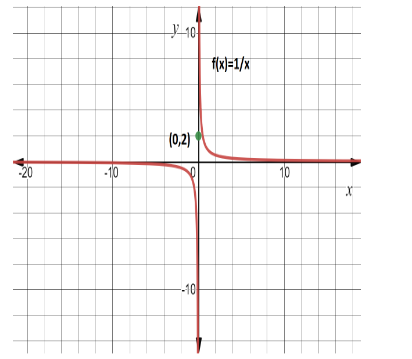
To find the area of the rectangle under the curve, we have
\[Area = width \times length = \Delta f({x_i})\] with \[n = 4\]
Let the width of the rectangle,
\[\Delta x = \dfrac{{b - a}}{n}\]
Substitute the values into the above formula to find the width, we get
\[\Delta x = \dfrac{{2 - 0}}{4} = \dfrac{1}{2}\]
Where, \[n = 4\] so to find the end point from \[a\] to \[b\] \[ = 0 \;to\;2\] ,
To find the interval between \[0\] to \[2\] is the midpoint: \[0,\dfrac{1}{2},1,\dfrac{3}{2},2\]
Here, we use the Riemann sum of interval \[a\] to \[b\] with \[\Delta x\] , we get
End points: \[0,\dfrac{1}{2},1,\dfrac{3}{2},2\] add with \[\Delta x\] is \[\left( {0,0 + \dfrac{1}{2} = \dfrac{1}{2},\dfrac{1}{2} + \dfrac{1}{2} = 1,1 + \dfrac{1}{2} = \dfrac{3}{2},\dfrac{3}{2} + \dfrac{1}{2} = \dfrac{4}{2} = 2} \right)\]
Therefore, the end points are \[\left( {0,\dfrac{1}{2},1,\dfrac{3}{2},2} \right)\] .
The subintervals are \[\left( {0,\dfrac{1}{2}} \right),\left( {\dfrac{1}{2},1} \right),\left( {1,\dfrac{3}{2}} \right),\left( {\dfrac{3}{2},2} \right)\]
The midpoint of each subinterval as its sample point. The midpoints may be found by averaging the endpoints of each subinterval or by averaging the endpoints of the first subinterval to find its midpoint and then successively adding \[\Delta x\] to get the others.
So, the mid points are \[\left( {\left( {0 + \dfrac{1}{2}} \right),\left( {\dfrac{1}{2} + 1} \right),\left( {1 + \dfrac{3}{2}} \right),\left( {\dfrac{3}{2} + 2} \right)} \right) \cdot \Delta x\]
= \[\left( {\left( {\dfrac{1}{2}} \right),\left( {\dfrac{{1 + 2}}{2}} \right),\left( {\dfrac{{2 + 3}}{2}} \right),\left( {\dfrac{{3 + 4}}{2}} \right)} \right) \cdot \dfrac{1}{2}\]
To simplify the points of multiplication, we get
\[\left( {\left( {\dfrac{1}{2} \times \dfrac{1}{2}} \right),\left( {\dfrac{3}{2} \times \dfrac{1}{2}} \right),\left( {\dfrac{5}{2} \times \dfrac{1}{2}} \right),\left( {\dfrac{7}{2} \times \dfrac{1}{2}} \right)} \right)\]
Therefore, the mid points are \[\left( {\dfrac{1}{4},\dfrac{3}{4},\dfrac{5}{4},\dfrac{7}{4}} \right)\] .
Now, the Riemann sum is the sum of the area of the \[4\] rectangles. We find the area of rectangle
\[Area = width \times length = \sum f({x_i})\Delta x\]
Where, \[{x_i} - \] Sample points
Now, substitute the values into the area of rectangle,
\[Area = f\left( {\dfrac{1}{4}} \right).\dfrac{1}{2} + f\left( {\dfrac{3}{4}} \right).\dfrac{1}{2} + f\left( {\dfrac{5}{4}} \right).\dfrac{1}{2} + f\left( {\dfrac{7}{4}} \right).\dfrac{1}{2}\]
Here, given function is \[f(x) = \dfrac{1}{x}\]
Take out the common value from the bracket, we get
\[Area = \left( {f\left( {\dfrac{1}{4}} \right) + f\left( {\dfrac{3}{4}} \right) + f\left( {\dfrac{5}{4}} \right) + f\left( {\dfrac{7}{4}} \right)} \right) \times \dfrac{1}{2}\]
Since \[f(x)\] is the reciprocal of \[x\] , we have
\[Area = \left( {\left( {\dfrac{4}{1}} \right) + \left( {\dfrac{4}{3}} \right) + \left( {\dfrac{4}{5}} \right) + \left( {\dfrac{4}{7}} \right)} \right) \times \dfrac{1}{2}\]
Take out common value of numerator, we have
\[Area = \left( {\dfrac{1}{1} + \dfrac{1}{3} + \dfrac{1}{5} + \dfrac{1}{7}} \right) \times \dfrac{4}{2}\]
Take LCM to simplify the arithmetic values, we get
\[\
Area = \left( {\dfrac{{\left( {3 \times 5 \times 7} \right) + (5 \times 7) + (3 \times 7) + (5 \times 3)}}{{3 \times 5 \times 7}}} \right)2 \\
Area = \left( {\dfrac{{105 + 35 + 21 + 15}}{{3 \times 5 \times 7}}} \right)2 \\
\ \]
By evaluate the
\[\
Area = \left( {\dfrac{{176}}{{105}}} \right)2 \\
Area = 3.352 \\
\ \]
Therefore, the Riemann sum of the area of the rectangle is \[3.35\] .
So, the correct answer is “ \[3.35\] Sq units”.
Note: A Riemann sum is a certain type of approximation for an integral. The easiest and simplest method to use is a rectangle sum; where we sum the area of n rectangles with equal width to approximate the area under a curve; as n approaches infinity, the sum approaches the true value of the net area.
Complete step by step solution:
Let the curve of \[f(x)\] be a function to find the area under the interval \[a\] to \[b\] .
\[f(x) = \dfrac{1}{x}\] , where the interval, \[[a,b] = [0,2] \] and \[n = 4\] .
By plot a graph with the given functions,
To find the area of the rectangle under the curve, we have
\[Area = width \times length = \Delta f({x_i})\] with \[n = 4\]
Let the width of the rectangle,
\[\Delta x = \dfrac{{b - a}}{n}\]
Substitute the values into the above formula to find the width, we get
\[\Delta x = \dfrac{{2 - 0}}{4} = \dfrac{1}{2}\]
Where, \[n = 4\] so to find the end point from \[a\] to \[b\] \[ = 0 \;to\;2\] ,
To find the interval between \[0\] to \[2\] is the midpoint: \[0,\dfrac{1}{2},1,\dfrac{3}{2},2\]
Here, we use the Riemann sum of interval \[a\] to \[b\] with \[\Delta x\] , we get
End points: \[0,\dfrac{1}{2},1,\dfrac{3}{2},2\] add with \[\Delta x\] is \[\left( {0,0 + \dfrac{1}{2} = \dfrac{1}{2},\dfrac{1}{2} + \dfrac{1}{2} = 1,1 + \dfrac{1}{2} = \dfrac{3}{2},\dfrac{3}{2} + \dfrac{1}{2} = \dfrac{4}{2} = 2} \right)\]
Therefore, the end points are \[\left( {0,\dfrac{1}{2},1,\dfrac{3}{2},2} \right)\] .
The subintervals are \[\left( {0,\dfrac{1}{2}} \right),\left( {\dfrac{1}{2},1} \right),\left( {1,\dfrac{3}{2}} \right),\left( {\dfrac{3}{2},2} \right)\]
The midpoint of each subinterval as its sample point. The midpoints may be found by averaging the endpoints of each subinterval or by averaging the endpoints of the first subinterval to find its midpoint and then successively adding \[\Delta x\] to get the others.
So, the mid points are \[\left( {\left( {0 + \dfrac{1}{2}} \right),\left( {\dfrac{1}{2} + 1} \right),\left( {1 + \dfrac{3}{2}} \right),\left( {\dfrac{3}{2} + 2} \right)} \right) \cdot \Delta x\]
= \[\left( {\left( {\dfrac{1}{2}} \right),\left( {\dfrac{{1 + 2}}{2}} \right),\left( {\dfrac{{2 + 3}}{2}} \right),\left( {\dfrac{{3 + 4}}{2}} \right)} \right) \cdot \dfrac{1}{2}\]
To simplify the points of multiplication, we get
\[\left( {\left( {\dfrac{1}{2} \times \dfrac{1}{2}} \right),\left( {\dfrac{3}{2} \times \dfrac{1}{2}} \right),\left( {\dfrac{5}{2} \times \dfrac{1}{2}} \right),\left( {\dfrac{7}{2} \times \dfrac{1}{2}} \right)} \right)\]
Therefore, the mid points are \[\left( {\dfrac{1}{4},\dfrac{3}{4},\dfrac{5}{4},\dfrac{7}{4}} \right)\] .
Now, the Riemann sum is the sum of the area of the \[4\] rectangles. We find the area of rectangle
\[Area = width \times length = \sum f({x_i})\Delta x\]
Where, \[{x_i} - \] Sample points
Now, substitute the values into the area of rectangle,
\[Area = f\left( {\dfrac{1}{4}} \right).\dfrac{1}{2} + f\left( {\dfrac{3}{4}} \right).\dfrac{1}{2} + f\left( {\dfrac{5}{4}} \right).\dfrac{1}{2} + f\left( {\dfrac{7}{4}} \right).\dfrac{1}{2}\]
Here, given function is \[f(x) = \dfrac{1}{x}\]
Take out the common value from the bracket, we get
\[Area = \left( {f\left( {\dfrac{1}{4}} \right) + f\left( {\dfrac{3}{4}} \right) + f\left( {\dfrac{5}{4}} \right) + f\left( {\dfrac{7}{4}} \right)} \right) \times \dfrac{1}{2}\]
Since \[f(x)\] is the reciprocal of \[x\] , we have
\[Area = \left( {\left( {\dfrac{4}{1}} \right) + \left( {\dfrac{4}{3}} \right) + \left( {\dfrac{4}{5}} \right) + \left( {\dfrac{4}{7}} \right)} \right) \times \dfrac{1}{2}\]
Take out common value of numerator, we have
\[Area = \left( {\dfrac{1}{1} + \dfrac{1}{3} + \dfrac{1}{5} + \dfrac{1}{7}} \right) \times \dfrac{4}{2}\]
Take LCM to simplify the arithmetic values, we get
\[\
Area = \left( {\dfrac{{\left( {3 \times 5 \times 7} \right) + (5 \times 7) + (3 \times 7) + (5 \times 3)}}{{3 \times 5 \times 7}}} \right)2 \\
Area = \left( {\dfrac{{105 + 35 + 21 + 15}}{{3 \times 5 \times 7}}} \right)2 \\
\ \]
By evaluate the
\[\
Area = \left( {\dfrac{{176}}{{105}}} \right)2 \\
Area = 3.352 \\
\ \]
Therefore, the Riemann sum of the area of the rectangle is \[3.35\] .
So, the correct answer is “ \[3.35\] Sq units”.
Note: A Riemann sum is a certain type of approximation for an integral. The easiest and simplest method to use is a rectangle sum; where we sum the area of n rectangles with equal width to approximate the area under a curve; as n approaches infinity, the sum approaches the true value of the net area.
Recently Updated Pages
Basicity of sulphurous acid and sulphuric acid are

Master Class 12 English: Engaging Questions & Answers for Success
Master Class 12 Social Science: Engaging Questions & Answers for Success
Master Class 12 Maths: Engaging Questions & Answers for Success
Master Class 12 Economics: Engaging Questions & Answers for Success
Master Class 12 Physics: Engaging Questions & Answers for Success
Trending doubts
Give 10 examples of unisexual and bisexual flowers
Coming together federation is practiced in A India class 12 social science CBSE
Write the formula to find the shortest distance between class 12 maths CBSE
Find the foot of the perpendicular from point232to class 12 maths CBSE
How was the Civil Disobedience Movement different from class 12 social science CBSE
How is democracy better than other forms of government class 12 social science CBSE