




The stage when all the body parts can be identified is known as
A. Zygote
B. Foetus
C. Embryo
D. Infant
Answer
 Verified
568.5k+ views
Hint: The first step in the process of sexual reproduction is the process of fusion of a sperm and an ovum. When the sperm comes in contact with an egg, one of the sperm fuses with the egg. Such fusion of the egg and the sperm is called fertilization. Fertilization that takes place inside the body of the female is called internal fertilization.
Complete answer:
In human beings, a single matured egg is being released into the oviduct by one of the ovaries every month. Uterus is the part where the development of the baby occurs.
A zygote is a eukaryotic cell which is formed when an egg cell is fertilized by a sperm cell. The zygote is the earliest developmental stage. Hence, all the body parts cannot be identified in this stage.
A foetus is the unborn offspring that later develops from an embryo. Fetal development takes place from the ninth week after fertilisation and then goes on until birth. A fetus is characterized by the presence of all the major body organs, but they will not be fully developed and functional.
An embryo is considered to be the early stage of development of a multicellular organism. Embryonic development starts just after fertilization and continues through the formation of body structures, like tissues and organs. Each embryo starts developing as a zygote, which is a single cell resulting from the fusion of gametes.
An infant means a very young offspring of human beings. The term is also used to refer to juveniles of other organisms. An infant is only hours, days, or even up to one month old. A newborn or neonate refers to an infant in the first twenty-eight days after birth.
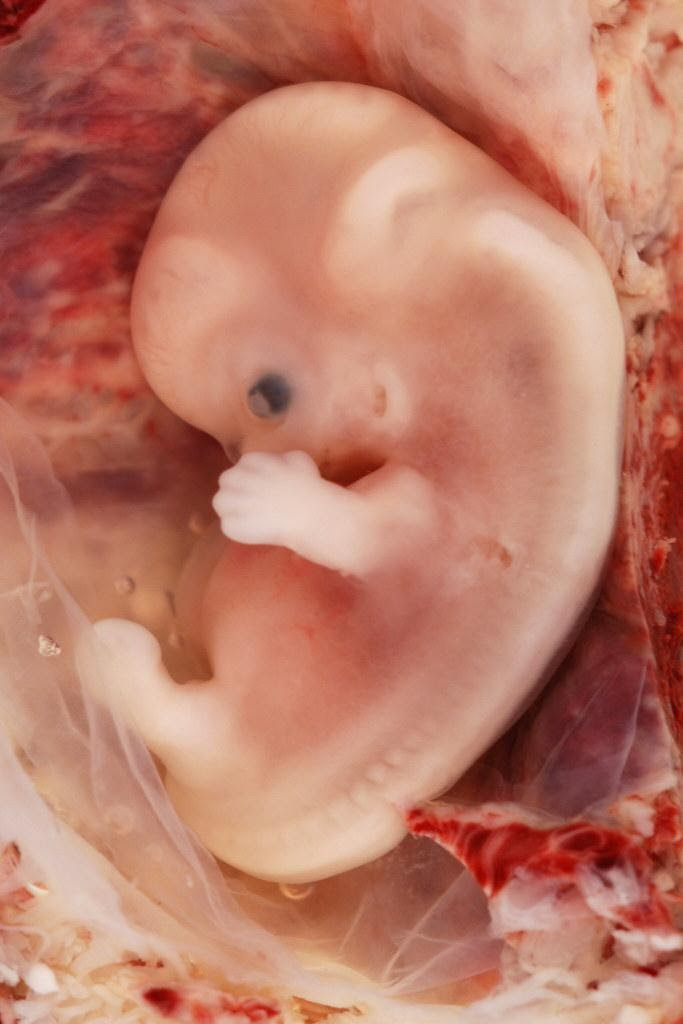
Thus, the correct answer is option B.
Note:
The placenta acts as a maternal-fetal barrier against the transmission of microbes which can cause infections. When this barrier is insufficient, mother-to-child transmission of infectious diseases takes place. A developing fetus is highly susceptible to anomalies during its growth and metabolism, thereby increasing the risk of birth defects.
Complete answer:
In human beings, a single matured egg is being released into the oviduct by one of the ovaries every month. Uterus is the part where the development of the baby occurs.
A zygote is a eukaryotic cell which is formed when an egg cell is fertilized by a sperm cell. The zygote is the earliest developmental stage. Hence, all the body parts cannot be identified in this stage.
A foetus is the unborn offspring that later develops from an embryo. Fetal development takes place from the ninth week after fertilisation and then goes on until birth. A fetus is characterized by the presence of all the major body organs, but they will not be fully developed and functional.
An embryo is considered to be the early stage of development of a multicellular organism. Embryonic development starts just after fertilization and continues through the formation of body structures, like tissues and organs. Each embryo starts developing as a zygote, which is a single cell resulting from the fusion of gametes.
An infant means a very young offspring of human beings. The term is also used to refer to juveniles of other organisms. An infant is only hours, days, or even up to one month old. A newborn or neonate refers to an infant in the first twenty-eight days after birth.
Thus, the correct answer is option B.
Note:
The placenta acts as a maternal-fetal barrier against the transmission of microbes which can cause infections. When this barrier is insufficient, mother-to-child transmission of infectious diseases takes place. A developing fetus is highly susceptible to anomalies during its growth and metabolism, thereby increasing the risk of birth defects.
Recently Updated Pages
Explain the structure of megasporangium class 12 biology CBSE

Why is chloroform kept in dark coloured bottles class 12 chemistry CBSE
Derive the balancing condition of a Wheatstone bri class 12 physics CBSE
Draw VI characteristics of a pn junction diode Explain class 12 physics CBSE
Is it possible to carry pride in ones language too class 12 english CBSE
In a population at Hardy Weinberg equilibrium the allele class 12 biology CBSE
Trending doubts
Draw a labelled sketch of the human eye class 12 physics CBSE
Which are the Top 10 Largest Countries of the World?
Draw ray diagrams each showing i myopic eye and ii class 12 physics CBSE
Which is the correct genotypic ratio of mendel dihybrid class 12 biology CBSE
Differentiate between homogeneous and heterogeneous class 12 chemistry CBSE
Which animal never drinks water in its entire life class 12 biology CBSE