




The shoulder and forelimb are connected to the heart by
A. Dorsal aorta
B. Subclavian artery
C. Esophageal artery
D. None of the above
Answer
 Verified
665.7k+ views
Hint: These are a pair of huge arteries within the thorax that provide blood to the thorax itself, head, neck, shoulder, and arms. Depending on the side of the body, it can have two origins: the aorta on the left, and the brachiocephalic trunk on the right side.
Complete answer: On the left side of the body, the subclavian artery originates directly from the arch of the aorta while towards the right side of the body, the subclavian artery arises from the brachiocephalic artery.
This brachiocephalic artery is further divided into two parts i.e. the subclavian and the carotid artery.
The subclavian arteries are paired arteries that are responsible to supply blood to the posterior cerebrum, the cerebellum of the hindbrain, posterior neck, both the right and left upper limbs, and also to the superior and anterior chest wall; they are asymmetrically arranged to aid in circulation. They receive blood from the aorta.
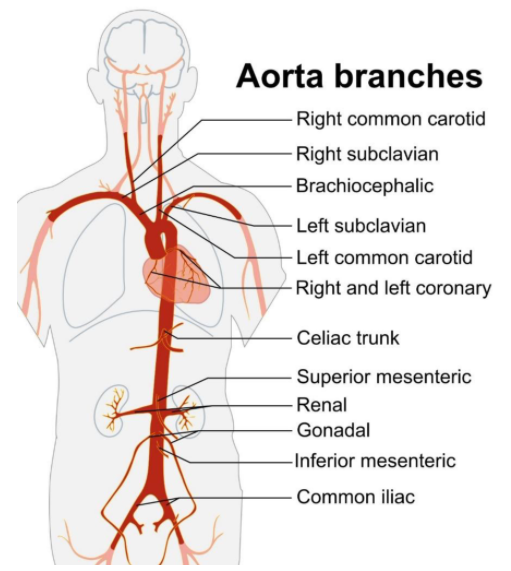
So, the correct answer is option B. Subclavian artery.
Note: In case the subclavian arteries are blocked due to some accident or due to other reasons, then the person may experience arm pain or muscle fatigue (due to the lack of oxygen availability) when using the arms above their head or doing any activity that would require more oxygen-rich blood flow to the arms compared to normal activities. Other symptoms faced may be dizziness due to arm activity.
Complete answer: On the left side of the body, the subclavian artery originates directly from the arch of the aorta while towards the right side of the body, the subclavian artery arises from the brachiocephalic artery.
This brachiocephalic artery is further divided into two parts i.e. the subclavian and the carotid artery.
The subclavian arteries are paired arteries that are responsible to supply blood to the posterior cerebrum, the cerebellum of the hindbrain, posterior neck, both the right and left upper limbs, and also to the superior and anterior chest wall; they are asymmetrically arranged to aid in circulation. They receive blood from the aorta.
So, the correct answer is option B. Subclavian artery.
Note: In case the subclavian arteries are blocked due to some accident or due to other reasons, then the person may experience arm pain or muscle fatigue (due to the lack of oxygen availability) when using the arms above their head or doing any activity that would require more oxygen-rich blood flow to the arms compared to normal activities. Other symptoms faced may be dizziness due to arm activity.
Recently Updated Pages
Master Class 10 Computer Science: Engaging Questions & Answers for Success

Differentiate between voluntary action and reflex class 10 biology CBSE
Fill in the blanks with abstract nouns of the words class 10 english CBSE
How many threedigit numbers are there class 10 maths CBSE
What is a reflex arc class 10 biology CBSE
Construct a square whose diagonal is 6cm Measure the class 10 maths CBSE
Trending doubts
The uses of bleaching powder are A It is used bleaching class 10 chemistry CBSE
GST is a direct or indirect tax?
The sum of all even numbers between 21 and 51 is a class 10 maths CBSE
Write any two uses of Plaster of Paris class 10 chemistry CBSE
What would happen if platelets were absent in the blood class 10 biology CBSE
Compare the advantages and disadvantages of multipurpose class 10 social science CBSE