




The pigment melanin which protects the body from harmful ultraviolet radiation is produced by
A. Dead epidermis
B. Living epidermis
C. Dermis
D. Subcutaneous layer
E. Epithelial
Answer
 Verified
646.2k+ views
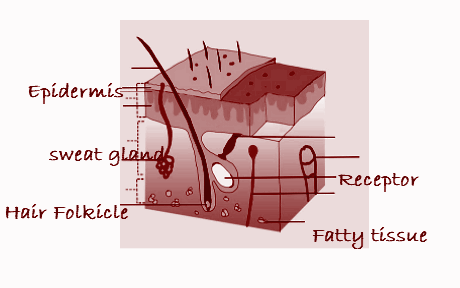
Hint: Melanocytes are the cells present deep within the epidermis which produces a pigment called melanin that is responsible for skin color. Exposure of skin to the sun stimulates melanocytes to produce more melanin to protect the skin from the damaging effects of ultraviolet radiation.
Complete answer:
Melanocytes are specialized cells that are capable of producing melanin located in the stratum basale of the skin's epidermis. Melanocytes are present within the middle layer of the eye, the inner ear, bones, and heart. Melanin is a dark pigment that is responsible for skin color. Melanin is first synthesized and contained in special organelles called melanosomes.
When exposed to sunlight these organelles release the melanin to nearby keratinocytes to induce pigmentation. Melanin serves as protection against UV radiation. The process of melanin production is called melanogenesis. This melanogenesis leads to a long-lasting pigmentation, which is in contrast to the pigmentation that originates from the oxidation of already-existing melanin.
The primary role of melanin is to protect the hypodermis from UV damage. This is why the melanocytes are found on the base of the epidermis. As melanin production dictates the skin color the melanogenesis in light-skinned people is much lower compared to dark-skinned people.
Therefore, the correct option is B.
Note: The dead layer of the epidermis refers to the topmost layer of dead keratinocytes which form a very thin layer of the granular cell layer. Melanin is not produced here. Beneath the epidermis is the dermis where ducts of sweat glands, blood vessels, and sebaceous glands are present. This is beneath the epidermis and no melanocytes are present in this layer. The subcutaneous layer is the hypodermis where the glands, muscles, and adipose tissue are present.
Complete answer:
Melanocytes are specialized cells that are capable of producing melanin located in the stratum basale of the skin's epidermis. Melanocytes are present within the middle layer of the eye, the inner ear, bones, and heart. Melanin is a dark pigment that is responsible for skin color. Melanin is first synthesized and contained in special organelles called melanosomes.
When exposed to sunlight these organelles release the melanin to nearby keratinocytes to induce pigmentation. Melanin serves as protection against UV radiation. The process of melanin production is called melanogenesis. This melanogenesis leads to a long-lasting pigmentation, which is in contrast to the pigmentation that originates from the oxidation of already-existing melanin.
The primary role of melanin is to protect the hypodermis from UV damage. This is why the melanocytes are found on the base of the epidermis. As melanin production dictates the skin color the melanogenesis in light-skinned people is much lower compared to dark-skinned people.
Therefore, the correct option is B.
Note: The dead layer of the epidermis refers to the topmost layer of dead keratinocytes which form a very thin layer of the granular cell layer. Melanin is not produced here. Beneath the epidermis is the dermis where ducts of sweat glands, blood vessels, and sebaceous glands are present. This is beneath the epidermis and no melanocytes are present in this layer. The subcutaneous layer is the hypodermis where the glands, muscles, and adipose tissue are present.
Recently Updated Pages
Which will be the least stable resonating structure class 11 chemistry CBSE

How many 5 digit telephone numbers can be construc-class-11-maths-CBSE
How do you find the angle of the resultant vector class 11 physics CBSE
Draw labelled diagram of the following i Gram seed class 11 biology CBSE
1 Quintal is equal to a 110 kg b 10 kg c 100kg d 1000 class 11 physics CBSE
What is the need and importance of classification class 11 biology CBSE
Trending doubts
Find the value of the expression given below sin 30circ class 11 maths CBSE
One Metric ton is equal to kg A 10000 B 1000 C 100 class 11 physics CBSE
10 examples of friction in our daily life
Draw a diagram of a plant cell and label at least eight class 11 biology CBSE
Difference between physical and chemical change class 11 chemistry CBSE
Proton was discovered by A Thomson B Rutherford C Chadwick class 11 chemistry CBSE