




The pericardium and pericardial fluid help in
A. Protecting the heart from friction, shocks and keeps it moist
B. Pumping of the blood
C. Receiving the blood from various parts of the body
D. None of the above
Answer
 Verified
603.6k+ views
Hint: The pericardium is a two-layered sac-like protective structure surrounding the heart from all sides. Like most of the internal organs, the heart is also surrounded by a protective layer known as the pericardium.
Complete answer:It is made up of 2 distinct layers and plays a crucial role in protecting and lubricating the heart and also helps to keep it in place within the chest cavity. Other important functions include: It prevents the extra stretching & overflow of blood to the heart, lubricates the heart thus preventing friction from the frequent heart beats, and also protects the spread of any disease to the heart from neighboring organs.
The 2 layers are namely, Fibrous pericardium (the outer layer) and Serous pericardium (the inner layer). The outer layer is made from a thick connective tissue and remains attached to the diaphragm. The serous pericardium is further divided into two more layers: the visceral and the parietal layers. It is the serous pericardium that actually helps in lubricating the heart. In between these two layers lies the fluid-filled pericardial cavity. The serous membrane secretes this fluid and this acts as a shock absorber as well as prevents epicardial friction.
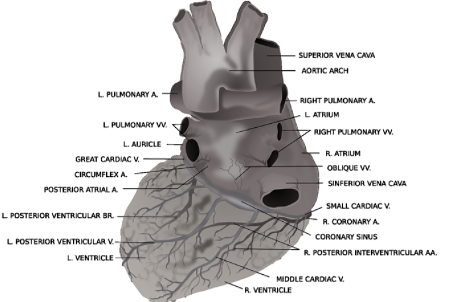
So, the correct answer is A. Protecting the heart from friction, shocks and keeps it moist.
Note: The decrease in pericardial fluid amount can lead to a serious condition called pericardial effusion, where the heart becomes too compressed and is unable to function normally.
Complete answer:It is made up of 2 distinct layers and plays a crucial role in protecting and lubricating the heart and also helps to keep it in place within the chest cavity. Other important functions include: It prevents the extra stretching & overflow of blood to the heart, lubricates the heart thus preventing friction from the frequent heart beats, and also protects the spread of any disease to the heart from neighboring organs.
The 2 layers are namely, Fibrous pericardium (the outer layer) and Serous pericardium (the inner layer). The outer layer is made from a thick connective tissue and remains attached to the diaphragm. The serous pericardium is further divided into two more layers: the visceral and the parietal layers. It is the serous pericardium that actually helps in lubricating the heart. In between these two layers lies the fluid-filled pericardial cavity. The serous membrane secretes this fluid and this acts as a shock absorber as well as prevents epicardial friction.
So, the correct answer is A. Protecting the heart from friction, shocks and keeps it moist.
Note: The decrease in pericardial fluid amount can lead to a serious condition called pericardial effusion, where the heart becomes too compressed and is unable to function normally.
Recently Updated Pages
Master Class 11 Social Science: Engaging Questions & Answers for Success

Master Class 11 English: Engaging Questions & Answers for Success
Master Class 11 Maths: Engaging Questions & Answers for Success
Master Class 11 Chemistry: Engaging Questions & Answers for Success
Master Class 11 Biology: Engaging Questions & Answers for Success
Master Class 11 Physics: Engaging Questions & Answers for Success
Trending doubts
Differentiate between an exothermic and an endothermic class 11 chemistry CBSE
One Metric ton is equal to kg A 10000 B 1000 C 100 class 11 physics CBSE
Difference Between Prokaryotic Cells and Eukaryotic Cells
There are 720 permutations of the digits 1 2 3 4 5 class 11 maths CBSE
Draw a diagram of a plant cell and label at least eight class 11 biology CBSE
Which chemical is known as king of chemicals A H 2 class 11 chemistry CBSE