




The number of occipital condyles in man is/are:
A. One
B. Two
C. Three
D. Four
Answer
 Verified
608.1k+ views
Hint: Occipital condyles are the protrusions on the occipital bone of the skull. A joint is formed between the first cervical vertebra and the protrusion on the occipital bone of the skull which helps the head to move relative to the neck is an occipital condyle.
Complete answer:
1. They are the bony protrusions on the occipital bone of the skull. It forms a joint (atlanto occipital joint) with the first cervical vertebra, enabling the head to move relative to the neck is an occipital condyle.
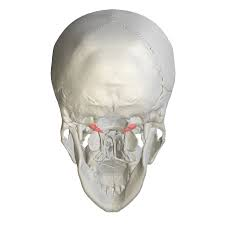
2. Humans have two occipital condyles. They are large rounded kidney-shaped projections of the occipital bone, that are located contralateral to the foramen magnum (opening for the spinal cord) and that articulates with the superior facets of the atlas cervical vertebra (1st cervical vertebra).
Additional Information:
1. Occipital condyle syndrome (OCS) is a rare syndrome characterized by severe, unilateral (on one side), occipital headache and ipsilateral (same side as that of the anomaly), and 12th nerve palsy (hypoglossal nerve cause weakness or wasting/ atrophy of the tongue on the affected side).
2. Tumors are the common cause of OCS. Inflammatory lesions causing OCS is rare
OCS is the only clinical manifestation in young people suffering from craniovertebral tuberculosis.
So, the correct answer is “Option A Two”.
Note: Isolated condyle fracture is a type of craniocervical injury. Symptoms of an isolated occipital condyle fracture are similar to those of other craniocervical injuries, including high cervical pain, reduced range of motion, unusual head/ neck posture, prevertebral swelling, and lower cranial nerve (IX, X, XI, XII) deficits, tetraparesis (also known as tetraplegia and quadriplegia, it is the paralysis caused by illness or injury that results in the partial or total loss of use of all four limbs and torso of the body) or abnormal breathing.
Complete answer:
1. They are the bony protrusions on the occipital bone of the skull. It forms a joint (atlanto occipital joint) with the first cervical vertebra, enabling the head to move relative to the neck is an occipital condyle.
2. Humans have two occipital condyles. They are large rounded kidney-shaped projections of the occipital bone, that are located contralateral to the foramen magnum (opening for the spinal cord) and that articulates with the superior facets of the atlas cervical vertebra (1st cervical vertebra).
Additional Information:
1. Occipital condyle syndrome (OCS) is a rare syndrome characterized by severe, unilateral (on one side), occipital headache and ipsilateral (same side as that of the anomaly), and 12th nerve palsy (hypoglossal nerve cause weakness or wasting/ atrophy of the tongue on the affected side).
2. Tumors are the common cause of OCS. Inflammatory lesions causing OCS is rare
OCS is the only clinical manifestation in young people suffering from craniovertebral tuberculosis.
So, the correct answer is “Option A Two”.
Note: Isolated condyle fracture is a type of craniocervical injury. Symptoms of an isolated occipital condyle fracture are similar to those of other craniocervical injuries, including high cervical pain, reduced range of motion, unusual head/ neck posture, prevertebral swelling, and lower cranial nerve (IX, X, XI, XII) deficits, tetraparesis (also known as tetraplegia and quadriplegia, it is the paralysis caused by illness or injury that results in the partial or total loss of use of all four limbs and torso of the body) or abnormal breathing.
Recently Updated Pages
Master Class 11 Social Science: Engaging Questions & Answers for Success

Master Class 11 English: Engaging Questions & Answers for Success
Master Class 11 Maths: Engaging Questions & Answers for Success
Master Class 11 Chemistry: Engaging Questions & Answers for Success
Master Class 11 Biology: Engaging Questions & Answers for Success
Master Class 11 Physics: Engaging Questions & Answers for Success
Trending doubts
Differentiate between an exothermic and an endothermic class 11 chemistry CBSE
One Metric ton is equal to kg A 10000 B 1000 C 100 class 11 physics CBSE
Difference Between Prokaryotic Cells and Eukaryotic Cells
There are 720 permutations of the digits 1 2 3 4 5 class 11 maths CBSE
Draw a diagram of a plant cell and label at least eight class 11 biology CBSE
1 Quintal is equal to a 110 kg b 10 kg c 100kg d 1000 class 11 physics CBSE