



The length, breadth and height of a room are in the ratio 7:5:4. If each of them increases by 1m, the area of the four walls increases by 124m. Find the dimensions of the room.
Answer
 Verified
613.8k+ views
Hint: In this question let us assume a variable for determining the length, breadth, height and substitute these values in the formula of area of four walls. Then again consider the increased dimensions and substitute the increased values of dimensions in the same formula and equate it to increased area.
\[2\times \left( l+b \right)\times h\]
Complete step-by-step answer:
A particular set of values of the variables, which when substituted for the variables in the equation makes the two sides of the equation equal, is called the solution of the equation.
Now, by assuming that x is the common factor for length, breadth and height we get,
Let us assume length as l , breadth as b and height as h.
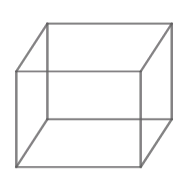
Then area of the four walls is given by:
\[2\times \left( l+b \right)\times h\]
Let us assume the area before increasing the dimensions as A and after increasing as B.
Now, we have
\[\begin{align}
& l=7x \\
& b=5x \\
& h=4x \\
\end{align}\]
\[\begin{align}
& \Rightarrow A=2\times \left( l+b \right)\times h \\
& \Rightarrow A=2\times \left( 7x+5x \right)\times 4x \\
& \Rightarrow A=2\times 12x\times 4x \\
& \Rightarrow A=24x\times 4x \\
& \therefore A=96{{x}^{2}} \\
\end{align}\]
Now, as the length, breadth and height are increased by 1m we get,
\[\begin{align}
& l=7x+1 \\
& b=5x+1 \\
& h=4x+1 \\
\end{align}\]
\[\begin{align}
& \Rightarrow B=2\times \left( l+b \right)\times h \\
& \Rightarrow B=2\times \left( 7x+1+5x+1 \right)\times \left( 4x+1 \right) \\
\end{align}\]
\[\begin{align}
& \Rightarrow B=2\times \left( 12x+2 \right)\times \left( 4x+1 \right) \\
& \Rightarrow B=4\times \left( 6x+1 \right)\times \left( 4x+1 \right) \\
\end{align}\]
\[\begin{align}
& \Rightarrow B=4\times \left( 24{{x}^{2}}+10x+1 \right) \\
& \therefore B=96{{x}^{2}}+40x+4 \\
\end{align}\]
\[\Rightarrow B=A+124\]
\[\begin{align}
& \Rightarrow 96{{x}^{2}}+40x+4=96{{x}^{2}}+124 \\
& \Rightarrow 40x+4=124 \\
& \Rightarrow 40x=124-4 \\
& \Rightarrow 40x=120 \\
& \therefore x=3 \\
\end{align}\]
\[\begin{align}
& \Rightarrow l=7x \\
& \Rightarrow l=7\times 3 \\
& \therefore l=21m \\
\end{align}\]
\[\begin{align}
& \Rightarrow b=5x \\
& \Rightarrow b=5\times 3 \\
& \therefore b=15m \\
\end{align}\]
\[\begin{align}
& \Rightarrow h=4x \\
& \Rightarrow h=4\times 3 \\
& \therefore h=12m \\
\end{align}\]
Hence, the dimensions of the room are 21, 15, 12.
Note: While assuming the variable we consider it for length, breadth and height because we were given the ratio of the dimensions which means that they have a common factor. So, we consider the variable x as a common factor which makes the dimensions of the room in proportion.
It is important to note that while substituting the dimensions in the area of four walls formula we are supposed to substitute the values of the length, breadth and height in the respective dimensions. So, when we simplify it there will be no errors.
\[2\times \left( l+b \right)\times h\]
\[2\times \left( l+b \right)\times h\]
Complete step-by-step answer:
A particular set of values of the variables, which when substituted for the variables in the equation makes the two sides of the equation equal, is called the solution of the equation.
Now, by assuming that x is the common factor for length, breadth and height we get,
Let us assume length as l , breadth as b and height as h.
Then area of the four walls is given by:
\[2\times \left( l+b \right)\times h\]
Let us assume the area before increasing the dimensions as A and after increasing as B.
Now, we have
\[\begin{align}
& l=7x \\
& b=5x \\
& h=4x \\
\end{align}\]
\[\begin{align}
& \Rightarrow A=2\times \left( l+b \right)\times h \\
& \Rightarrow A=2\times \left( 7x+5x \right)\times 4x \\
& \Rightarrow A=2\times 12x\times 4x \\
& \Rightarrow A=24x\times 4x \\
& \therefore A=96{{x}^{2}} \\
\end{align}\]
Now, as the length, breadth and height are increased by 1m we get,
\[\begin{align}
& l=7x+1 \\
& b=5x+1 \\
& h=4x+1 \\
\end{align}\]
\[\begin{align}
& \Rightarrow B=2\times \left( l+b \right)\times h \\
& \Rightarrow B=2\times \left( 7x+1+5x+1 \right)\times \left( 4x+1 \right) \\
\end{align}\]
\[\begin{align}
& \Rightarrow B=2\times \left( 12x+2 \right)\times \left( 4x+1 \right) \\
& \Rightarrow B=4\times \left( 6x+1 \right)\times \left( 4x+1 \right) \\
\end{align}\]
\[\begin{align}
& \Rightarrow B=4\times \left( 24{{x}^{2}}+10x+1 \right) \\
& \therefore B=96{{x}^{2}}+40x+4 \\
\end{align}\]
\[\Rightarrow B=A+124\]
\[\begin{align}
& \Rightarrow 96{{x}^{2}}+40x+4=96{{x}^{2}}+124 \\
& \Rightarrow 40x+4=124 \\
& \Rightarrow 40x=124-4 \\
& \Rightarrow 40x=120 \\
& \therefore x=3 \\
\end{align}\]
\[\begin{align}
& \Rightarrow l=7x \\
& \Rightarrow l=7\times 3 \\
& \therefore l=21m \\
\end{align}\]
\[\begin{align}
& \Rightarrow b=5x \\
& \Rightarrow b=5\times 3 \\
& \therefore b=15m \\
\end{align}\]
\[\begin{align}
& \Rightarrow h=4x \\
& \Rightarrow h=4\times 3 \\
& \therefore h=12m \\
\end{align}\]
Hence, the dimensions of the room are 21, 15, 12.
Note: While assuming the variable we consider it for length, breadth and height because we were given the ratio of the dimensions which means that they have a common factor. So, we consider the variable x as a common factor which makes the dimensions of the room in proportion.
It is important to note that while substituting the dimensions in the area of four walls formula we are supposed to substitute the values of the length, breadth and height in the respective dimensions. So, when we simplify it there will be no errors.
\[2\times \left( l+b \right)\times h\]
Recently Updated Pages
Master Class 9 General Knowledge: Engaging Questions & Answers for Success

Master Class 9 Social Science: Engaging Questions & Answers for Success
Master Class 9 English: Engaging Questions & Answers for Success
Master Class 9 Maths: Engaging Questions & Answers for Success
Master Class 9 Science: Engaging Questions & Answers for Success
Class 9 Question and Answer - Your Ultimate Solutions Guide
Trending doubts
Who is eligible for RTE class 9 social science CBSE
What is the Full Form of ISI and RAW
How do you find the valency of chlorine sulphur and class 9 chemistry CBSE
What are the major achievements of the UNO class 9 social science CBSE
Explain the importance of pH in everyday life class 9 chemistry CBSE
Differentiate between parenchyma collenchyma and sclerenchyma class 9 biology CBSE