




The hardest substance of the body is
(A)Bone
(B)Enamel
(C)Cartilage
(D)Tendon
Answer
 Verified
619.2k+ views
Hint: The hardest substance of the body is present in our teeth. It is made up of calcium minerals and is white in color. This substance has a fIrm intercellular matrix in it.
Complete answer:
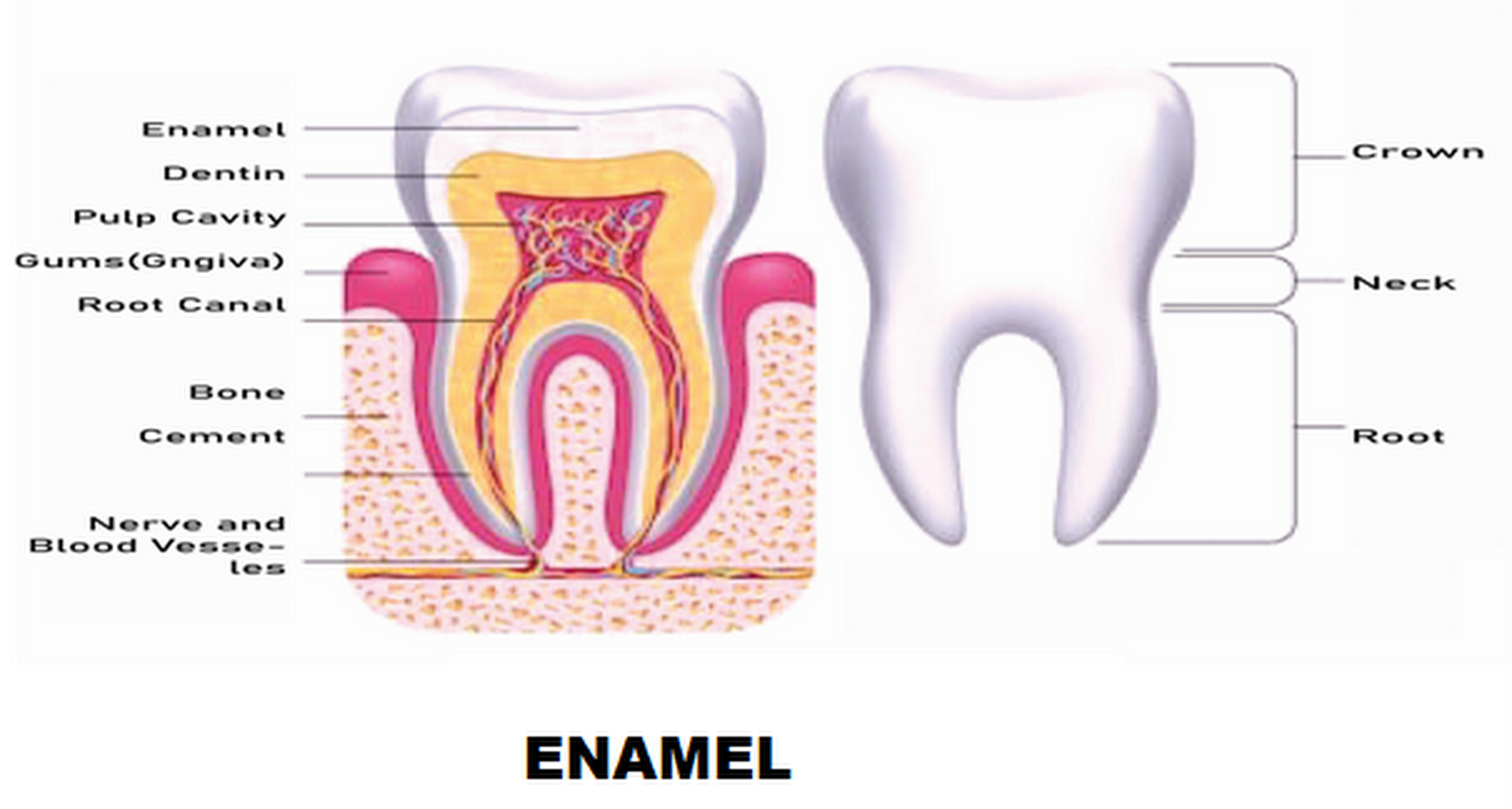
The hardest substance of the body is Enamel. It is the outer covering of the tooth and Enamel is the visible part of the teeth. Its function is to protect the tooth’s crown. It plays a major role and acts as a defense mechanism towards tooth decay.
Additional Information: Enamel is hardest, with white to off-white, and is made up of a highly mineralized substance that protects the tooth but may become prone to degradation, especially by acids that are present in the food and drink. Calcium hardens the tooth enamel. In some very rare cases, it is seen that enamel fails to form, leaving the underlying dentin exposed on the surface. As you know that the enamel is the hardest substance present in the human body, it contains the highest percentage of minerals approx 96%, with water and organic material composing the rest. The primary mineral present in enamel is the hydroxyapatite, which is crystalline calcium phosphate. Enamel is formed on the outer layer of the tooth while the tooth develops within the jaw bone before it erupts into the mouth. Once the enamel is fully formed, the enamel does not contain blood vessels or nerves and is not made of cells. Enamel rod is the basic unit of enamel.
So, the correct answer is ‘Enamel’.
Note: After enamel, the hardest substance in the human body is the bone. Bone is made up of calcium phosphate and collagen. Enamel is the second hardest substance in the whole world after the diamond. The light can pass through enamel as it is translucent.
Complete answer:
The hardest substance of the body is Enamel. It is the outer covering of the tooth and Enamel is the visible part of the teeth. Its function is to protect the tooth’s crown. It plays a major role and acts as a defense mechanism towards tooth decay.
Additional Information: Enamel is hardest, with white to off-white, and is made up of a highly mineralized substance that protects the tooth but may become prone to degradation, especially by acids that are present in the food and drink. Calcium hardens the tooth enamel. In some very rare cases, it is seen that enamel fails to form, leaving the underlying dentin exposed on the surface. As you know that the enamel is the hardest substance present in the human body, it contains the highest percentage of minerals approx 96%, with water and organic material composing the rest. The primary mineral present in enamel is the hydroxyapatite, which is crystalline calcium phosphate. Enamel is formed on the outer layer of the tooth while the tooth develops within the jaw bone before it erupts into the mouth. Once the enamel is fully formed, the enamel does not contain blood vessels or nerves and is not made of cells. Enamel rod is the basic unit of enamel.
So, the correct answer is ‘Enamel’.
Note: After enamel, the hardest substance in the human body is the bone. Bone is made up of calcium phosphate and collagen. Enamel is the second hardest substance in the whole world after the diamond. The light can pass through enamel as it is translucent.
Recently Updated Pages
Master Class 11 English: Engaging Questions & Answers for Success

Master Class 11 Social Science: Engaging Questions & Answers for Success
Master Class 11 Maths: Engaging Questions & Answers for Success
Master Class 11 Biology: Engaging Questions & Answers for Success
Master Class 11 Physics: Engaging Questions & Answers for Success
Master Class 11 Chemistry: Engaging Questions & Answers for Success
Trending doubts
One Metric ton is equal to kg A 10000 B 1000 C 100 class 11 physics CBSE
Difference Between Prokaryotic Cells and Eukaryotic Cells
Find the value of the expression given below sin 30circ class 11 maths CBSE
Difference between physical and chemical change class 11 chemistry CBSE
Two of the body parts which do not appear in MRI are class 11 biology CBSE
Draw a diagram of a plant cell and label at least eight class 11 biology CBSE