




The chloroplasts of algae usually lack
A. Grana
B. Pigments
C. Quantasomes
D. Lamellae
Answer
 Verified
603k+ views
Hint: It is from the region of higher plants and it is look like a stack like structure of thylakoid disc and it is act to trap a energy from the sunlight, and in this involves process of photosynthesis, chloroplast they are mostly found in green plants and also in algae. It looks like a stack of pancakes.
Complete answer:
Before moving on to the answer, we should have some knowledge about chloroplast. Chloroplasts are mostly found in green plants and also in algae. They are mostly organelles that produce photosynthesis, in which the pigment chlorophyll captures the energy from the sunlight. Then again it converts and stores it in the storage molecules ATP and NADPH while the freezing oxygen from water in plant and algae cells.
The chloroplasts usually lack Grana because they are like green coloured plastids that are mostly present in plants and also in other plastids named algae. Then the Green color of chloroplast is because of the presence of the chlorophyll pigments of a, b that helps in photosynthesis. They look like a double membrane cell organelles and also have inter membrane space and have a round shaped structure called Thylakoids.
Then the Group of Thylakoids began to form the stacks of Grana. The theory called endosymbiosis theory the algae, the red algae and then blue green algae have no Grana.
So, the thylakoids look unstacked and single. Therefore the algae of the chloroplast usually lack Grana.
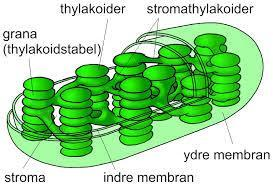
option A: Grana This the correct answer because grana is absent in the chloroplast,So the chloroplast of algae usually lacks grana.
For option B: pigments This is the wrong answer because In chloroplast algae pigments are colors that give pigments to chloroplasts.
For option C: Quantasomes This is wrong answer because Quantasomes are particles that are found in thylakoids and the photosynthesis of algae
For option D: Lamellae This is the wrong answer because lamellae in algae has thylakoids, sac, stacks of coin like structure are connected with stroma and lamellae.
So, the correct answer is “Option A”.
Note:
In this question grana is likely present in chloroplast of algae that means stacks of thylakoids are called as grana they seem to be a tube like structure. Most of this granum are formed when it is approximately to form a cylindrical stack, and they are separated from each other by 3 to 4 nm, 10 to 20 thylakoids, 200 to 600 nm in height, 300 to 600 nm in diameter.
Complete answer:
Before moving on to the answer, we should have some knowledge about chloroplast. Chloroplasts are mostly found in green plants and also in algae. They are mostly organelles that produce photosynthesis, in which the pigment chlorophyll captures the energy from the sunlight. Then again it converts and stores it in the storage molecules ATP and NADPH while the freezing oxygen from water in plant and algae cells.
The chloroplasts usually lack Grana because they are like green coloured plastids that are mostly present in plants and also in other plastids named algae. Then the Green color of chloroplast is because of the presence of the chlorophyll pigments of a, b that helps in photosynthesis. They look like a double membrane cell organelles and also have inter membrane space and have a round shaped structure called Thylakoids.
Then the Group of Thylakoids began to form the stacks of Grana. The theory called endosymbiosis theory the algae, the red algae and then blue green algae have no Grana.
So, the thylakoids look unstacked and single. Therefore the algae of the chloroplast usually lack Grana.
option A: Grana This the correct answer because grana is absent in the chloroplast,So the chloroplast of algae usually lacks grana.
For option B: pigments This is the wrong answer because In chloroplast algae pigments are colors that give pigments to chloroplasts.
For option C: Quantasomes This is wrong answer because Quantasomes are particles that are found in thylakoids and the photosynthesis of algae
For option D: Lamellae This is the wrong answer because lamellae in algae has thylakoids, sac, stacks of coin like structure are connected with stroma and lamellae.
So, the correct answer is “Option A”.
Note:
In this question grana is likely present in chloroplast of algae that means stacks of thylakoids are called as grana they seem to be a tube like structure. Most of this granum are formed when it is approximately to form a cylindrical stack, and they are separated from each other by 3 to 4 nm, 10 to 20 thylakoids, 200 to 600 nm in height, 300 to 600 nm in diameter.
Recently Updated Pages
Master Class 12 Economics: Engaging Questions & Answers for Success

Master Class 12 English: Engaging Questions & Answers for Success
Master Class 12 Social Science: Engaging Questions & Answers for Success
Master Class 12 Maths: Engaging Questions & Answers for Success
Master Class 12 Physics: Engaging Questions & Answers for Success
Master Class 11 Social Science: Engaging Questions & Answers for Success
Trending doubts
One Metric ton is equal to kg A 10000 B 1000 C 100 class 11 physics CBSE
Difference Between Prokaryotic Cells and Eukaryotic Cells
Two of the body parts which do not appear in MRI are class 11 biology CBSE
1 ton equals to A 100 kg B 1000 kg C 10 kg D 10000 class 11 physics CBSE
Draw a diagram of nephron and explain its structur class 11 biology CBSE
10 examples of friction in our daily life