



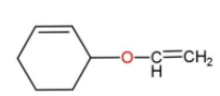
the best method for synthesis of given ether by Williamson’s ether synthesis is:
A.
B.
C.
D.
Answer
 Verified
598.5k+ views
Hint: Williamson ether synthesis is a reaction which is used to prepare ethers. It uses an organohalide compound, which
is a compound that contains a halogen along with a carbon alkyl chain, which reacts with an alkoxide to yield ethers.
Complete answer:
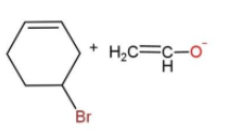
Williamson synthesis for ethers involve a reaction sequence, where an alkoxide reacts with a alkyl halide through the mechanism of nucleophilic substitution reaction, which is a ${{S}_{N}}^{2}$ type of reaction. The alkoxide involved is usually a sodium alkoxide which is readily reduced to remove the sodium metal ion, the remaining is the alkoxide ion which is used in the reaction. The alkoxide ion replaces the nucleophile, bromine ion and forms an ether.
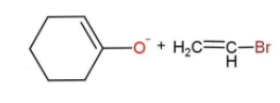
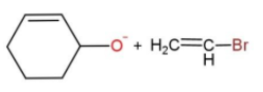
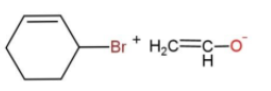
In the given reaction, the mechanism followed is ${{S}_{N}}^{2}$which is followed by inversion of configuration where the attacking nucleophile gets attached from the back side. So, reaction c favors this condition, as the removal of Br from the bulky group is easier also the alkoxide ion attacks from the opposite side to yield the product. While in other reactions, the alkoxide is the carbon ring, which does not get attached to the carbon chain due to its bulkiness, so the alkoxide attaching is favored.
The reaction is as follows:

Hence, option c is the correct way for ether synthesis.
Note:
The alkoxide is formed from the reaction of an alcohol with a metal ion. The metal ion is sodium preferably which is present as a base NaOH. The reaction uses the acidic nature of alcohols, and removes the hydrogen ion to form an alkoxide. This is the first step of Williamson ether synthesis.
is a compound that contains a halogen along with a carbon alkyl chain, which reacts with an alkoxide to yield ethers.
Complete answer:
Williamson synthesis for ethers involve a reaction sequence, where an alkoxide reacts with a alkyl halide through the mechanism of nucleophilic substitution reaction, which is a ${{S}_{N}}^{2}$ type of reaction. The alkoxide involved is usually a sodium alkoxide which is readily reduced to remove the sodium metal ion, the remaining is the alkoxide ion which is used in the reaction. The alkoxide ion replaces the nucleophile, bromine ion and forms an ether.
In the given reaction, the mechanism followed is ${{S}_{N}}^{2}$which is followed by inversion of configuration where the attacking nucleophile gets attached from the back side. So, reaction c favors this condition, as the removal of Br from the bulky group is easier also the alkoxide ion attacks from the opposite side to yield the product. While in other reactions, the alkoxide is the carbon ring, which does not get attached to the carbon chain due to its bulkiness, so the alkoxide attaching is favored.
The reaction is as follows:
Hence, option c is the correct way for ether synthesis.
Note:
The alkoxide is formed from the reaction of an alcohol with a metal ion. The metal ion is sodium preferably which is present as a base NaOH. The reaction uses the acidic nature of alcohols, and removes the hydrogen ion to form an alkoxide. This is the first step of Williamson ether synthesis.
Recently Updated Pages
Which of the following graphs shows the variation of class 12 physics CBSE

Draw a labelled diagram of the human male reproductive class 12 biology CBSE
Describe the experiment to compare the emf of two cells class 12 physics CBSE
What is standard hydrogen electrode
What is conventional current and electric current class 12 physics CBSE
2Bromopentane is treated with an alcoholic KOH solution class 12 chemistry CBSE
Trending doubts
Draw a labelled sketch of the human eye class 12 physics CBSE
Which are the Top 10 Largest Countries of the World?
Differentiate between homogeneous and heterogeneous class 12 chemistry CBSE
Draw ray diagrams each showing i myopic eye and ii class 12 physics CBSE
Which is the correct genotypic ratio of mendel dihybrid class 12 biology CBSE
What is the Full Form of PVC, PET, HDPE, LDPE, PP and PS ?