




Tallest angiosperm is
(a)Eucalyptus
(b)Redwood tree
(c)Oaktree
(d)Pinus
Answer
 Verified
662.7k+ views
Hint: The needles grow short and narrow, which look like the needles of cedar or juniper. These leaves make their introduction growing out of the bark of the upper branches. The scale-like upper leaves are compatible with the warmer, drier conditions found within the forest canopy.
Complete answer:
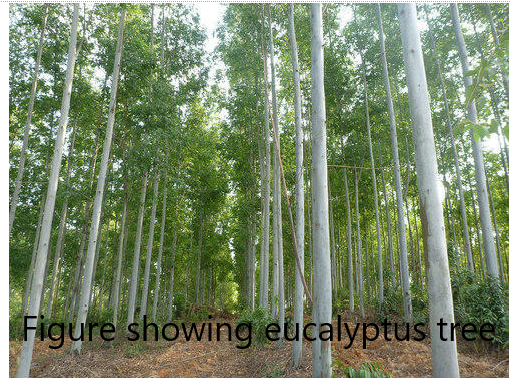
Angiosperms are a group of flowering plants which have various salient features. The tallest angiosperm is Eucalyptus(Eucalyptus regnans).
Additional Information:
Eucalyptus tree-The tallest angiosperm:
-It is the tallest blooming plant and perhaps the tallest tree on the planet.
-The vast majority of these trees are quick cultivators, arriving at statutes of around 30 to 180 feet or more, contingent upon the assortment, with roughly 60 per cent of their development.
-When devoured in the limited quantities found in nourishments.
-Indications of eucalyptus harming may incorporate stomach agony and consumption, discombobulation, muscle shortcoming, little eye students, sentiments of suffocation, and some others.
Salient features of Angiosperms are;
-The embryo sac (Ovule) remains enclosed within the ovary.
- plant part helps in fertilization, so water isn't essential for fertilization.
- Double fertilization is present. The endosperm is triploid.
-Flowers are produced rather than a cone.
-They are of two types namely monocotyledons and dicotyledons (named based on the number of cotyledons present in them).
-The endosperm is the nutrient-rich which feeds the embryo.
-Seed, flower and fruit formation occurs.
So, the correct answer is,” Eucalyptus”.
Note:
Tallest Angiosperm: Eucalyptus
Smallest Angiosperm: Wolffia(duckweed/watermeal)
-Angiosperms undergo double fertilization in which one of the sperm fuses with the egg cell to form a zygote and the other sperm fuses with the polar nuclei to form the triploid endosperm which is rich in nutrients.
-At the end of fertilization or the post-fertilization events involves the formation of seeds and fruits from ovules and ovaries respectively.
Complete answer:
Angiosperms are a group of flowering plants which have various salient features. The tallest angiosperm is Eucalyptus(Eucalyptus regnans).
Additional Information:
Eucalyptus tree-The tallest angiosperm:
-It is the tallest blooming plant and perhaps the tallest tree on the planet.
-The vast majority of these trees are quick cultivators, arriving at statutes of around 30 to 180 feet or more, contingent upon the assortment, with roughly 60 per cent of their development.
-When devoured in the limited quantities found in nourishments.
-Indications of eucalyptus harming may incorporate stomach agony and consumption, discombobulation, muscle shortcoming, little eye students, sentiments of suffocation, and some others.
Salient features of Angiosperms are;
-The embryo sac (Ovule) remains enclosed within the ovary.
- plant part helps in fertilization, so water isn't essential for fertilization.
- Double fertilization is present. The endosperm is triploid.
-Flowers are produced rather than a cone.
-They are of two types namely monocotyledons and dicotyledons (named based on the number of cotyledons present in them).
-The endosperm is the nutrient-rich which feeds the embryo.
-Seed, flower and fruit formation occurs.
So, the correct answer is,” Eucalyptus”.
Note:
Tallest Angiosperm: Eucalyptus
Smallest Angiosperm: Wolffia(duckweed/watermeal)
-Angiosperms undergo double fertilization in which one of the sperm fuses with the egg cell to form a zygote and the other sperm fuses with the polar nuclei to form the triploid endosperm which is rich in nutrients.
-At the end of fertilization or the post-fertilization events involves the formation of seeds and fruits from ovules and ovaries respectively.
Recently Updated Pages
If x a + bt + ct2 where x is in meters and t is in class 11 physics CBSE

A car covers the first half distance between two places class 11 physics CBSE
The resultant of two vectors overrightarrow P and overrightarrow class 11 physics CBSE
Find the value of cos 135 class 11 maths CBSE
A mass M is held in place by an applied force F and class 11 physics CBSE
A solution of glucose in water is labelled as 10 dfracwv class 11 chemistry CBSE
Trending doubts
One Metric ton is equal to kg A 10000 B 1000 C 100 class 11 physics CBSE
Find the value of the expression given below sin 30circ class 11 maths CBSE
What do you mean by retardation What is its SI uni class 11 physics CBSE
Draw a diagram of nephron and explain its structur class 11 biology CBSE
10 examples of friction in our daily life
Difference between physical and chemical change class 11 chemistry CBSE