




Systemic heart in higher vertebrates is
A. The left atrium and left ventricle in higher mammals
B. The left atrium and right ventricle
C. The right atrium and right ventricle receives venous blood and propelling it to lungs
D. The right atrium and left ventricle
Answer
 Verified
626.7k+ views
Hint: They are the parts of the left heart which carries oxygenated blood to the body. The human heart has four-chambers and it undergoes double circulation.
Complete answer
The process of transport of oxygenated blood from the heart to the body with the help of the left atrium and left ventricle is called systemic circulation.
Additional information
- The heart is an organ that pumps blood through the blood vessels of the circulatory system.
- The heart in humans is divided into four chambers: the upper left and right atria and the lower left and right ventricles.
- The circulatory system of the blood has two components: the systemic circulation, and pulmonary circulation.
- Systemic circulation is the circulatory system that transports oxygenated blood away from the heart through the aorta from the left ventricle.
- In the left ventricle, the blood is stored for the day and returns as deoxygenated blood back to the heart.
- The first part of the systemic circulation is the aorta, which is a thick-walled large artery.
- The left atrium receives newly oxygenated blood from the lungs and pulmonary vein and is then carried out to the left ventricle.
So, the correct answer is ‘Left atrium and left ventricle in higher mammals’.
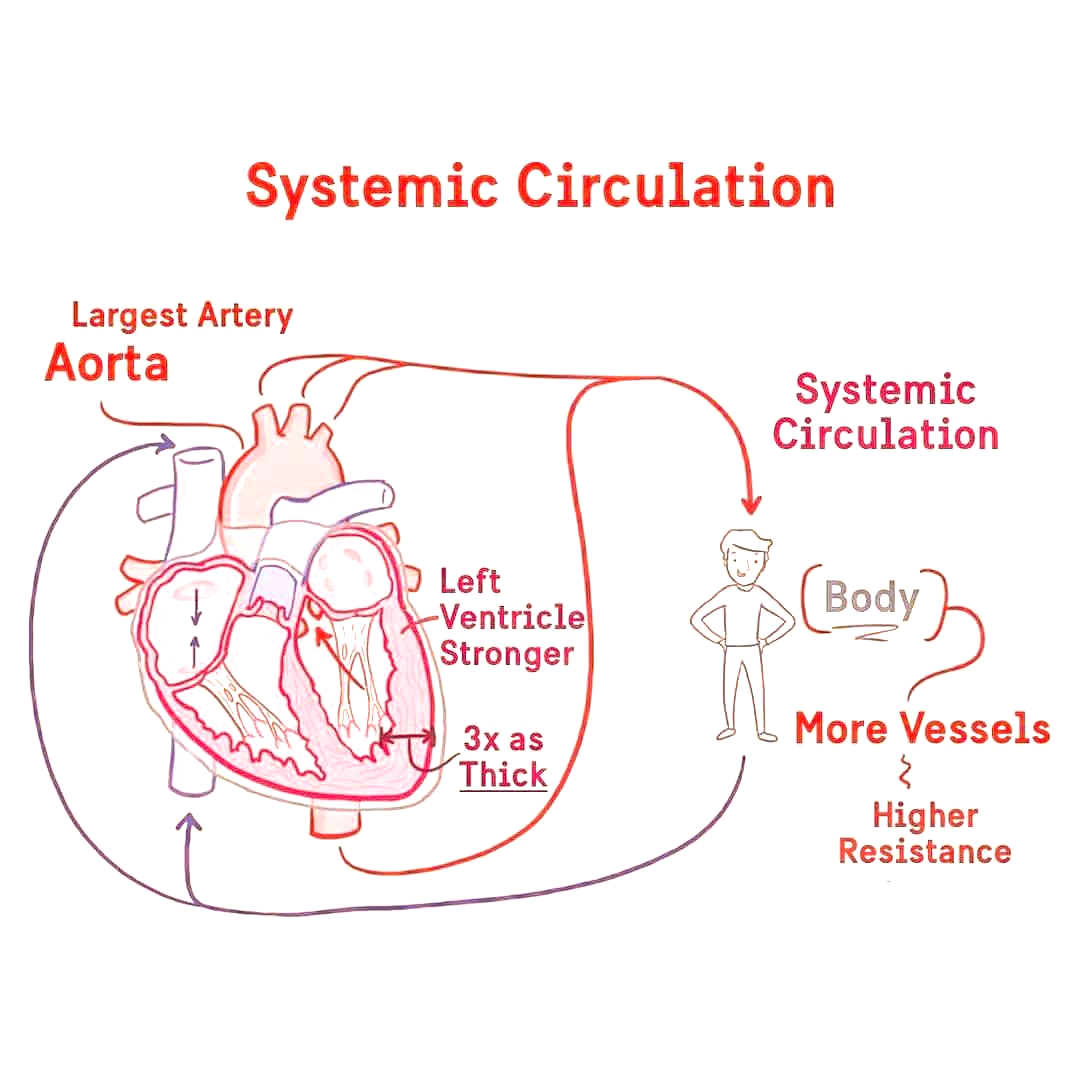
Note: Pulmonary circulation is the opposite of the systemic circulation. The pulmonary circulation is the system of blood vessels forming a closed circuit between the heart and the lungs while systemic circulation forms a closed circuit between the heart and all the other body tissues. Pulmonary circulation carries the deoxygenated blood from the lungs to the heart.
Complete answer
The process of transport of oxygenated blood from the heart to the body with the help of the left atrium and left ventricle is called systemic circulation.
Additional information
- The heart is an organ that pumps blood through the blood vessels of the circulatory system.
- The heart in humans is divided into four chambers: the upper left and right atria and the lower left and right ventricles.
- The circulatory system of the blood has two components: the systemic circulation, and pulmonary circulation.
- Systemic circulation is the circulatory system that transports oxygenated blood away from the heart through the aorta from the left ventricle.
- In the left ventricle, the blood is stored for the day and returns as deoxygenated blood back to the heart.
- The first part of the systemic circulation is the aorta, which is a thick-walled large artery.
- The left atrium receives newly oxygenated blood from the lungs and pulmonary vein and is then carried out to the left ventricle.
So, the correct answer is ‘Left atrium and left ventricle in higher mammals’.
Note: Pulmonary circulation is the opposite of the systemic circulation. The pulmonary circulation is the system of blood vessels forming a closed circuit between the heart and the lungs while systemic circulation forms a closed circuit between the heart and all the other body tissues. Pulmonary circulation carries the deoxygenated blood from the lungs to the heart.
Recently Updated Pages
Master Class 11 Social Science: Engaging Questions & Answers for Success

Master Class 11 English: Engaging Questions & Answers for Success
Master Class 11 Maths: Engaging Questions & Answers for Success
Master Class 11 Chemistry: Engaging Questions & Answers for Success
Master Class 11 Biology: Engaging Questions & Answers for Success
Master Class 11 Physics: Engaging Questions & Answers for Success
Trending doubts
Differentiate between an exothermic and an endothermic class 11 chemistry CBSE
There are 720 permutations of the digits 1 2 3 4 5 class 11 maths CBSE
Draw a diagram of a plant cell and label at least eight class 11 biology CBSE
1 Quintal is equal to a 110 kg b 10 kg c 100kg d 1000 class 11 physics CBSE
Which chemical is known as king of chemicals A H 2 class 11 chemistry CBSE
Draw a diagram of nephron and explain its structur class 11 biology CBSE