




Streptococcus lactis is responsible for
(a) Conversion of molasses into alcohol
(b) Conversion of milk into curd
(c) Tanning of leather
(d) Flavouring the leaves of tea and tobacco
Answer
 Verified
621k+ views
Hint: The strain of Streptococcus mentioned here is lactis. This particular strain is useful in creating products related to milk.
Complete answer:
- Streptococcus lactis is a bacteria used in the manufacturing of various milk-based products like curd, buttermilk, cheese, etc. It is the most important microorganisms in the dairy industry.
- When S. lactis is added to milk, the bacteria produce enzymes which use the lactose present to convert it into ATP and lactic acid is produced as a byproduct. The lactic acid curdles the milk, thus giving it the consistency and texture of curd.
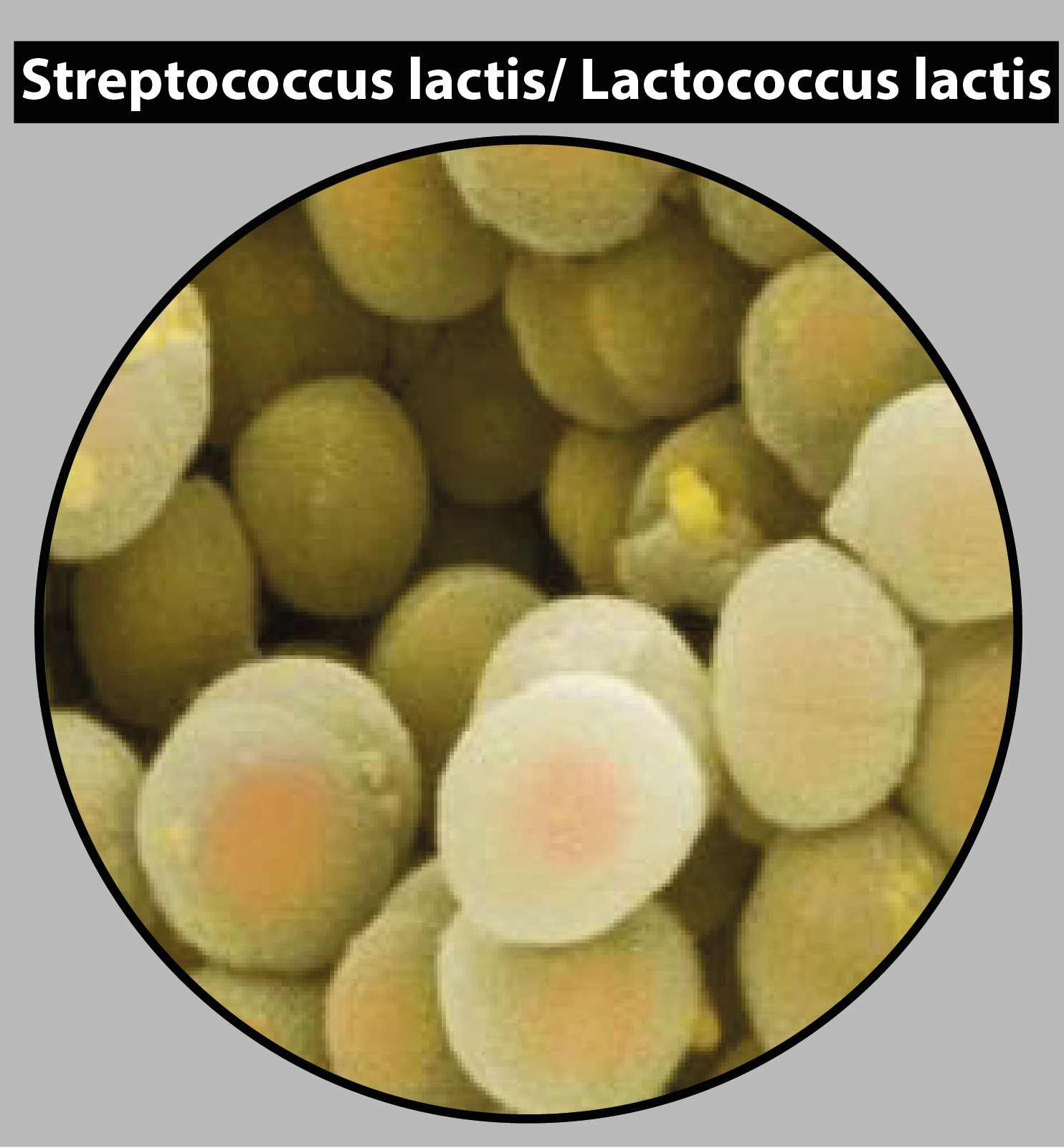
- S. lactis is a Gram-positive bacteria. It is spherical in shape and does not form spores. It is non-motile.
So, the correct answer is ‘conversion of milk into curd’.
Additional Information:
- This microorganism is known as a ‘starter culture’ where it is used to begin the fermentation process of a product, in this case, it is milk.
- The lactic acid produced by the bacteria also lowers the pH of milk which inhibits the growth of many other pathogenic microorganisms.
- Other lactic acid-producing bacteria include Lactobacillus and Lactococcus species.
- This bacteria is also used in the fermentation of soy milk, some bread, and pickled vegetables.
Note:
- Streptococcus lactis is now commonly known as Lactococcus lactis.
- This bacteria is also used for producing other fermented products such as cheeses, sour cream, kefir, buttermilk, nisin, etc.
Complete answer:
- Streptococcus lactis is a bacteria used in the manufacturing of various milk-based products like curd, buttermilk, cheese, etc. It is the most important microorganisms in the dairy industry.
- When S. lactis is added to milk, the bacteria produce enzymes which use the lactose present to convert it into ATP and lactic acid is produced as a byproduct. The lactic acid curdles the milk, thus giving it the consistency and texture of curd.
- S. lactis is a Gram-positive bacteria. It is spherical in shape and does not form spores. It is non-motile.
So, the correct answer is ‘conversion of milk into curd’.
Additional Information:
- This microorganism is known as a ‘starter culture’ where it is used to begin the fermentation process of a product, in this case, it is milk.
- The lactic acid produced by the bacteria also lowers the pH of milk which inhibits the growth of many other pathogenic microorganisms.
- Other lactic acid-producing bacteria include Lactobacillus and Lactococcus species.
- This bacteria is also used in the fermentation of soy milk, some bread, and pickled vegetables.
Note:
- Streptococcus lactis is now commonly known as Lactococcus lactis.
- This bacteria is also used for producing other fermented products such as cheeses, sour cream, kefir, buttermilk, nisin, etc.
Recently Updated Pages
Master Class 12 Business Studies: Engaging Questions & Answers for Success

Master Class 12 Chemistry: Engaging Questions & Answers for Success
Master Class 12 Biology: Engaging Questions & Answers for Success
Class 12 Question and Answer - Your Ultimate Solutions Guide
Master Class 11 English: Engaging Questions & Answers for Success
Master Class 11 Social Science: Engaging Questions & Answers for Success
Trending doubts
Differentiate between homogeneous and heterogeneous class 12 chemistry CBSE
In order to find out the different types of gametes class 12 biology NEET_UG
Yeast reproduces by A Spore formation B Multiple fission class 12 biology CBSE
Write any five applications of photoelectric cells class 12 physics CBSE
Suicide bags of cells are aEndoplasmic reticulum bLysosome class 12 biology CBSE
Who is the father of zoology A Aristotle B Theophrastus class 12 biology CBSE