




Sperms move actively in the female genital tract by
(A) Creeping
(B) Gliding
(C) Swimming
(D) Jet propulsion
Answer
 Verified
620.4k+ views
Hint: Sperm contains flagella which help in the movement of sperm as a to and fro motion. Liquid present near the cervix helps the sperm cells to move into the cervix.
Complete answer:
Man releases many millions of sperm cells during ejaculation which start swimming towards the fallopian tubes as they have to proceed further to meet and fertilize the egg. The sperm in the female genetic tract can live up to 48 to 72 hours.
Sperm is a male gamete that is responsible for fertilization of the egg. The semen which is present in the sperm gets thickens and helps the sperm to stay as near to the cervix it can. It has a long and flexible tail which is the flagella which helps in swimming. The process during which sperm cells are formed is known as spermatogenesis and it takes place in the seminiferous tubule of the testis. The lifespan of sperm cells is very short.
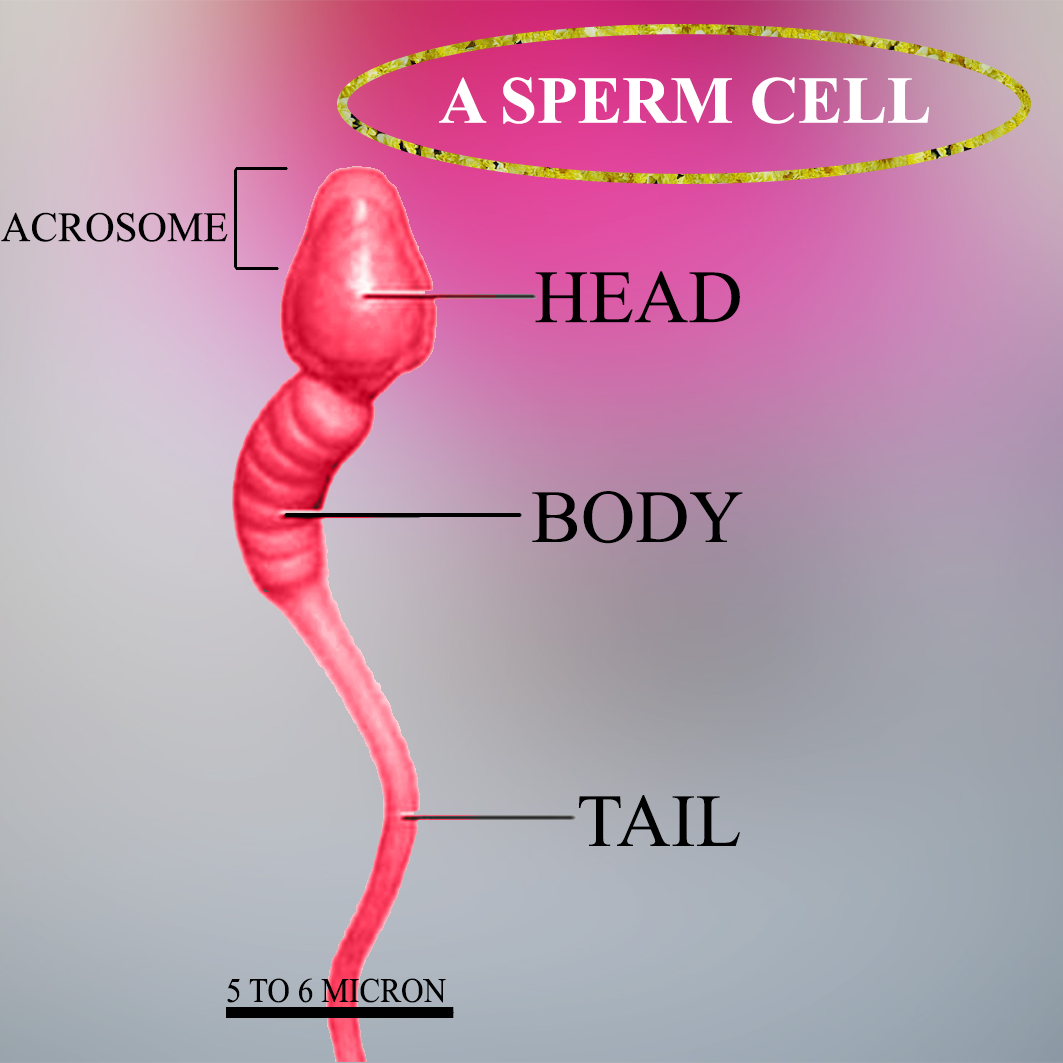
Its head contains the nucleus and chromatin fibers. The penetration of sperm into the egg is because of the presence of acrosome in the head.
Millions of the sperms are released but only the strongest one makes its way into the egg and produces a zygote after fertilization. Fertilization takes place in the fallopian tube. Once the egg is fertilized, the egg moves towards the nucleus.
So, the correct answer is ‘(C) Swimming’.
Note: The term sperm is derived from the Greek word ‘Sperma’ which means seed. The sperm cells also contain semen in which there are certain elements present that protect the sperm cells in the female genital tract until they reach up to the egg.
Complete answer:
Man releases many millions of sperm cells during ejaculation which start swimming towards the fallopian tubes as they have to proceed further to meet and fertilize the egg. The sperm in the female genetic tract can live up to 48 to 72 hours.
Sperm is a male gamete that is responsible for fertilization of the egg. The semen which is present in the sperm gets thickens and helps the sperm to stay as near to the cervix it can. It has a long and flexible tail which is the flagella which helps in swimming. The process during which sperm cells are formed is known as spermatogenesis and it takes place in the seminiferous tubule of the testis. The lifespan of sperm cells is very short.
Its head contains the nucleus and chromatin fibers. The penetration of sperm into the egg is because of the presence of acrosome in the head.
Millions of the sperms are released but only the strongest one makes its way into the egg and produces a zygote after fertilization. Fertilization takes place in the fallopian tube. Once the egg is fertilized, the egg moves towards the nucleus.
So, the correct answer is ‘(C) Swimming’.
Note: The term sperm is derived from the Greek word ‘Sperma’ which means seed. The sperm cells also contain semen in which there are certain elements present that protect the sperm cells in the female genital tract until they reach up to the egg.
Recently Updated Pages
Master Class 12 Business Studies: Engaging Questions & Answers for Success

Master Class 12 Biology: Engaging Questions & Answers for Success
Master Class 12 Chemistry: Engaging Questions & Answers for Success
Class 12 Question and Answer - Your Ultimate Solutions Guide
Master Class 11 English: Engaging Questions & Answers for Success
Master Class 11 Social Science: Engaging Questions & Answers for Success
Trending doubts
Sulphuric acid is known as the king of acids State class 12 chemistry CBSE
Derive an expression for the electric field intensity class 12 physics CBSE
The electric field due to a uniformly charged nonconducting class 12 physics CBSE
In a halfwave rectifier the rms value of the ac component class 12 physics CBSE
What is apomixis and what is its importance class 12 biology CBSE
One megawatt is equal to how many units of electri class 12 physics CBSE