




What is the special feature present in a human heart which does not allow mixing of blood when oxygen-rich and carbon dioxide rich blood reach the heart?
Answer
 Verified
549.3k+ views
Hint: Heart is a muscular and major organ of any organism. It comes under the circulatory system as its function is to pump blood throughout the body. Once the heart stops working the person dies. It is that essential organ. The heart size of our hand’s fist presents back and slightly left of the breastbone. Functions of the heart include pumping oxygenated blood to the other body parts.
Complete answer-
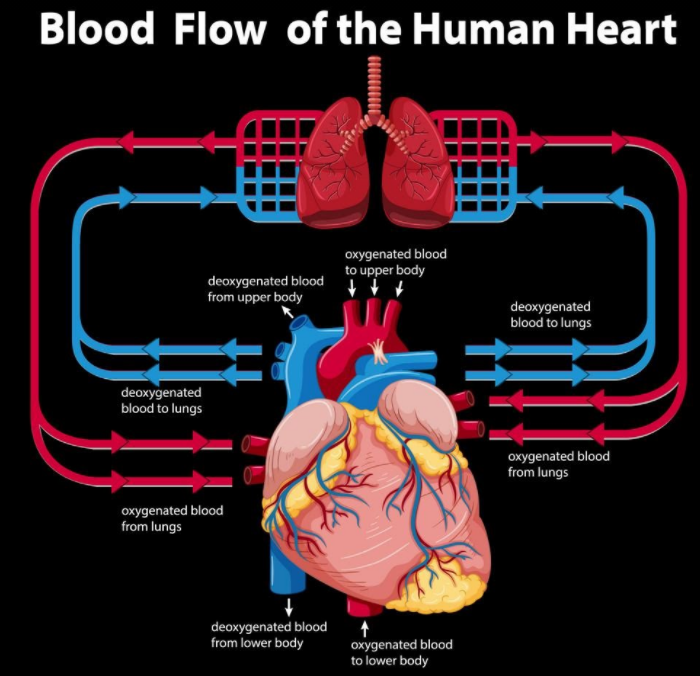
Humans have four chambered hearts and they are called two auricles and two ventricles. Heart is a complex organ to discuss about, as it carries all the blood pumps in and send out to other body parts. The blood carried in a closed vessels known as capillaries. There are two types of blood capillaries present in body one is vein and other is artery.
The Sino-auricular node emerges from the nerve impulses which are important for starting the contraction of the heart. Purkinje’s fibers are specialized conducting fibers composed of electrically excited cells. They are myofibrils with mitochondria which conducts cardiac action potentials more quickly and efficiently than any other cells in the heart.
The wall that separates the oxygen rich and carbon dioxide rich blood from the heart and does not allow mixing is septum. A septum is a wall present between the left side and the right side of the heart which does not allow the above statements.
Note:
The human heart as we discussed, was divided by a wall known as septum. This clear division of heart into compartments is for blood not to mix up from oxygenated to de-oxygenated as it can be fatal for the animal and they can die. The two upper atria are the receiving chambers and two lower ventricles are the discharging chambers.
Complete answer-
Humans have four chambered hearts and they are called two auricles and two ventricles. Heart is a complex organ to discuss about, as it carries all the blood pumps in and send out to other body parts. The blood carried in a closed vessels known as capillaries. There are two types of blood capillaries present in body one is vein and other is artery.
The Sino-auricular node emerges from the nerve impulses which are important for starting the contraction of the heart. Purkinje’s fibers are specialized conducting fibers composed of electrically excited cells. They are myofibrils with mitochondria which conducts cardiac action potentials more quickly and efficiently than any other cells in the heart.
The wall that separates the oxygen rich and carbon dioxide rich blood from the heart and does not allow mixing is septum. A septum is a wall present between the left side and the right side of the heart which does not allow the above statements.
Note:
The human heart as we discussed, was divided by a wall known as septum. This clear division of heart into compartments is for blood not to mix up from oxygenated to de-oxygenated as it can be fatal for the animal and they can die. The two upper atria are the receiving chambers and two lower ventricles are the discharging chambers.
Recently Updated Pages
If x a + bt + ct2 where x is in meters and t is in class 11 physics CBSE

A car covers the first half distance between two places class 11 physics CBSE
The resultant of two vectors overrightarrow P and overrightarrow class 11 physics CBSE
Find the value of cos 135 class 11 maths CBSE
A mass M is held in place by an applied force F and class 11 physics CBSE
A solution of glucose in water is labelled as 10 dfracwv class 11 chemistry CBSE
Trending doubts
One Metric ton is equal to kg A 10000 B 1000 C 100 class 11 physics CBSE
Find the value of the expression given below sin 30circ class 11 maths CBSE
What do you mean by retardation What is its SI uni class 11 physics CBSE
Draw a diagram of nephron and explain its structur class 11 biology CBSE
10 examples of friction in our daily life
Difference between physical and chemical change class 11 chemistry CBSE