




Sorosis is found in
(a)Jackfruit
(b)Mulberry
(c)Fig
(d)Both (A) and (B)
Answer
 Verified
633.9k+ views
Hint: Fruits in which the edible part is perianth and peduncle and the fruit which is fleshy and have more than one seed vessels and flowers are examples of the sorosis fruits.
Complete answer:
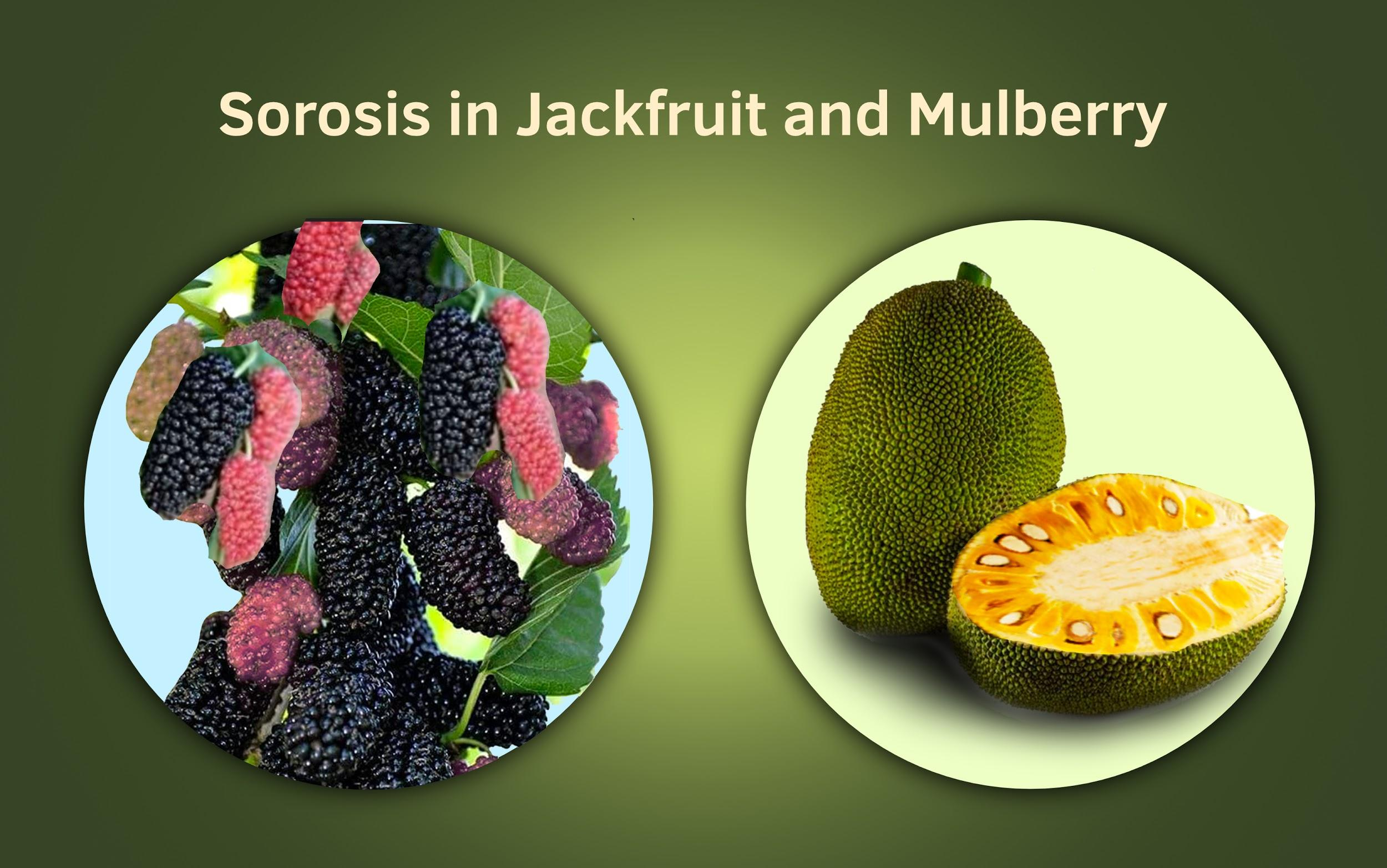
Sorosis grows from the spike, spadix, or catkin. For example, In the case of the pineapple, the fruit grows from the spike and the axis, bract and the perianth of the fruit becomes fleshy and pulpy. In jackfruit, the fleshy part develops from spadix inflorescence that carries sessile flowers. The female flowers that have spines on the surface are basically styles. Another common example of sorosis fruit is mulberry. Fig comes under the category of dry fruits.
Additional Information: -Jack fruit is a fleshy fruit, which means the fruits form a lot of flesh(pulp) and are attractive as an edible product for all kinds of organisms except carnivores.
-Fig which is a common dry fruit, is actually a naturally occurring fruit, where the major portion of the moisture content has been taken away by naturally ( sun drying) or artificially using specialized dryers and dehydrators.
-The edible part of the sorosis fruits are the perianth and peduncle. They commonly have a fleshy layer around one large seed. Pineapple, jackfruit, mulberry, etc are the common examples.
So, the correct answer is 'Both (A) and (B)'.
Note: -Depending on the part of the flower from which the fruits are differentiated. Various other classification of fruits includes simple, sorosis, parthenocarpic, aggregate, composite, and multiple fruits.
-Aggregate fruit: An aggregate A fruit formed as a result of the combining of numerous ovaries of the same flower. This process begins with a flower that has numerous carpels with the same number of ovaries
-Multiple fruits: A cluster of fruiting flowers forms fruiting bodies by the inflorescence is called as multiple fruits or collective fruits. Every flower in the inflorescence forms a fruit, but they grow into one mass in which every flower produces true fruit.
Complete answer:
Sorosis grows from the spike, spadix, or catkin. For example, In the case of the pineapple, the fruit grows from the spike and the axis, bract and the perianth of the fruit becomes fleshy and pulpy. In jackfruit, the fleshy part develops from spadix inflorescence that carries sessile flowers. The female flowers that have spines on the surface are basically styles. Another common example of sorosis fruit is mulberry. Fig comes under the category of dry fruits.
Additional Information: -Jack fruit is a fleshy fruit, which means the fruits form a lot of flesh(pulp) and are attractive as an edible product for all kinds of organisms except carnivores.
-Fig which is a common dry fruit, is actually a naturally occurring fruit, where the major portion of the moisture content has been taken away by naturally ( sun drying) or artificially using specialized dryers and dehydrators.
-The edible part of the sorosis fruits are the perianth and peduncle. They commonly have a fleshy layer around one large seed. Pineapple, jackfruit, mulberry, etc are the common examples.
So, the correct answer is 'Both (A) and (B)'.
Note: -Depending on the part of the flower from which the fruits are differentiated. Various other classification of fruits includes simple, sorosis, parthenocarpic, aggregate, composite, and multiple fruits.
-Aggregate fruit: An aggregate A fruit formed as a result of the combining of numerous ovaries of the same flower. This process begins with a flower that has numerous carpels with the same number of ovaries
-Multiple fruits: A cluster of fruiting flowers forms fruiting bodies by the inflorescence is called as multiple fruits or collective fruits. Every flower in the inflorescence forms a fruit, but they grow into one mass in which every flower produces true fruit.
Recently Updated Pages
Master Class 11 Social Science: Engaging Questions & Answers for Success

Master Class 11 English: Engaging Questions & Answers for Success
Master Class 11 Accountancy: Engaging Questions & Answers for Success
Master Class 11 Physics: Engaging Questions & Answers for Success
Master Class 11 Computer Science: Engaging Questions & Answers for Success
Master Class 11 Business Studies: Engaging Questions & Answers for Success
Trending doubts
Find the value of the expression given below sin 30circ class 11 maths CBSE
The teeth used for biting and cutting food are called class 11 biology CBSE
Bond order ofO2 O2+ O2 and O22 is in order A O2 langle class 11 chemistry CBSE
Frogs heart when taken out of the body continues to class 11 biology CBSE
10 examples of diffusion in everyday life
Can anyone list 10 advantages and disadvantages of friction