




Siphonogamy is characteristics of
A) All spermatophytes
B) Only gymnosperms
C) Only angiosperms
D) Only pteridophytes
Answer
 Verified
645k+ views
Hint: Siphonogamy is a condition in which the pollen tube is developed on the female reproductive part so that transfer of male cells can occur and can reach the eggs. It is present in the higher plants and is not a characteristic feature of lower plants. In lower plants, the male cells usually float and reach the egg in order to fertilize it.
Complete answer:
The siphonogamy is the characteristic feature of all spermatophytes and they are also called siphonogamous. In siphonogamy there is the presence of pollen tubes. When the pollen grains land on the surface of the stigma then some chemical reactions take place, which leads to the development of the pollen tube. The pollen tube then makes its way from the stigma to the style and finally reaches near the egg. After the formation of the pollen tube is complete then the male cells are released from the pollen grains and are transported to the egg directly. This type of transportation of the male cells to the egg is known as siphonogamy. It occurs only in the higher vascular plants and is absent in the plants which are present in the lower classification. The plants in lower classification transport their male cells by the means of water and these cells then fuse the female egg.
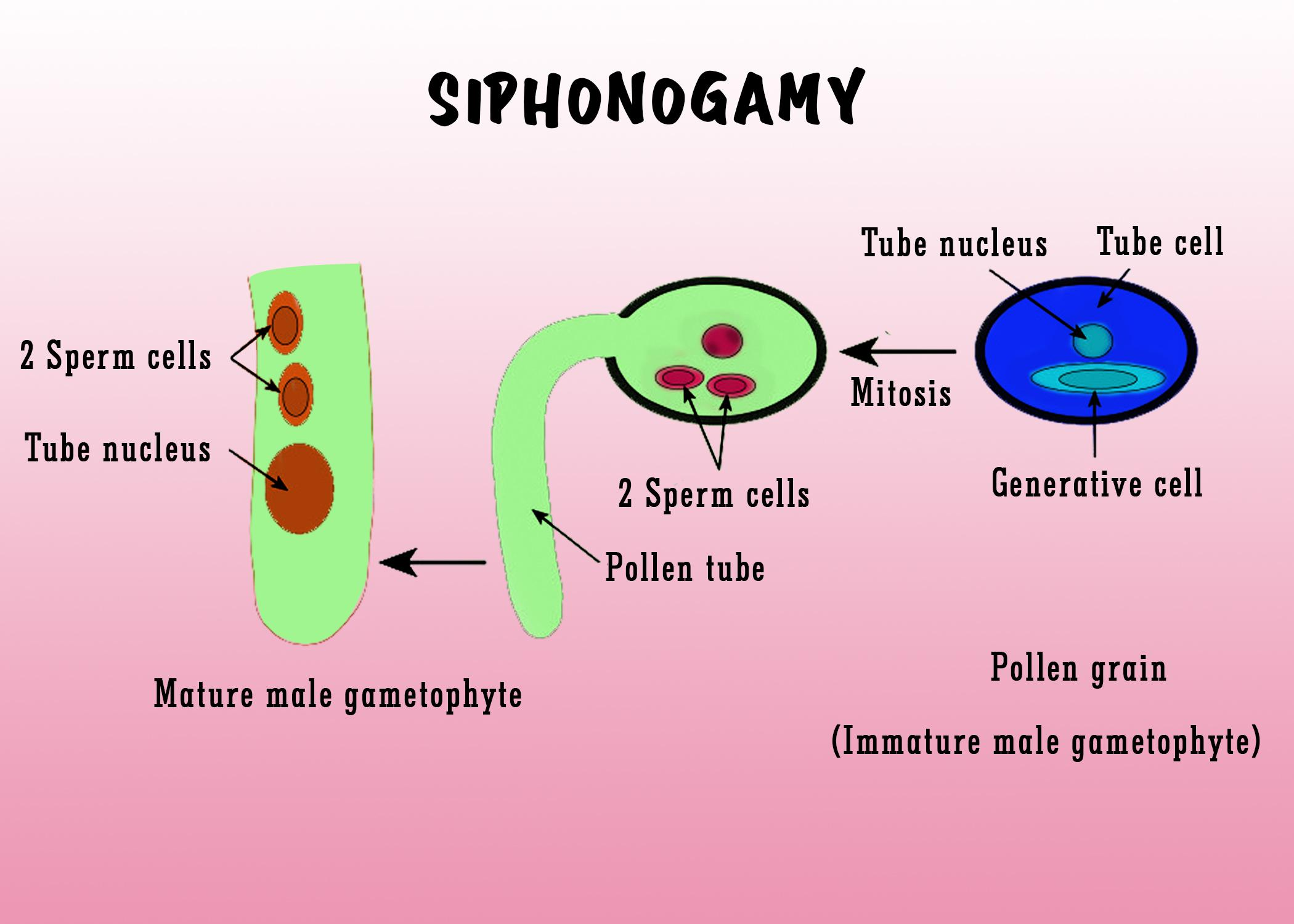
So, the correct answer is option A, i.e., ‘all spermatophytes’
Note: The siphonogamy is the characteristic feature of all spermatophytes and is known as siphonogamous plants. The spermatophytes are those plants that produce seeds. These plants are also known by the name phanerogams. They include gymnosperms and angiosperms.
Complete answer:
The siphonogamy is the characteristic feature of all spermatophytes and they are also called siphonogamous. In siphonogamy there is the presence of pollen tubes. When the pollen grains land on the surface of the stigma then some chemical reactions take place, which leads to the development of the pollen tube. The pollen tube then makes its way from the stigma to the style and finally reaches near the egg. After the formation of the pollen tube is complete then the male cells are released from the pollen grains and are transported to the egg directly. This type of transportation of the male cells to the egg is known as siphonogamy. It occurs only in the higher vascular plants and is absent in the plants which are present in the lower classification. The plants in lower classification transport their male cells by the means of water and these cells then fuse the female egg.
So, the correct answer is option A, i.e., ‘all spermatophytes’
Note: The siphonogamy is the characteristic feature of all spermatophytes and is known as siphonogamous plants. The spermatophytes are those plants that produce seeds. These plants are also known by the name phanerogams. They include gymnosperms and angiosperms.
Recently Updated Pages
Explain the structure of megasporangium class 12 biology CBSE

Why is chloroform kept in dark coloured bottles class 12 chemistry CBSE
Derive the balancing condition of a Wheatstone bri class 12 physics CBSE
Draw VI characteristics of a pn junction diode Explain class 12 physics CBSE
Is it possible to carry pride in ones language too class 12 english CBSE
In a population at Hardy Weinberg equilibrium the allele class 12 biology CBSE
Trending doubts
Draw a labelled sketch of the human eye class 12 physics CBSE
Which are the Top 10 Largest Countries of the World?
Draw ray diagrams each showing i myopic eye and ii class 12 physics CBSE
One megawatt is equal to how many units of electri class 12 physics CBSE
Which is the correct genotypic ratio of mendel dihybrid class 12 biology CBSE
Give 10 examples of unisexual and bisexual flowers