




Sheet erosion is caused by
(a)Sea
(b)Wind
(c)Heavy rains
(d)Glaciers
Answer
 Verified
622.2k+ views
Hint: Sheet erosion is also known as sheet wash and may be characterized by the formation of channels that can be even 30cm deep. It results in the loss of a highly nutritive layer of soil rich in minerals and organic compost.
Complete answer:
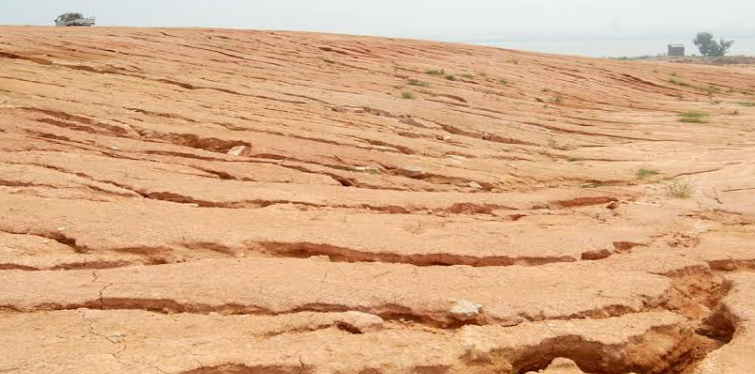
The removal of a uniform layer of soil from the topmost surface of the earth due to the very high intensity of rainfall is known as Sheet erosion. It is named so because it involves a shallow layer of rainwater flowing like a sheet over the ground and is mainly seen over coastal plains, hill slopes, flood plains, and beaches.
It occurs very rarely but causes huge loss of soil in both cultivated and non-cultivated areas. The soil particles get detached from the original place by the large raindrops (rain splash) and get deposited elsewhere.
Soil erosion can be prevented by taking the following measures:
-It can be prevented by maintaining a healthy plant cover over the soil. It prevents splash erosion.
-It can be prevented by maximizing the infiltration of water on the pond by absorption through soil and organic matter.
-The organic matter consists of small pores and acts as a glue to hold the rainwater into the soil particles and reduce the amount of rainwater available for erosion.
-It can also be prevented with the help of geotextiles or mulch.
So, the correct answer is ‘Heavy rain'.
Note:
-The water flowing in sheet erosion forms certain fingers like grooves or channels known as 'rills' that can be upto 30 cm deep. Several rills converge to form grooves deeper than 30 cm known as gullies.
-The measurement of the dimension of the rills helps in determining the amount of soil eroded.
-It can be prevented by a specific variety of grass called ‘vetiver'.
Complete answer:
The removal of a uniform layer of soil from the topmost surface of the earth due to the very high intensity of rainfall is known as Sheet erosion. It is named so because it involves a shallow layer of rainwater flowing like a sheet over the ground and is mainly seen over coastal plains, hill slopes, flood plains, and beaches.
It occurs very rarely but causes huge loss of soil in both cultivated and non-cultivated areas. The soil particles get detached from the original place by the large raindrops (rain splash) and get deposited elsewhere.
Soil erosion can be prevented by taking the following measures:
-It can be prevented by maintaining a healthy plant cover over the soil. It prevents splash erosion.
-It can be prevented by maximizing the infiltration of water on the pond by absorption through soil and organic matter.
-The organic matter consists of small pores and acts as a glue to hold the rainwater into the soil particles and reduce the amount of rainwater available for erosion.
-It can also be prevented with the help of geotextiles or mulch.
So, the correct answer is ‘Heavy rain'.
Note:
-The water flowing in sheet erosion forms certain fingers like grooves or channels known as 'rills' that can be upto 30 cm deep. Several rills converge to form grooves deeper than 30 cm known as gullies.
-The measurement of the dimension of the rills helps in determining the amount of soil eroded.
-It can be prevented by a specific variety of grass called ‘vetiver'.
Recently Updated Pages
Master Class 12 Business Studies: Engaging Questions & Answers for Success

Master Class 12 Chemistry: Engaging Questions & Answers for Success
Master Class 12 Biology: Engaging Questions & Answers for Success
Class 12 Question and Answer - Your Ultimate Solutions Guide
Master Class 11 English: Engaging Questions & Answers for Success
Master Class 11 Social Science: Engaging Questions & Answers for Success
Trending doubts
Which are the Top 10 Largest Countries of the World?
Draw a labelled sketch of the human eye class 12 physics CBSE
The end of compass needle which points towards north class 12 physics CBSE
Differentiate between homogeneous and heterogeneous class 12 chemistry CBSE
In order to find out the different types of gametes class 12 biology NEET_UG
Why is the cell called the structural and functional class 12 biology CBSE