




Sensory speech areas occurs in
A. Parietal lobe
B. Parietal lobe and partly in temporal lobe
C. Temporal lobe
D. Temporal and occipital lobes
Answer
 Verified
601.2k+ views
Hint: Sensory speech area is a part of the cerebrum. It is responsible for the speech and language process in human beings.
Complete answer:
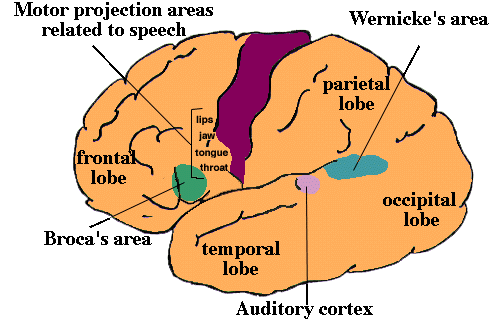
The central organ of the human nervous system is the human brain and along with the spinal cord, it forms the central nervous system of the human body. The human brain is composed of the cerebrum, brainstem, and cerebellum. The cerebrum forms the largest part of the brain and further divided into two hemispheres called the left hemisphere and right hemisphere by the corpus callosum. The cerebrum is divided into six lobes: frontal lobe, parietal lobe, occipital lobe, temporal lobe, and limbic lobe. Depending upon the functions the cerebral cortex is divided into sensory, motor, and associative areas. Sensory information is received and processed in the sensory area of the brain. information about temperature, taste, touch, and movement is processed by the parietal lobe whereas the occipital lobe is responsible for vision. processes like memories, integrating them with sensations of taste, sound, sight, and touch is done by the temporal lobe. Wernicke’s area, which is the sensory speech area is found in the temporal lobe of the cerebrum. So, the sensory speech area is located in the temporal lobe.
Therefore, option C is the correct answer.
Note: The area associated with speech production is Broca’s area placed in the frontal lobe of the hemisphere whereas Wernicke's area in the temporal lobe is responsible for language development and comprehension of speech. Damage to Wernicke’s area causes Wernicke’s aphasia which is a language disorder.
Complete answer:
The central organ of the human nervous system is the human brain and along with the spinal cord, it forms the central nervous system of the human body. The human brain is composed of the cerebrum, brainstem, and cerebellum. The cerebrum forms the largest part of the brain and further divided into two hemispheres called the left hemisphere and right hemisphere by the corpus callosum. The cerebrum is divided into six lobes: frontal lobe, parietal lobe, occipital lobe, temporal lobe, and limbic lobe. Depending upon the functions the cerebral cortex is divided into sensory, motor, and associative areas. Sensory information is received and processed in the sensory area of the brain. information about temperature, taste, touch, and movement is processed by the parietal lobe whereas the occipital lobe is responsible for vision. processes like memories, integrating them with sensations of taste, sound, sight, and touch is done by the temporal lobe. Wernicke’s area, which is the sensory speech area is found in the temporal lobe of the cerebrum. So, the sensory speech area is located in the temporal lobe.
Therefore, option C is the correct answer.
Note: The area associated with speech production is Broca’s area placed in the frontal lobe of the hemisphere whereas Wernicke's area in the temporal lobe is responsible for language development and comprehension of speech. Damage to Wernicke’s area causes Wernicke’s aphasia which is a language disorder.
Recently Updated Pages
Master Class 11 English: Engaging Questions & Answers for Success

Master Class 11 Maths: Engaging Questions & Answers for Success
Class 11 Question and Answer - Your Ultimate Solutions Guide
Master Class 11 Biology: Engaging Questions & Answers for Success
Master Class 11 Physics: Engaging Questions & Answers for Success
Master Class 11 Accountancy: Engaging Questions & Answers for Success
Trending doubts
Differentiate between an exothermic and an endothermic class 11 chemistry CBSE
One Metric ton is equal to kg A 10000 B 1000 C 100 class 11 physics CBSE
Difference Between Prokaryotic Cells and Eukaryotic Cells
There are 720 permutations of the digits 1 2 3 4 5 class 11 maths CBSE
Draw a diagram of a plant cell and label at least eight class 11 biology CBSE
1 Quintal is equal to a 110 kg b 10 kg c 100kg d 1000 class 11 physics CBSE