




Rapid interconversion of $\alpha $-D-glucose and $\beta $-D-glucose in solution is known as:
A. Racemisation
B. Asymmetric induction
C. Fluxional isomerisation
D. Mutarotation
Answer
 Verified
636.3k+ views
Hint: Recollect the Haworth structures of glucose. Draw all the Haworth structures of glucose as named in the question. Try to find what each term in the given option means and then think what changes take place when one anomer is converted to another anomer and the name of that process.
Complete step by step answer:
First of all, we should draw the structure of both the structures of glucose. Then only we can find the correct option.
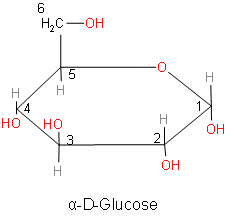
Above is the structure of $\alpha $-D-glucose.
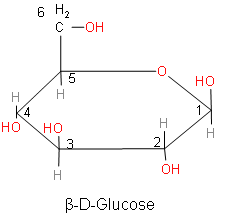
Above is the structure of $\beta $-D-glucose.
When comparing the above structures, we came to know that both the structures of glucose are anomers. Anomers are cyclic monosaccharides or glycosides that are epimers of each other. Epimer is a one pair of diastereoisomer. Two epimers have opposite configurations at only one stereogenic center (stereocenter) out of at least two. The stereocenter is that point on the chain on which interchanging any two substituents leads to a stereoisomer.
So, anomers are defined as cyclic monosaccharides or glycosides that are epimers and they are differing from each other in the configuration of C-1 if they are aldoses and we should also know that the anomers differ at the configuration at C-2 if they are ketoses. The epimeric carbon in anomers is known as anomeric carbon or anomeric center.
So, from the above discussion we now know about anomers. Now, we will answer our question. The process for rapid interconversion of $\alpha $-D-glucose and $\beta $-D-glucose in solution is called Anomerization or mutarotation.
The correct answer of the process for rapid interconversion of $\alpha $-D-glucose and $\beta $ -D-glucose in solution is option D. Mutarotation occurs when the anomeric position (C1) changes its configuration between $\alpha $ and $\beta $ form in the solution. Mutarotation is a deviation from the specific rotation, due to the change in the equilibrium between $\alpha $ anomeric and $\beta $ anomeric form, in the aqueous solution. As observed in the $\alpha $-D- glucose and $\beta $-D- glucose, the carbon centre or anomeric carbon or C-1 carbon changes.
So, the correct answer is “Option D”.
Note: Remember that racemization is a conversion of an optically active compound into an optically inactive form in the presence of heat, in which half of the optically active substance becomes its mirror image (enantiomer) referred to as racemic mixtures (that is, it contains equal amount of (+) and (−) forms).
Complete step by step answer:
First of all, we should draw the structure of both the structures of glucose. Then only we can find the correct option.
Above is the structure of $\alpha $-D-glucose.
Above is the structure of $\beta $-D-glucose.
When comparing the above structures, we came to know that both the structures of glucose are anomers. Anomers are cyclic monosaccharides or glycosides that are epimers of each other. Epimer is a one pair of diastereoisomer. Two epimers have opposite configurations at only one stereogenic center (stereocenter) out of at least two. The stereocenter is that point on the chain on which interchanging any two substituents leads to a stereoisomer.
So, anomers are defined as cyclic monosaccharides or glycosides that are epimers and they are differing from each other in the configuration of C-1 if they are aldoses and we should also know that the anomers differ at the configuration at C-2 if they are ketoses. The epimeric carbon in anomers is known as anomeric carbon or anomeric center.
So, from the above discussion we now know about anomers. Now, we will answer our question. The process for rapid interconversion of $\alpha $-D-glucose and $\beta $-D-glucose in solution is called Anomerization or mutarotation.
The correct answer of the process for rapid interconversion of $\alpha $-D-glucose and $\beta $ -D-glucose in solution is option D. Mutarotation occurs when the anomeric position (C1) changes its configuration between $\alpha $ and $\beta $ form in the solution. Mutarotation is a deviation from the specific rotation, due to the change in the equilibrium between $\alpha $ anomeric and $\beta $ anomeric form, in the aqueous solution. As observed in the $\alpha $-D- glucose and $\beta $-D- glucose, the carbon centre or anomeric carbon or C-1 carbon changes.
So, the correct answer is “Option D”.
Note: Remember that racemization is a conversion of an optically active compound into an optically inactive form in the presence of heat, in which half of the optically active substance becomes its mirror image (enantiomer) referred to as racemic mixtures (that is, it contains equal amount of (+) and (−) forms).
Recently Updated Pages
Basicity of sulphurous acid and sulphuric acid are

Master Class 12 Economics: Engaging Questions & Answers for Success
Master Class 12 Biology: Engaging Questions & Answers for Success
Master Class 11 English: Engaging Questions & Answers for Success
Master Class 11 Physics: Engaging Questions & Answers for Success
Master Class 11 Computer Science: Engaging Questions & Answers for Success
Trending doubts
Draw a labelled sketch of the human eye class 12 physics CBSE
The chemical formula of tear gas is A CO Cl 2 B C 10 class 12 chemistry CBSE
Draw ray diagrams each showing i myopic eye and ii class 12 physics CBSE
Which are the Top 10 Largest Countries of the World?
Differentiate between homogeneous and heterogeneous class 12 chemistry CBSE
Which is the correct genotypic ratio of mendel dihybrid class 12 biology CBSE