




Protandry is a condition in which
(a)Anthers mature after Stigma
(b)Anthers and stigma mature at the same time
(c)Anthers mature earlier than the stigma
(d)Pollen of the same flowers pollinates stigmas.
Answer
 Verified
606.6k+ views
Hint: By maturing the anther and stigma at different times, the flower is forced to fertilize or be fertilized by another. This is nature's way of preventing inbreeding and ensuring that the result will be vigorous progeny through cross-pollination.
Complete answer:
In the case of hermaphroditic plants, a condition occurs, in which the development and maturation of the male reproductive part (androecium) occur before the maturation of female reproductive part(gynoecium) to promote cross-pollination and inhibiting the process of self-pollination, is known as protandry.
Additional Information:
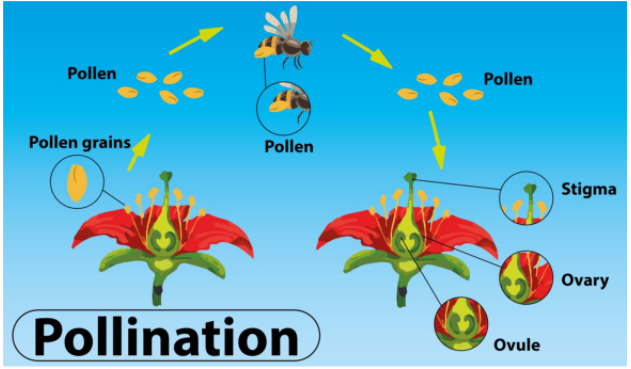
Pollination: It is the process of transfer of the pollen grains from the anther to the stigma of a flower. The androecium is the male reproductive organ of a flower while the gynoecium is the female reproductive organ of a flower.
The two agents of pollination are:
- Insects
- Birds
The process of pollination leads to fertilization in the manner as, In the flowering plants, the ovules are contained within a hollow organ called the pistil (a basic unit of the gynoecium), and the pollen is deposited on the pistil’s receptive surface, the stigma. There the pollen germinates and gives rise to the pollen tube, which grows down through the pistil toward one of the ovules in its base. The growing ovule then transforms itself into a seed of the plant.
So, the correct answer is 'anther mature earlier than the stigma'.
Note: Self-pollination is the transfer of pollen grains from the anther to the stigma of the same flower of the plant while cross-pollination is the transfer of pollen grains from the anther to the stigma of a genetically different flower of another plant.
-Studies of pollination are invaluable for understanding the evolution of the flowering plants and their distribution in the world today.
-Pollination by insects probably occurred in primitive seed plants as their reliance on other means is an event of their recent evolutionary development.
-The most prevalent insect forms in the earlier times were primitive beetles; no bees and butterflies were present.
Complete answer:
In the case of hermaphroditic plants, a condition occurs, in which the development and maturation of the male reproductive part (androecium) occur before the maturation of female reproductive part(gynoecium) to promote cross-pollination and inhibiting the process of self-pollination, is known as protandry.
Additional Information:
Pollination: It is the process of transfer of the pollen grains from the anther to the stigma of a flower. The androecium is the male reproductive organ of a flower while the gynoecium is the female reproductive organ of a flower.
The two agents of pollination are:
- Insects
- Birds
The process of pollination leads to fertilization in the manner as, In the flowering plants, the ovules are contained within a hollow organ called the pistil (a basic unit of the gynoecium), and the pollen is deposited on the pistil’s receptive surface, the stigma. There the pollen germinates and gives rise to the pollen tube, which grows down through the pistil toward one of the ovules in its base. The growing ovule then transforms itself into a seed of the plant.
So, the correct answer is 'anther mature earlier than the stigma'.
Note: Self-pollination is the transfer of pollen grains from the anther to the stigma of the same flower of the plant while cross-pollination is the transfer of pollen grains from the anther to the stigma of a genetically different flower of another plant.
-Studies of pollination are invaluable for understanding the evolution of the flowering plants and their distribution in the world today.
-Pollination by insects probably occurred in primitive seed plants as their reliance on other means is an event of their recent evolutionary development.
-The most prevalent insect forms in the earlier times were primitive beetles; no bees and butterflies were present.
Recently Updated Pages
Master Class 12 Economics: Engaging Questions & Answers for Success

Master Class 12 English: Engaging Questions & Answers for Success
Master Class 12 Social Science: Engaging Questions & Answers for Success
Master Class 12 Maths: Engaging Questions & Answers for Success
Master Class 12 Physics: Engaging Questions & Answers for Success
Master Class 9 General Knowledge: Engaging Questions & Answers for Success
Trending doubts
Which are the Top 10 Largest Countries of the World?
Draw a labelled sketch of the human eye class 12 physics CBSE
Differentiate between homogeneous and heterogeneous class 12 chemistry CBSE
Sulphuric acid is known as the king of acids State class 12 chemistry CBSE
Why is the cell called the structural and functional class 12 biology CBSE
A dentist uses a small mirror that gives a magnification class 12 physics CBSE