




What is the predominant phase in the life-cycle of Bryophyte?
(a)Gametophyte
(b)Capsule
(c)Seta
(d)Sporophyte
Answer
 Verified
597.3k+ views
Hint: Bryophytes are non-vascular land plants that consist of about 20,000 plant species and do not produce flowers or seed. Reproduction in bryophytes takes place through spores and is considered to be a paraphyletic group.
Complete answer:
The predominant phase in the life cycle of bryophytes is gametophyte. A gametophyte is a haploid multicellular organism which gets developed from the haploid sport that consists of one set of chromosomes. It is the sexual phase and develops sex organs which produce gametes and participate in fertilizer station to form a diploid zygote which consists of a double set of chromosome. Sporophytes produced are unbranched and the life cycle gets dominated by the gametophyte stage. They do not have true vascular tissue which contains lignin which helps in the transport of water. They constitute a long-lived plant which is the haploid gametophyte and the diploid sporophyte that appear occasionally which depends upon the gametophyte for nutrition. The cell division of a new deployed multicellular organism results in the second stage in the life cycle which is known as the sporophyte that produces haploid spores by meiosis.
Additional information:
Each gametophyte gives rise to several sporophytes at once which are always unbranched and produce a single sporangium. The liverworts, mosses, and hornworts spend their entire life as gametophytes, and the gametangia which are the gamete producing organs produced on the gametophytes at the tips of the shoots or in the axils of leaves under hidden thalli. The mature sporophytes remain attached to the gametophyte which consists of a stalk and a single sporangium in which the haploid spores are produced by the process of meiosis. The mature gametophyte of mosses gets to develop into leafy shoots that produce sex organs that help in the production of gametes.
So, the correct answer is option (A) 'Gametophyte'.
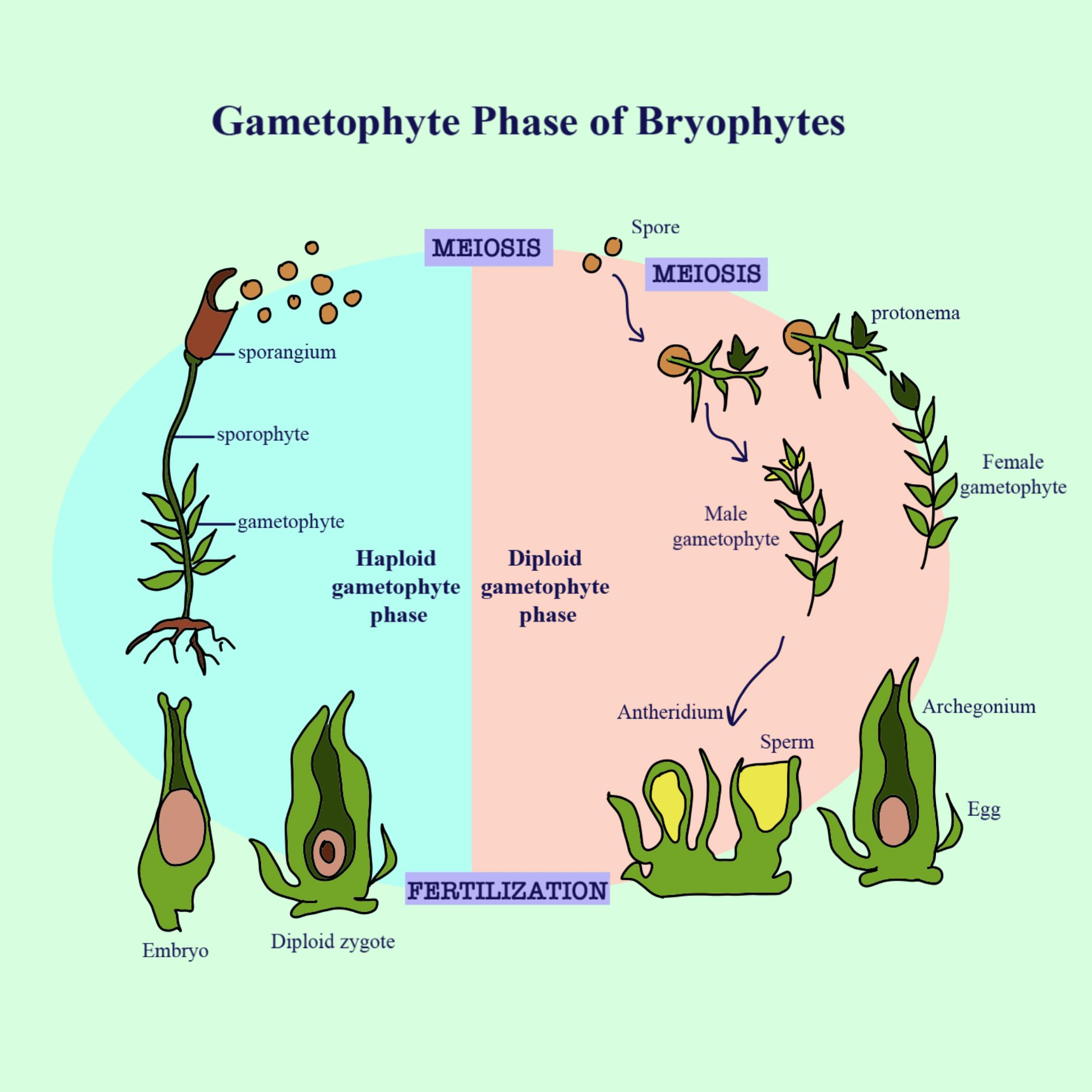
Note: Bryophyte consists of mosses which are the very first plants on the earth that were adapted 450 million years ago. They are the non-vascular plants that consist of 14000 species of plants that can be found on all seven continents and preferred damp and shaded environments.
Complete answer:
The predominant phase in the life cycle of bryophytes is gametophyte. A gametophyte is a haploid multicellular organism which gets developed from the haploid sport that consists of one set of chromosomes. It is the sexual phase and develops sex organs which produce gametes and participate in fertilizer station to form a diploid zygote which consists of a double set of chromosome. Sporophytes produced are unbranched and the life cycle gets dominated by the gametophyte stage. They do not have true vascular tissue which contains lignin which helps in the transport of water. They constitute a long-lived plant which is the haploid gametophyte and the diploid sporophyte that appear occasionally which depends upon the gametophyte for nutrition. The cell division of a new deployed multicellular organism results in the second stage in the life cycle which is known as the sporophyte that produces haploid spores by meiosis.
Additional information:
Each gametophyte gives rise to several sporophytes at once which are always unbranched and produce a single sporangium. The liverworts, mosses, and hornworts spend their entire life as gametophytes, and the gametangia which are the gamete producing organs produced on the gametophytes at the tips of the shoots or in the axils of leaves under hidden thalli. The mature sporophytes remain attached to the gametophyte which consists of a stalk and a single sporangium in which the haploid spores are produced by the process of meiosis. The mature gametophyte of mosses gets to develop into leafy shoots that produce sex organs that help in the production of gametes.
So, the correct answer is option (A) 'Gametophyte'.
Note: Bryophyte consists of mosses which are the very first plants on the earth that were adapted 450 million years ago. They are the non-vascular plants that consist of 14000 species of plants that can be found on all seven continents and preferred damp and shaded environments.
Recently Updated Pages
Master Class 12 Economics: Engaging Questions & Answers for Success

Master Class 12 English: Engaging Questions & Answers for Success
Master Class 12 Social Science: Engaging Questions & Answers for Success
Master Class 12 Maths: Engaging Questions & Answers for Success
Master Class 12 Physics: Engaging Questions & Answers for Success
Master Class 9 General Knowledge: Engaging Questions & Answers for Success
Trending doubts
One Metric ton is equal to kg A 10000 B 1000 C 100 class 11 physics CBSE
Difference Between Prokaryotic Cells and Eukaryotic Cells
Two of the body parts which do not appear in MRI are class 11 biology CBSE
1 ton equals to A 100 kg B 1000 kg C 10 kg D 10000 class 11 physics CBSE
Draw a diagram of nephron and explain its structur class 11 biology CBSE
10 examples of friction in our daily life