




On monochlorination of $2 - methylbutane$, the total number of chiral compounds formed is,
$
A.2
B.4
C.6
D.8
$
Answer
 Verified
602.4k+ views
Hint:We know that a molecule or ion is called chiral only when there is no superimposable mirror image and there is no plane of symmetry in the molecule. This property is known as chirality and the compounds with the same molecular formula but differ in the arrangement of the atom are said to be isomers. The compounds which are mirror images but are not identical; to each other are called enantiomers.
Complete step by step answer:
Monochlorination of $2 - methylbutane$ forms four isomers,
The structure of \[4\] isomers is,
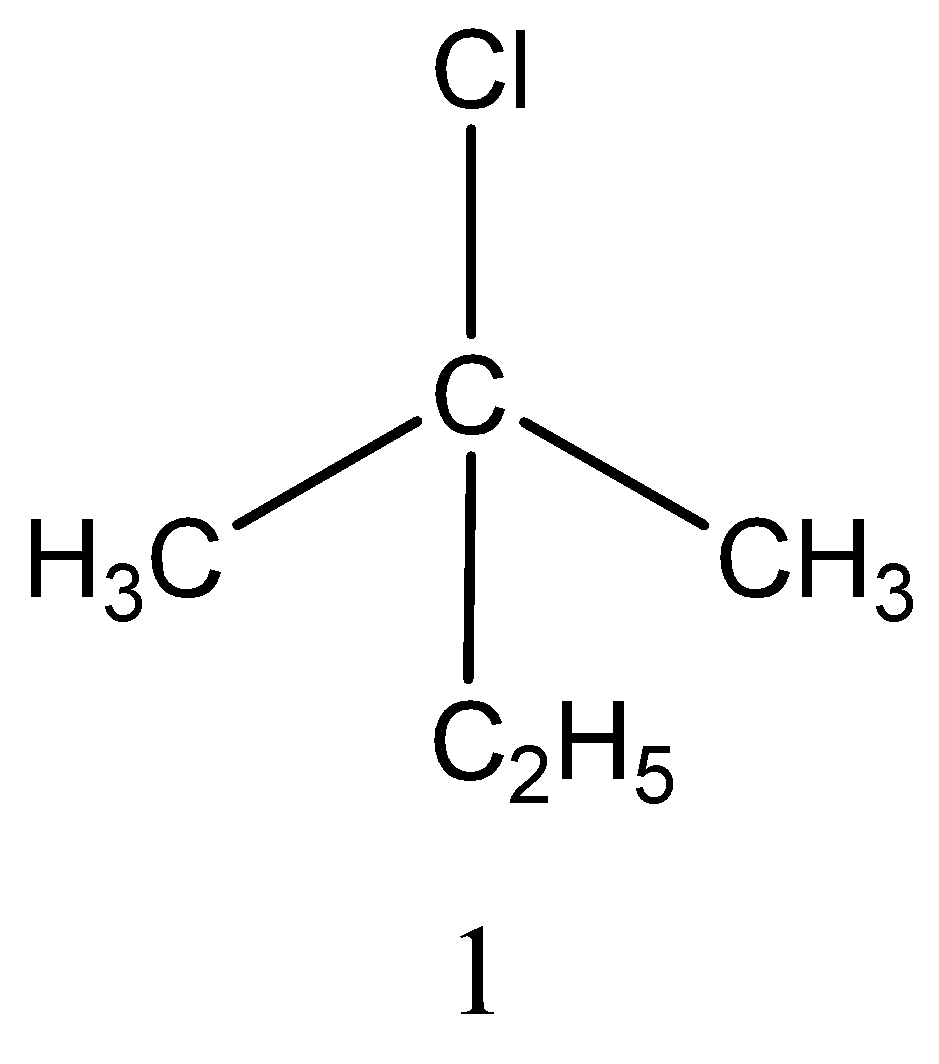
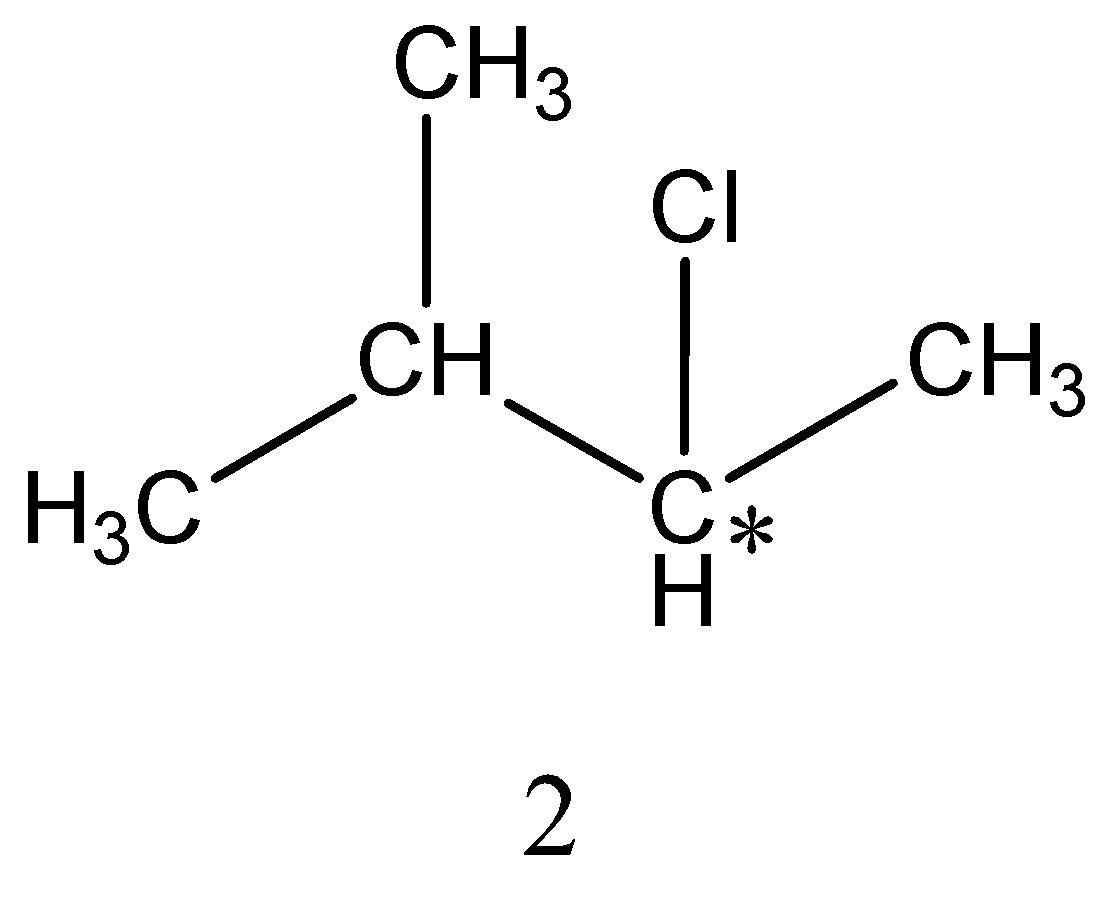
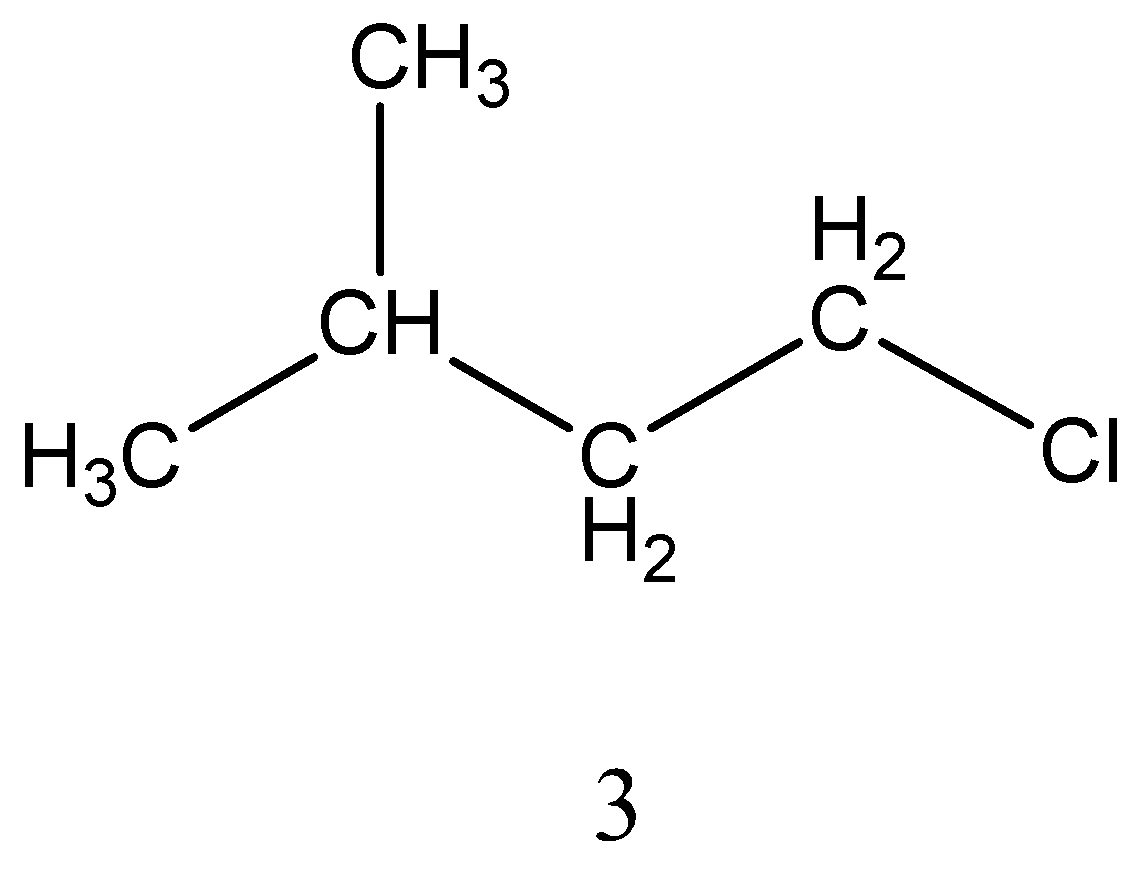
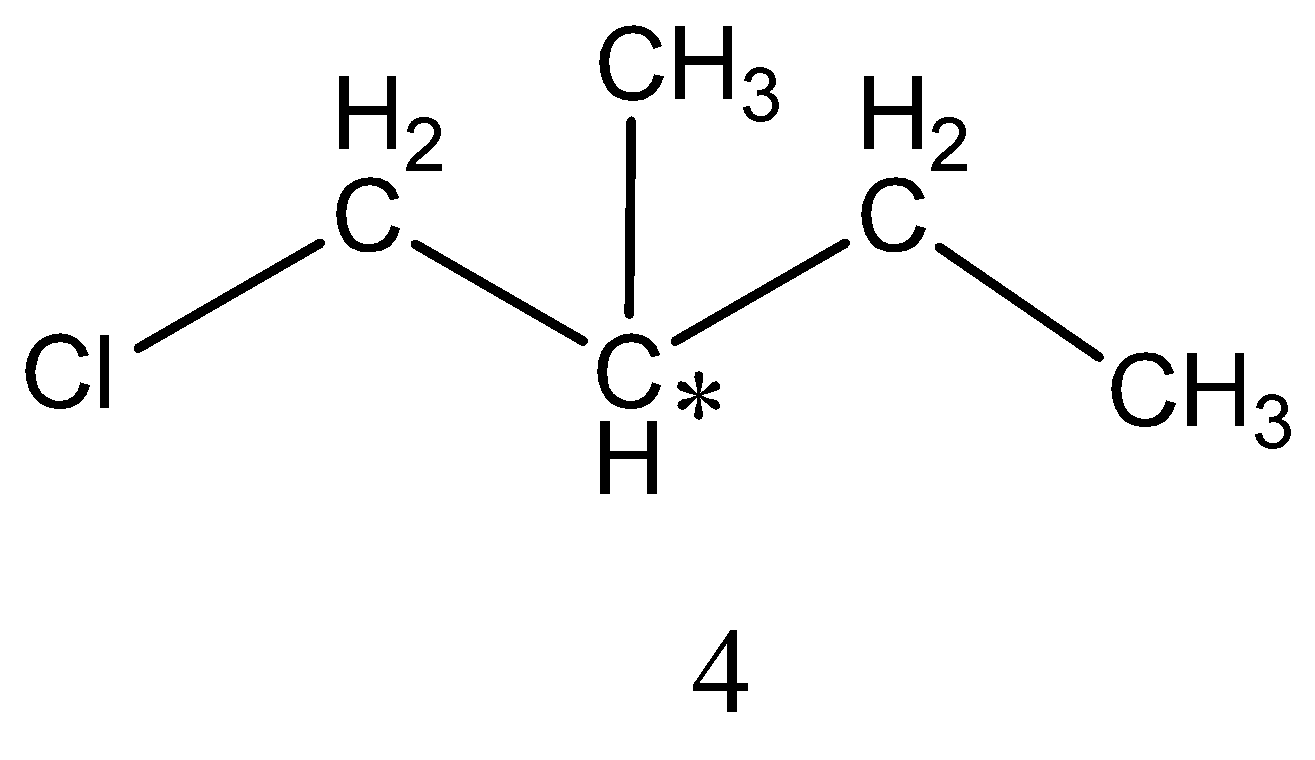
Among the four isomers only two isomers are chiral. As we already know that if carbon is attached to four different groups then it is referred to as chiral carbon. Thus, among the four isomers $2\,\& \,4$ has chiral carbon.
Therefore, the option A is correct.
Note:
Enantiomers versus Chiral:
Chiral recognition is often described because of the inequity between the \[2\] enantiomers of a chiral molecule. Because the physical properties that are typically used to separate molecular species are identical within the case of enantiomers, it's difficult to separate the \[2\] species. It’s only through the interactions with a discriminating secondary species that physical differences are often observed. The structural basis of enantiomerism is named chirality. Enantiomers are in every other respect chemically identical. A pair of enantiomers is distinguished by the direction during which when dissolved in solution they rotate polarized light either Dextro or levo rotatory, hence the term optical isomers. When two enantiomers are present in equal proportions they're collectively mentioned as a racemic mixture that doesn't rotate polarized light because the optical activity of every enantiomer is cancelled by the opposite .
Complete step by step answer:
Monochlorination of $2 - methylbutane$ forms four isomers,
The structure of \[4\] isomers is,
Among the four isomers only two isomers are chiral. As we already know that if carbon is attached to four different groups then it is referred to as chiral carbon. Thus, among the four isomers $2\,\& \,4$ has chiral carbon.
Therefore, the option A is correct.
Note:
Enantiomers versus Chiral:
Chiral recognition is often described because of the inequity between the \[2\] enantiomers of a chiral molecule. Because the physical properties that are typically used to separate molecular species are identical within the case of enantiomers, it's difficult to separate the \[2\] species. It’s only through the interactions with a discriminating secondary species that physical differences are often observed. The structural basis of enantiomerism is named chirality. Enantiomers are in every other respect chemically identical. A pair of enantiomers is distinguished by the direction during which when dissolved in solution they rotate polarized light either Dextro or levo rotatory, hence the term optical isomers. When two enantiomers are present in equal proportions they're collectively mentioned as a racemic mixture that doesn't rotate polarized light because the optical activity of every enantiomer is cancelled by the opposite .
Recently Updated Pages
Master Class 12 Social Science: Engaging Questions & Answers for Success

Master Class 12 Physics: Engaging Questions & Answers for Success
Master Class 12 Maths: Engaging Questions & Answers for Success
Master Class 12 Economics: Engaging Questions & Answers for Success
Master Class 12 Chemistry: Engaging Questions & Answers for Success
Master Class 12 Business Studies: Engaging Questions & Answers for Success
Trending doubts
Which are the Top 10 Largest Countries of the World?
Draw a labelled sketch of the human eye class 12 physics CBSE
Explain the structure of megasporangium class 12 biology CBSE
What are the major means of transport Explain each class 12 social science CBSE
How many chromosomes are found in human ovum a 46 b class 12 biology CBSE
The diagram of the section of a maize grain is given class 12 biology CBSE