




What measures would you take to prevent water-borne diseases?
Answer
 Verified
612.9k+ views
Hint: The water-borne disease, this term itself tells us about what it is and how to prevent these diseases. Waterborne disease means the diseases which are caused due to the growth of pathogens in contaminated water. If bacteria will not grow on water sources or bodies, the disease will not spread.
Complete answer:
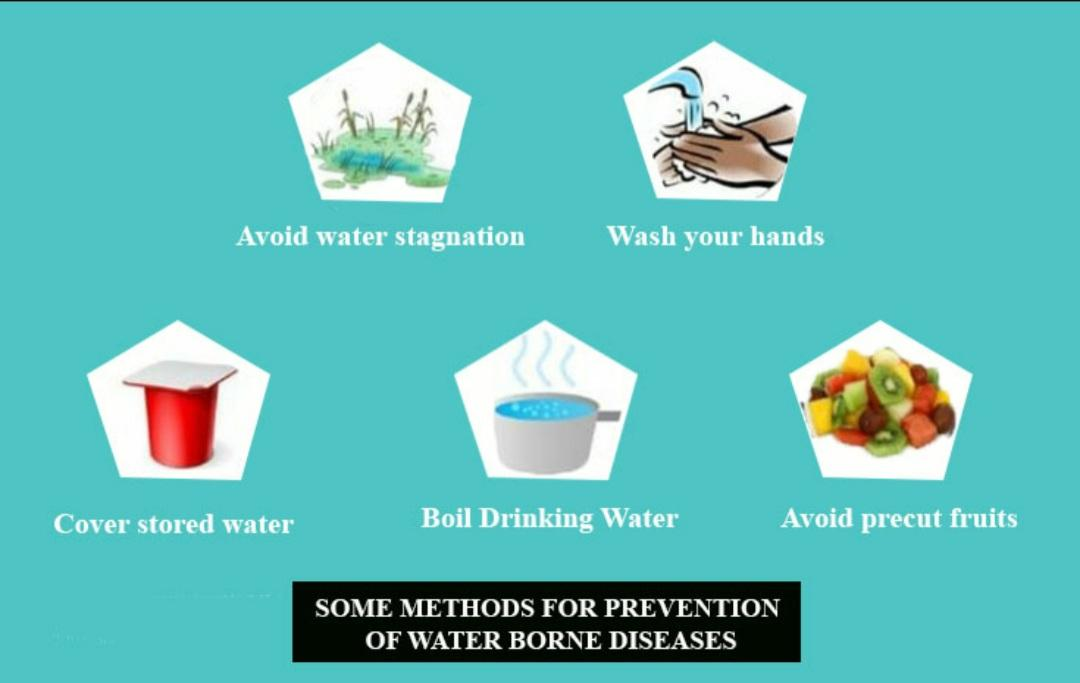
There are many practices which we can adopt to prevent water-borne diseases. They are as follows:
-Drink only filtered/boiled water.
-Always store foods/beverages covered.
-Water jars/containers should be washed daily.
-Always wash hands before and after preparing food or eating, likewise, children should be taught washing of hands.
-Store water in a very clean container.
-It is mandatory to clean hands with soaps or hand sanitizer after using the washroom, or even after changing the child's diaper.
-Consume warm and residential cooked foods while avoiding street foods.
-Wash food thoroughly before cooking.
-Make sure that the pipes and tanks that provide water to your house are properly maintained and clean.
-Using detergent and, if possible, hot water for cleaning purposes.
- Discard or flush any stool within the toilet.
-Travelers should only drink Bisleri water and avoid uncooked food.
-People affected by water-borne diseases shouldn't visit work until fully recovered to avoid spreading.
These harmful and pathogenic bacteria or microorganisms are mostly transported to water sources by human or animal feces.
Note: Some of the common diseases caused due to water or specifically contaminated water are: Typhoid fever, malaria, dysentery, diarrhea, cholera, hepatitis, worms, polio, and the list is so long. According to the latest survey done by the World Health Organisation (WHO), water-borne diseases cause about 1.8 million human deaths annually.
Complete answer:
There are many practices which we can adopt to prevent water-borne diseases. They are as follows:
-Drink only filtered/boiled water.
-Always store foods/beverages covered.
-Water jars/containers should be washed daily.
-Always wash hands before and after preparing food or eating, likewise, children should be taught washing of hands.
-Store water in a very clean container.
-It is mandatory to clean hands with soaps or hand sanitizer after using the washroom, or even after changing the child's diaper.
-Consume warm and residential cooked foods while avoiding street foods.
-Wash food thoroughly before cooking.
-Make sure that the pipes and tanks that provide water to your house are properly maintained and clean.
-Using detergent and, if possible, hot water for cleaning purposes.
- Discard or flush any stool within the toilet.
-Travelers should only drink Bisleri water and avoid uncooked food.
-People affected by water-borne diseases shouldn't visit work until fully recovered to avoid spreading.
These harmful and pathogenic bacteria or microorganisms are mostly transported to water sources by human or animal feces.
Note: Some of the common diseases caused due to water or specifically contaminated water are: Typhoid fever, malaria, dysentery, diarrhea, cholera, hepatitis, worms, polio, and the list is so long. According to the latest survey done by the World Health Organisation (WHO), water-borne diseases cause about 1.8 million human deaths annually.
Recently Updated Pages
Master Class 12 Economics: Engaging Questions & Answers for Success

Master Class 12 English: Engaging Questions & Answers for Success
Master Class 12 Social Science: Engaging Questions & Answers for Success
Master Class 12 Maths: Engaging Questions & Answers for Success
Master Class 12 Physics: Engaging Questions & Answers for Success
Master Class 12 Business Studies: Engaging Questions & Answers for Success
Trending doubts
Which are the Top 10 Largest Countries of the World?
Draw a labelled sketch of the human eye class 12 physics CBSE
Differentiate between homogeneous and heterogeneous class 12 chemistry CBSE
Why is the cell called the structural and functional class 12 biology CBSE
Draw ray diagrams each showing i myopic eye and ii class 12 physics CBSE
Which is the correct genotypic ratio of mendel dihybrid class 12 biology CBSE