




In which radical odd electron is in pure orbital \[N{O_2},{\text{ }}Cl{O_2},{\text{ }}C{H_3},{\text{ }}Cl{F_3}\]?
Answer
 Verified
515.1k+ views
Hint: We need to know and study pure orbitals and hybrid orbitals. In the valence bond theory, orbital hybridization is the notion of mixing atomic orbitals to generate new hybrid orbitals appropriate for electron pairing to form chemical bonds.
Complete answer:
Atomic orbitals containing electrons are known as pure orbitals. These aren't hybrid orbitals, which are mixed orbitals. Because electrons are constantly moving about the atomic nucleus, the orbital indicates the most likely position of electrons in an atom. This offers an area where the electron can occur at a certain moment rather than a set place.
Hybrid orbitals are molecular orbitals that develop when atomic orbitals are mixed together. These are only fictitious orbitals. The mixing takes place between the same atom's atomic orbitals. In order to create a covalent chemical connection with another atom, this mixing takes place. The outcome of this mixing is a process known as "orbital hybridization," which produces hybrid orbitals. These orbitals are named for the atomic orbitals that are hybridized.
We draw the orbitals of the given compounds to find the radical in which the odd electron is in the pure orbital.
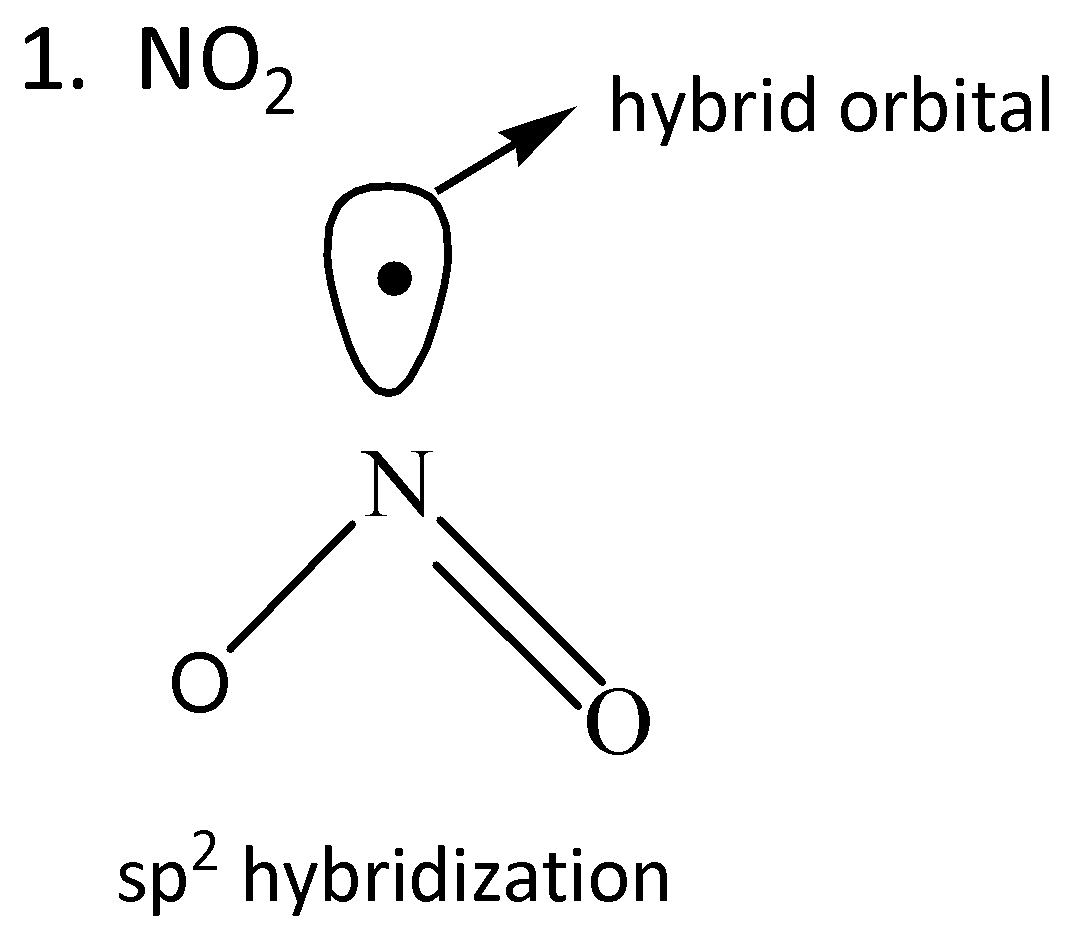
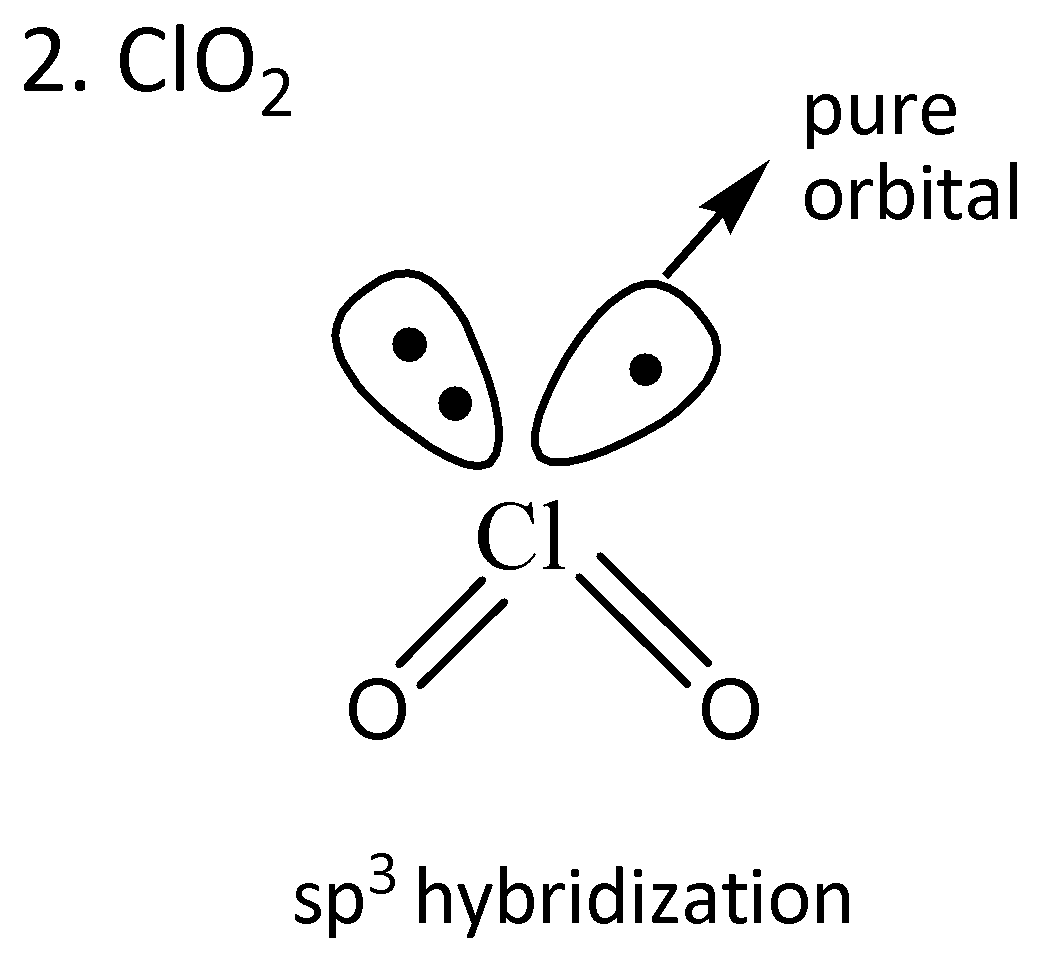


From the given orbital diagrams above, it is clear that odd electrons of $Cl{O_2}$are in the pure orbital.
Note:
Note that the primary distinction between pure and hybrid orbitals is that pure orbitals are the initial atomic orbitals, whereas hybrid orbitals are created by combining two or more atomic orbitals.
Complete answer:
Atomic orbitals containing electrons are known as pure orbitals. These aren't hybrid orbitals, which are mixed orbitals. Because electrons are constantly moving about the atomic nucleus, the orbital indicates the most likely position of electrons in an atom. This offers an area where the electron can occur at a certain moment rather than a set place.
Hybrid orbitals are molecular orbitals that develop when atomic orbitals are mixed together. These are only fictitious orbitals. The mixing takes place between the same atom's atomic orbitals. In order to create a covalent chemical connection with another atom, this mixing takes place. The outcome of this mixing is a process known as "orbital hybridization," which produces hybrid orbitals. These orbitals are named for the atomic orbitals that are hybridized.
We draw the orbitals of the given compounds to find the radical in which the odd electron is in the pure orbital.
From the given orbital diagrams above, it is clear that odd electrons of $Cl{O_2}$are in the pure orbital.
Note:
Note that the primary distinction between pure and hybrid orbitals is that pure orbitals are the initial atomic orbitals, whereas hybrid orbitals are created by combining two or more atomic orbitals.
Recently Updated Pages
Master Class 11 English: Engaging Questions & Answers for Success

Master Class 11 Social Science: Engaging Questions & Answers for Success
Master Class 11 Maths: Engaging Questions & Answers for Success
Master Class 11 Biology: Engaging Questions & Answers for Success
Master Class 11 Physics: Engaging Questions & Answers for Success
Master Class 11 Chemistry: Engaging Questions & Answers for Success
Trending doubts
1 ton equals to A 100 kg B 1000 kg C 10 kg D 10000 class 11 physics CBSE
Find the value of the expression given below sin 30circ class 11 maths CBSE
What are hard magnetic materials class 11 physics CBSE
1 Quintal is equal to a 110 kg b 10 kg c 100kg d 1000 class 11 physics CBSE
Draw a diagram showing the external features of fish class 11 biology CBSE
What organs are located on the left side of your body class 11 biology CBSE