




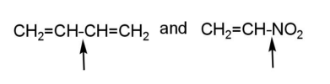
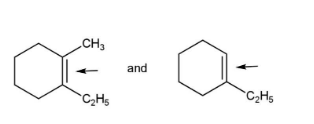
In which of the following pairs, indicated bond is of greater strength:
A.
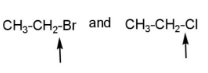
B.
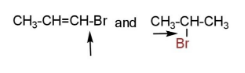
C.
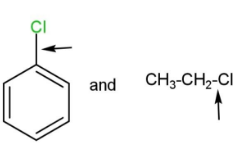
D.
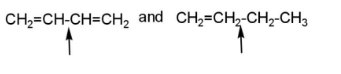
E.
F.
Answer
 Verified
593.4k+ views
Hint: When the atoms are held together in a molecule, bonds are formed due to their interactions. These bonds are of varied lengths and strengths.Bond order is responsible for the length of any bond, and length of any bond has an effect on the bond strength.
Complete answer:
Bonds are the species that link together atoms. These bonds are formed by either sharing of electrons between atoms (in covalent bond) or by transfer of electrons (in ionic bond).
As we know, length of a bond is defined as the distance between the nuclei of two atoms bonded together. While, Bond order is the number of bonds between the atoms. If the bond order is high, then the bond length is shorter, so, the bond energy is also high, as energy is required to break more bonds, which means that the bond strength is greater. So, shorter bond lengths have higher energy requirements for their breaking. Therefore, this will increase the bond strength in atoms with high bond order.
Also, the atoms that have delocalization, and hyper conjugation, due to double or triple bonds have higher bond strength. This is due to the fact that bond order and bond length are related, more electron pairs result in short bonds and high bond strength. Thus, bond length is inversely proportional to bond strength.
Through these facts, it can be inferred that pairs B, D, E, and F have compounds in which greater bond strength is indicated, due to more bond order and less bond length, also due to hyper conjugation.
Some of the compounds that have more bond strength in these pairs are:
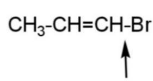
pair B has hyper conjugation due to more bond order, and double bond that decreases bond length and increases bond strength.

pair E has both the indicated bonds with greater strength due to the double bond character and more bond order, because of hyper conjugation.
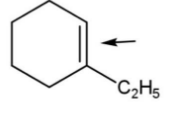
compound from pair F, has less carbon chain so shorter bond length so, more bond strength.
Pairs, D have only the first compound with more bond strength due to the same reasons.
Hence, pairs B, D, E, and F have compounds indicating greater bond strength.
Note: Hybridization also affects the bond length, and hence the bond strength, more s character results in a longer length and less bond strength, while a decreased s character has more bond strength.
Complete answer:
Bonds are the species that link together atoms. These bonds are formed by either sharing of electrons between atoms (in covalent bond) or by transfer of electrons (in ionic bond).
As we know, length of a bond is defined as the distance between the nuclei of two atoms bonded together. While, Bond order is the number of bonds between the atoms. If the bond order is high, then the bond length is shorter, so, the bond energy is also high, as energy is required to break more bonds, which means that the bond strength is greater. So, shorter bond lengths have higher energy requirements for their breaking. Therefore, this will increase the bond strength in atoms with high bond order.
Also, the atoms that have delocalization, and hyper conjugation, due to double or triple bonds have higher bond strength. This is due to the fact that bond order and bond length are related, more electron pairs result in short bonds and high bond strength. Thus, bond length is inversely proportional to bond strength.
Through these facts, it can be inferred that pairs B, D, E, and F have compounds in which greater bond strength is indicated, due to more bond order and less bond length, also due to hyper conjugation.
Some of the compounds that have more bond strength in these pairs are:
pair B has hyper conjugation due to more bond order, and double bond that decreases bond length and increases bond strength.
pair E has both the indicated bonds with greater strength due to the double bond character and more bond order, because of hyper conjugation.
compound from pair F, has less carbon chain so shorter bond length so, more bond strength.
Pairs, D have only the first compound with more bond strength due to the same reasons.
Hence, pairs B, D, E, and F have compounds indicating greater bond strength.
Note: Hybridization also affects the bond length, and hence the bond strength, more s character results in a longer length and less bond strength, while a decreased s character has more bond strength.
Recently Updated Pages
Which will be the least stable resonating structure class 11 chemistry CBSE

How many 5 digit telephone numbers can be construc-class-11-maths-CBSE
How do you find the angle of the resultant vector class 11 physics CBSE
Draw labelled diagram of the following i Gram seed class 11 biology CBSE
1 Quintal is equal to a 110 kg b 10 kg c 100kg d 1000 class 11 physics CBSE
What is the need and importance of classification class 11 biology CBSE
Trending doubts
One Metric ton is equal to kg A 10000 B 1000 C 100 class 11 physics CBSE
Find the value of the expression given below sin 30circ class 11 maths CBSE
Draw a diagram of nephron and explain its structur class 11 biology CBSE
10 examples of friction in our daily life
Proton was discovered by A Thomson B Rutherford C Chadwick class 11 chemistry CBSE
The teeth used for biting and cutting food are called class 11 biology CBSE