




In the Acacia species, the first few leaves are pinnately compound. Then there are leaves with flattened petiole and fewer pinnae. The leaves of the adult plant have parallel-veined flattened petiole and no pinnae. It shows that
A. Leaves of the adult plant are reduced to phyllodes while those of the seedling are unreduced
B. The parallel-veined green structures of the adult plant are phylloclades
C. The plant shows developmental heterophylly, the compound in seedling and simple in adult plant
D. The leaves of the adult plant are unreduced while they are reduced in the seedling stage
Answer
 Verified
596.4k+ views
Hint: A pinnately compound leaf is an arrangement in which the leaf is split into smaller leaflets, those leaflets arranged are in turn attached on all sides of the leaf's central stalk/rachis (axis). It is characteristically found in species of Acacia.
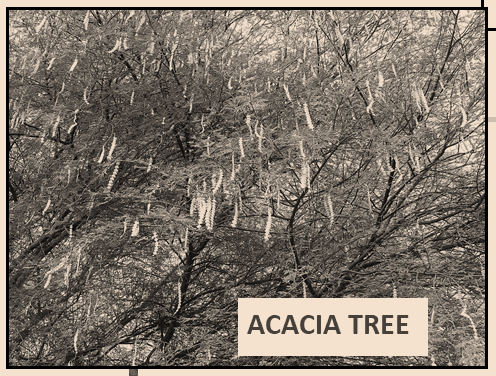
Complete answer: Acacia, (genus Acacia), a genus of about 160 species of trees and shrubs within the Leguminosae (Fabaceae) family. In the Acacia species, the primary few leaves are pinnately compound. Along with these, there are leaves with detailed flattened petiole and a lesser number of pinnae. These leaves belonging to the adult plant are characterized by the presence of parallel-veined flattened petiole and no pinnae. It shows that the leaves of adult plants are reduced to phyllodes while those of the seedling stage are unreduced. The parallel venation in the flattened petiole which is found in adult plants is referred to as phyllodes. These plants have many small oval leaves (called pinnate leaves) along with their ‘leaflets’ which provides them the looks of a double-sided comb and is the main identifying factor for this tree. These leaflets attach to the most stem by a leaf stalk called a leaf petiole.
So, the proper answer is option A. Leaves of adult plants are reduced to phyllodes while those of the seedling are unreduced.
Note: It is important to note that Acacias are native to tropical and subtropical regions of the world, particularly Australia (where they are called wattles) and Africa. In these parts, they are well-known landmarks on the veld and savanna.
Complete answer: Acacia, (genus Acacia), a genus of about 160 species of trees and shrubs within the Leguminosae (Fabaceae) family. In the Acacia species, the primary few leaves are pinnately compound. Along with these, there are leaves with detailed flattened petiole and a lesser number of pinnae. These leaves belonging to the adult plant are characterized by the presence of parallel-veined flattened petiole and no pinnae. It shows that the leaves of adult plants are reduced to phyllodes while those of the seedling stage are unreduced. The parallel venation in the flattened petiole which is found in adult plants is referred to as phyllodes. These plants have many small oval leaves (called pinnate leaves) along with their ‘leaflets’ which provides them the looks of a double-sided comb and is the main identifying factor for this tree. These leaflets attach to the most stem by a leaf stalk called a leaf petiole.
So, the proper answer is option A. Leaves of adult plants are reduced to phyllodes while those of the seedling are unreduced.
Note: It is important to note that Acacias are native to tropical and subtropical regions of the world, particularly Australia (where they are called wattles) and Africa. In these parts, they are well-known landmarks on the veld and savanna.
Recently Updated Pages
Master Class 12 Economics: Engaging Questions & Answers for Success

Master Class 12 English: Engaging Questions & Answers for Success
Master Class 12 Social Science: Engaging Questions & Answers for Success
Master Class 12 Maths: Engaging Questions & Answers for Success
Master Class 12 Physics: Engaging Questions & Answers for Success
Master Class 11 Social Science: Engaging Questions & Answers for Success
Trending doubts
One Metric ton is equal to kg A 10000 B 1000 C 100 class 11 physics CBSE
Difference Between Prokaryotic Cells and Eukaryotic Cells
Two of the body parts which do not appear in MRI are class 11 biology CBSE
1 ton equals to A 100 kg B 1000 kg C 10 kg D 10000 class 11 physics CBSE
Draw a diagram of nephron and explain its structur class 11 biology CBSE
10 examples of friction in our daily life