




In photoelectric effect, electrons are emitted
A) With a maximum velocity proportional to the frequency of the incident radiation
B) At a rate that is independent of the intensity of the incident radiation
C) Only if the frequency of the incident radiation is above a certain threshold value
D) Only if the temperature of the emitter is high
Answer
 Verified
646.8k+ views
Hint:
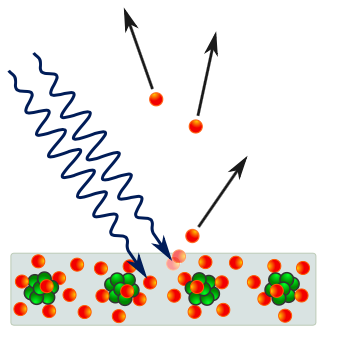
Photoelectric effect: The phenomenon in which the electrons are emitted when a metal absorbs electromagnetic radiation.
Photoelectric emission requires some minimum frequency of the light wave to perform the phenomenon which is called threshold energy.
The kinetic energy of the light wave depends on the intensity of the light.
Formula used:
\[K{E_{\max }} = hf - h{f_0}\], where\[\;K{E_{max}}\] = maximum kinetic energy of photoelectron,
$f$=incident light’s frequency, ${f_ \circ }$= frequency of threshold.
Complete step-by-step solution:
According to Einstein’s equation for the photoelectric effect, the kinetic energy depends on the frequency of the light wave.
Analyzing the given options
Explains the velocity of the light wave, the velocity of the light wave does not affect the kinetic energy of the photoelectric emission. The kinetic energy is independent of the velocity of the light.
Explain the rate of intensity of the incident light wave, the light wave requires minimum intensity for the emission of electrons but not the rate of change of intensity.
Explaining the minimum frequency of the light wave which is called threshold frequency, this frequency affects the emission of photoelectrons from the metal surface because the phenomenon takes place only if the light has a minimum frequency.
Explains the temperature effect on the photoelectric effect but the temperature does not affect the photoelectric emission.
The correct option is C
Note: Since the maximum kinetic energy of photoelectrons is greater than zero so $hf - h{f_0} > 0$ or $f{\text{ }} > {\text{ }}{f_0}$.
-Application of photoelectric effect: light meters, photodiodes, phototransistors, etc.
Light meters: It is a device used to measure the amount of light falling on a subject.
Photodiodes: It is a semiconductor device that converts light energy into electrical energy.
Phototransistor: It is a two-terminal electric switch which amplifies electric current when exposed to light energy.
Photoelectric effect: The phenomenon in which the electrons are emitted when a metal absorbs electromagnetic radiation.
Photoelectric emission requires some minimum frequency of the light wave to perform the phenomenon which is called threshold energy.
The kinetic energy of the light wave depends on the intensity of the light.
Formula used:
\[K{E_{\max }} = hf - h{f_0}\], where\[\;K{E_{max}}\] = maximum kinetic energy of photoelectron,
$f$=incident light’s frequency, ${f_ \circ }$= frequency of threshold.
Complete step-by-step solution:
According to Einstein’s equation for the photoelectric effect, the kinetic energy depends on the frequency of the light wave.
Analyzing the given options
Explains the velocity of the light wave, the velocity of the light wave does not affect the kinetic energy of the photoelectric emission. The kinetic energy is independent of the velocity of the light.
Explain the rate of intensity of the incident light wave, the light wave requires minimum intensity for the emission of electrons but not the rate of change of intensity.
Explaining the minimum frequency of the light wave which is called threshold frequency, this frequency affects the emission of photoelectrons from the metal surface because the phenomenon takes place only if the light has a minimum frequency.
Explains the temperature effect on the photoelectric effect but the temperature does not affect the photoelectric emission.
The correct option is C
Note: Since the maximum kinetic energy of photoelectrons is greater than zero so $hf - h{f_0} > 0$ or $f{\text{ }} > {\text{ }}{f_0}$.
-Application of photoelectric effect: light meters, photodiodes, phototransistors, etc.
Light meters: It is a device used to measure the amount of light falling on a subject.
Photodiodes: It is a semiconductor device that converts light energy into electrical energy.
Phototransistor: It is a two-terminal electric switch which amplifies electric current when exposed to light energy.
Recently Updated Pages
Explain the structure of megasporangium class 12 biology CBSE

Why is chloroform kept in dark coloured bottles class 12 chemistry CBSE
Derive the balancing condition of a Wheatstone bri class 12 physics CBSE
Draw VI characteristics of a pn junction diode Explain class 12 physics CBSE
Is it possible to carry pride in ones language too class 12 english CBSE
In a population at Hardy Weinberg equilibrium the allele class 12 biology CBSE
Trending doubts
Draw a labelled sketch of the human eye class 12 physics CBSE
Which are the Top 10 Largest Countries of the World?
Draw ray diagrams each showing i myopic eye and ii class 12 physics CBSE
Which is the correct genotypic ratio of mendel dihybrid class 12 biology CBSE
Differentiate between homogeneous and heterogeneous class 12 chemistry CBSE
Which animal never drinks water in its entire life class 12 biology CBSE