




In Hydra, absence of circulatory system is compensated by
A. Gastrovascular cavity
B. Tentacles
C. Pseudocoelomic fluid
D. Mesoglea
Answer
 Verified
571.5k+ views
Hint: Hydra is an aquatic animal belonging to the phylum Cnidaria and class hydrozoa. They do not have a complete circulatory system, i.e., contain only one opening. This single opening serves the purpose of exchange of material in between the cells of the organism.
Complete answer:
Hydra is a genus of phylum Cnidaria that are native to temperate and tropical regions. The unique feature of them is that they have the power of regeneration. They are tubular, radially symmetrical and the mouth is surrounded by tentacles present at distal end and pedal disc at proximal end.
Living things must be able to transport nutrients, waste and gases. Simple animals, such as Hydra and planaria lack specialized organs such as heart and blood vessels for circulation of substance instead they use their skin as an exchange point for material. This limits the size of an animal. Hydra do not have a complete circulatory system instead they have only one opening which serves both the purpose of mouth as well as of anus. It is replaced by the gastrovascular cavity, which serves the purpose of exchange of gases and nutrients. Hydra takes up oxygen from the water that enters the cavity and gets the wastes out like carbon dioxide from this cavity only. The cells that line up this cavity helps in taking up the nutrients for the body.
So, the correct answer is option A, Gastrovascular cavity.
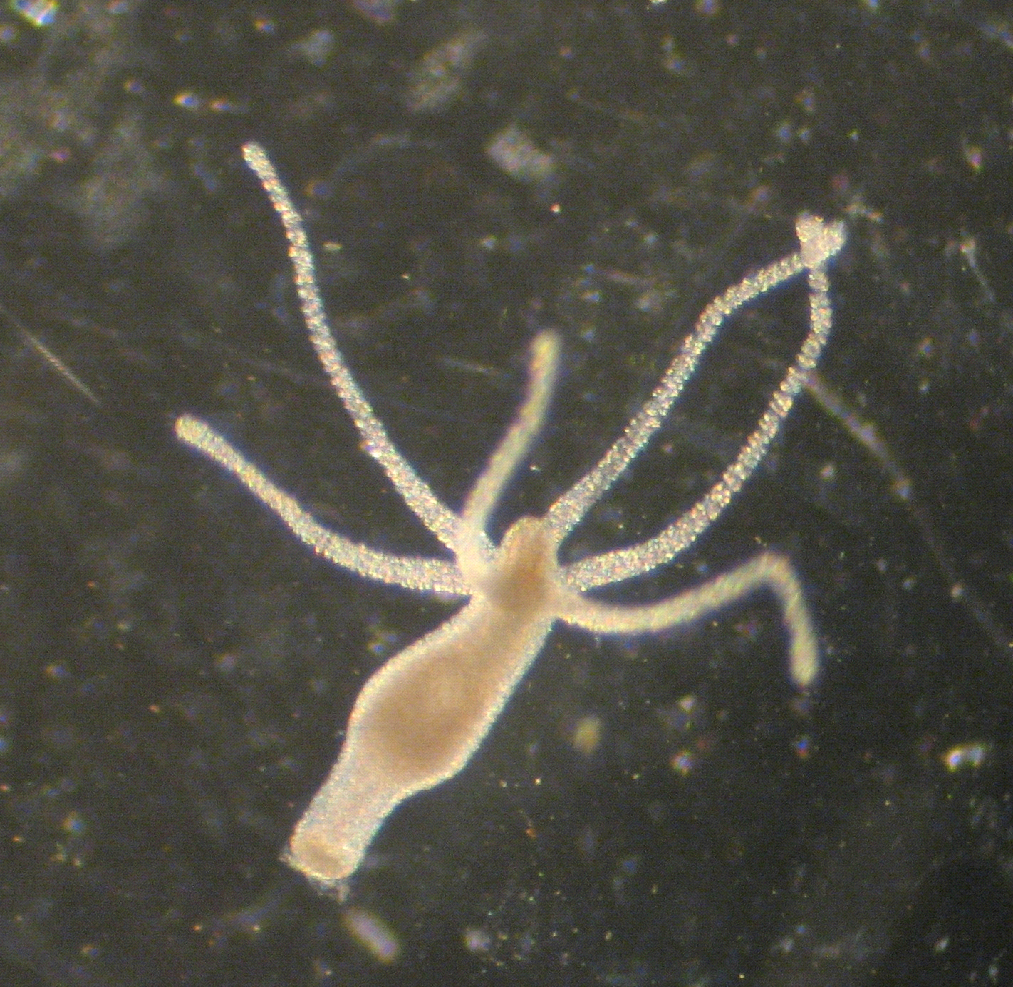
Hydra vulgaris
Additional information:-
Feature of Hydra vulgaris :
Hydra is found in freshwater ponds, ditches, where they remain attached to stones and aquatic plants.
It is solitary. Normally they are attached to plants by tentacles and to substratum by pedal disc. They can detach, swim and feed.
Body is in the form of an elongated tube showing blind sac plan as it has only mouth and no anus.
Tentacles are generally 6-8 in number and are used for defence purposes.
Reproduction takes place asexually by budding and sexually by formation of gametes.
It has a great power of regeneration.
It is carnivorous.
Note:
Hydra mainly feed on aquatic invertebrates such as Daphnia and Cyclops. They extend their tentacles slowly around the prey animal. Upon contact, nematocysts present on the tentacle fire into the prey and coil around the prey. Within two minutes, the tentacles will have surrounded the prey and moved it into the opened mouth aperture and in 10 min the food gets digested.
Complete answer:
Hydra is a genus of phylum Cnidaria that are native to temperate and tropical regions. The unique feature of them is that they have the power of regeneration. They are tubular, radially symmetrical and the mouth is surrounded by tentacles present at distal end and pedal disc at proximal end.
Living things must be able to transport nutrients, waste and gases. Simple animals, such as Hydra and planaria lack specialized organs such as heart and blood vessels for circulation of substance instead they use their skin as an exchange point for material. This limits the size of an animal. Hydra do not have a complete circulatory system instead they have only one opening which serves both the purpose of mouth as well as of anus. It is replaced by the gastrovascular cavity, which serves the purpose of exchange of gases and nutrients. Hydra takes up oxygen from the water that enters the cavity and gets the wastes out like carbon dioxide from this cavity only. The cells that line up this cavity helps in taking up the nutrients for the body.
So, the correct answer is option A, Gastrovascular cavity.
Hydra vulgaris
Additional information:-
Feature of Hydra vulgaris :
Hydra is found in freshwater ponds, ditches, where they remain attached to stones and aquatic plants.
It is solitary. Normally they are attached to plants by tentacles and to substratum by pedal disc. They can detach, swim and feed.
Body is in the form of an elongated tube showing blind sac plan as it has only mouth and no anus.
Tentacles are generally 6-8 in number and are used for defence purposes.
Reproduction takes place asexually by budding and sexually by formation of gametes.
It has a great power of regeneration.
It is carnivorous.
Note:
Hydra mainly feed on aquatic invertebrates such as Daphnia and Cyclops. They extend their tentacles slowly around the prey animal. Upon contact, nematocysts present on the tentacle fire into the prey and coil around the prey. Within two minutes, the tentacles will have surrounded the prey and moved it into the opened mouth aperture and in 10 min the food gets digested.
Recently Updated Pages
Which will be the least stable resonating structure class 11 chemistry CBSE

How many 5 digit telephone numbers can be construc-class-11-maths-CBSE
How do you find the angle of the resultant vector class 11 physics CBSE
Draw labelled diagram of the following i Gram seed class 11 biology CBSE
1 Quintal is equal to a 110 kg b 10 kg c 100kg d 1000 class 11 physics CBSE
What is the need and importance of classification class 11 biology CBSE
Trending doubts
Find the value of the expression given below sin 30circ class 11 maths CBSE
One Metric ton is equal to kg A 10000 B 1000 C 100 class 11 physics CBSE
10 examples of friction in our daily life
Draw a diagram of a plant cell and label at least eight class 11 biology CBSE
Difference between physical and chemical change class 11 chemistry CBSE
Proton was discovered by A Thomson B Rutherford C Chadwick class 11 chemistry CBSE