



In eukaryotic cells, the chromosomes are located in
A. Nucleus
B. Nucleolus
C. Golgi complex
D. Lysosomes
Answer
 Verified
637.8k+ views
Hint: Eukaryotic cells are the ones which have a proper nuclear membrane outside the nucleus, they are advanced than the prokaryotes, in which the genetic material is present inside the cytoplasm and no nuclear membrane is found, the genetic material in prokaryotes is termed as nuclein.
Complete answer: A eukaryotic cell is the one that has a definite nucleus bound to a nuclear membrane inside which the chromosome is found.
A Prokaryotic cell on the other hand lacks the presence of a nuclear and cell organelles.
In the case of rod prokaryotes, the genetic material or the chromosomes are found suspended in the cytoplasm, it is known as nuclein.
In a prokaryotic cell, a single chromosome is present as mentioned above while in eukaryotes more than one chromosome may be present.
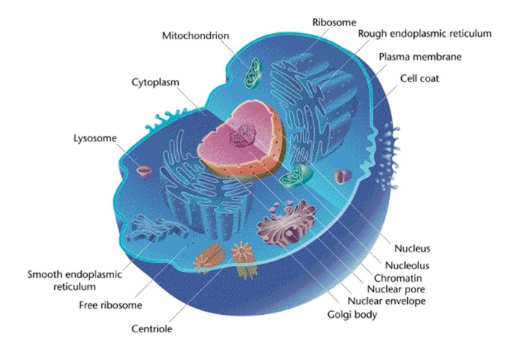
There are many other differences between a eukaryotic and a prokaryotic cell like the absence of membrane-bound cell organelles in the later.
In the case of prokaryotes, additional structures known as the pili and flagella are present for locomotion, which is absent in the case of eukaryotes.
Hence, the correct option is (A), Nucleus.
Note: Chromosomes in the case of prokaryotes are found as a single circular DNA and these are suspended in the cell cytoplasm and no membrane-bound organelles are present. In eukaryotes, chromosomes are also present inside the mitochondria in both plant and animal cells and the chloroplast in the case of plant cells, but that DNA and is dependent on the nuclear DNA for some of its functions.
Complete answer: A eukaryotic cell is the one that has a definite nucleus bound to a nuclear membrane inside which the chromosome is found.
A Prokaryotic cell on the other hand lacks the presence of a nuclear and cell organelles.
In the case of rod prokaryotes, the genetic material or the chromosomes are found suspended in the cytoplasm, it is known as nuclein.
In a prokaryotic cell, a single chromosome is present as mentioned above while in eukaryotes more than one chromosome may be present.
There are many other differences between a eukaryotic and a prokaryotic cell like the absence of membrane-bound cell organelles in the later.
In the case of prokaryotes, additional structures known as the pili and flagella are present for locomotion, which is absent in the case of eukaryotes.
Hence, the correct option is (A), Nucleus.
Note: Chromosomes in the case of prokaryotes are found as a single circular DNA and these are suspended in the cell cytoplasm and no membrane-bound organelles are present. In eukaryotes, chromosomes are also present inside the mitochondria in both plant and animal cells and the chloroplast in the case of plant cells, but that DNA and is dependent on the nuclear DNA for some of its functions.
Recently Updated Pages
Basicity of sulphurous acid and sulphuric acid are

Master Class 12 Economics: Engaging Questions & Answers for Success
Master Class 12 Biology: Engaging Questions & Answers for Success
Master Class 11 English: Engaging Questions & Answers for Success
Master Class 11 Physics: Engaging Questions & Answers for Success
Master Class 11 Computer Science: Engaging Questions & Answers for Success
Trending doubts
Difference Between Plant Cell and Animal Cell
Fill the blanks with the suitable prepositions 1 The class 9 english CBSE
What is pollution? How many types of pollution? Define it
What is the full form of pH?
What is the Full Form of ICSE, CBSE and SSC
Name 10 Living and Non living things class 9 biology CBSE