




In eukaryotic cell, the type of ribosome is
A. Only 70S
B. Only 80S
C. 70S and 80S both
D. Only 50S
Answer
 Verified
613.5k+ views
Hint:-Ribosome is the subcellular organelle that is composed of RNA and associated proteins that are known to carry out the synthesis of proteins from RNA molecules. Ribosomal structure is composed of two subunits- smaller and larger subunits.
Complete step-by-step solution:-
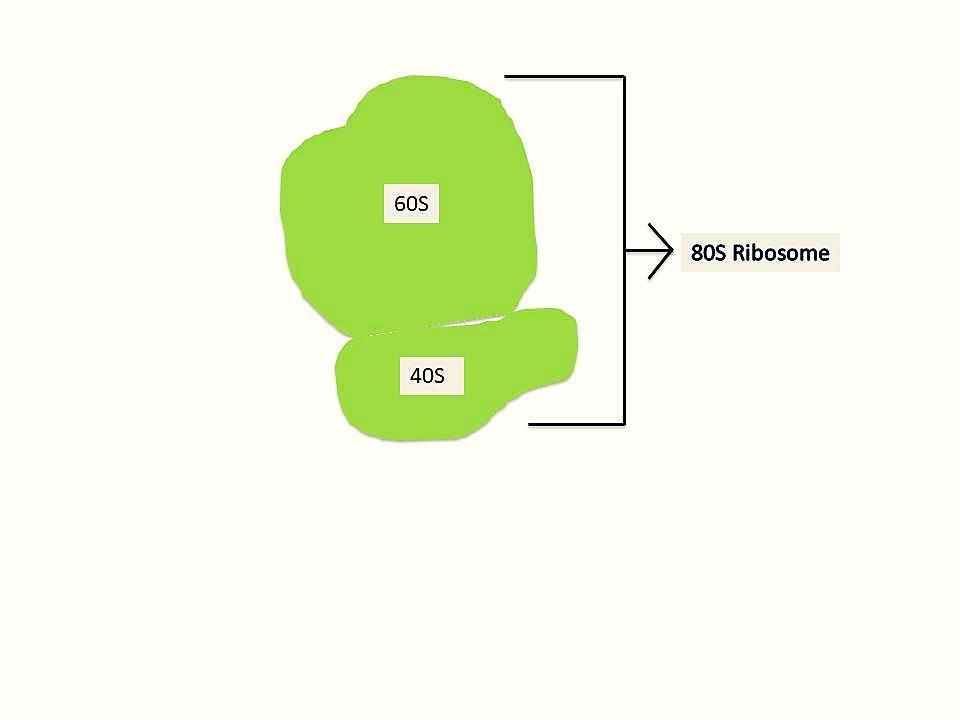
Ribosomes are present either scattered in the cytoplasm of the cell or sometimes attached to the endoplasmic reticulum making it a rough endoplasmic reticulum (RER). Ribosomes are present in both eukaryotes as well as prokaryotes. The eukaryotic ribosomes are larger than the prokaryotic chromosomes. Thus, in eukaryotes, 80S ribosomes are present in which ‘S’ represents their sedimentation coefficient in the Svedberg unit, which implies that the sedimentation rate of ribosomes in eukaryotes is faster than the prokaryotes whose ribosomes are of 70S type.
Option (A) is incorrect because a 70S type of ribosome exists in prokaryotic cells.
Option (C) is incorrect because in eukaryotes only 80S type of ribosome is present, but not both i.e., 70S and 80S.
Option (D) is incorrect because 50S is the smaller subunit of the ribosome in the prokaryotic cells. Hence, it is not a part of the eukaryotic chromosome.
So, the correct option is (B).
Additional information:-
Eukaryotic ribosomes that are of the type 80S are composed of two subunits i.e., smaller and larger subunits. Hence, the smaller subunit is of 40S type and the larger subunit is of 60S type which is based on their sedimentation coefficient. The prokaryotic ribosomes that are of 70S type are made up of 30S (smaller) and 50S (larger) subunits. Ribosomes perform two main functions i.e., to decode the message present in RNA molecules through the use of genetic code and finally joining the decoded amino-acids through peptide bonds to form proteins.
Note:- Ribosomes are present in both eukaryotes as well as prokaryotes. They are present as 80S ribosomes in eukaryotes and as 70S ribosomes in prokaryotes based on their sedimentation rate.
Complete step-by-step solution:-
Ribosomes are present either scattered in the cytoplasm of the cell or sometimes attached to the endoplasmic reticulum making it a rough endoplasmic reticulum (RER). Ribosomes are present in both eukaryotes as well as prokaryotes. The eukaryotic ribosomes are larger than the prokaryotic chromosomes. Thus, in eukaryotes, 80S ribosomes are present in which ‘S’ represents their sedimentation coefficient in the Svedberg unit, which implies that the sedimentation rate of ribosomes in eukaryotes is faster than the prokaryotes whose ribosomes are of 70S type.
Option (A) is incorrect because a 70S type of ribosome exists in prokaryotic cells.
Option (C) is incorrect because in eukaryotes only 80S type of ribosome is present, but not both i.e., 70S and 80S.
Option (D) is incorrect because 50S is the smaller subunit of the ribosome in the prokaryotic cells. Hence, it is not a part of the eukaryotic chromosome.
So, the correct option is (B).
Additional information:-
Eukaryotic ribosomes that are of the type 80S are composed of two subunits i.e., smaller and larger subunits. Hence, the smaller subunit is of 40S type and the larger subunit is of 60S type which is based on their sedimentation coefficient. The prokaryotic ribosomes that are of 70S type are made up of 30S (smaller) and 50S (larger) subunits. Ribosomes perform two main functions i.e., to decode the message present in RNA molecules through the use of genetic code and finally joining the decoded amino-acids through peptide bonds to form proteins.
Note:- Ribosomes are present in both eukaryotes as well as prokaryotes. They are present as 80S ribosomes in eukaryotes and as 70S ribosomes in prokaryotes based on their sedimentation rate.
Recently Updated Pages
Master Class 12 Economics: Engaging Questions & Answers for Success

Master Class 12 English: Engaging Questions & Answers for Success
Master Class 12 Social Science: Engaging Questions & Answers for Success
Master Class 12 Maths: Engaging Questions & Answers for Success
Master Class 12 Physics: Engaging Questions & Answers for Success
Master Class 9 General Knowledge: Engaging Questions & Answers for Success
Trending doubts
Which are the Top 10 Largest Countries of the World?
Draw a labelled sketch of the human eye class 12 physics CBSE
Differentiate between homogeneous and heterogeneous class 12 chemistry CBSE
Why is the cell called the structural and functional class 12 biology CBSE
Draw ray diagrams each showing i myopic eye and ii class 12 physics CBSE
Which is the correct genotypic ratio of mendel dihybrid class 12 biology CBSE