




In angiosperms, functional megaspore develops into
(a) Endosperm
(b) Pollensac
(c) Embryo sac
(d) Ovule
Answer
 Verified
664.2k+ views
Hint: The female gametophyte of a seed plant consists of a thin-walled sac within the nucleus that contains the egg nucleus and other nuclei which produce endosperm on fertilization.
Complete step by step answer:
In angiosperms or flowering plants, the megasporocyte produces a megaspore that develops into an embryo sac through two distinct processes megasporogenesis (formation of the megaspore within the nucellus, or megasporangium) , and megagametogenesis (development of the megaspore into embryo sac, or megagametophyte) .
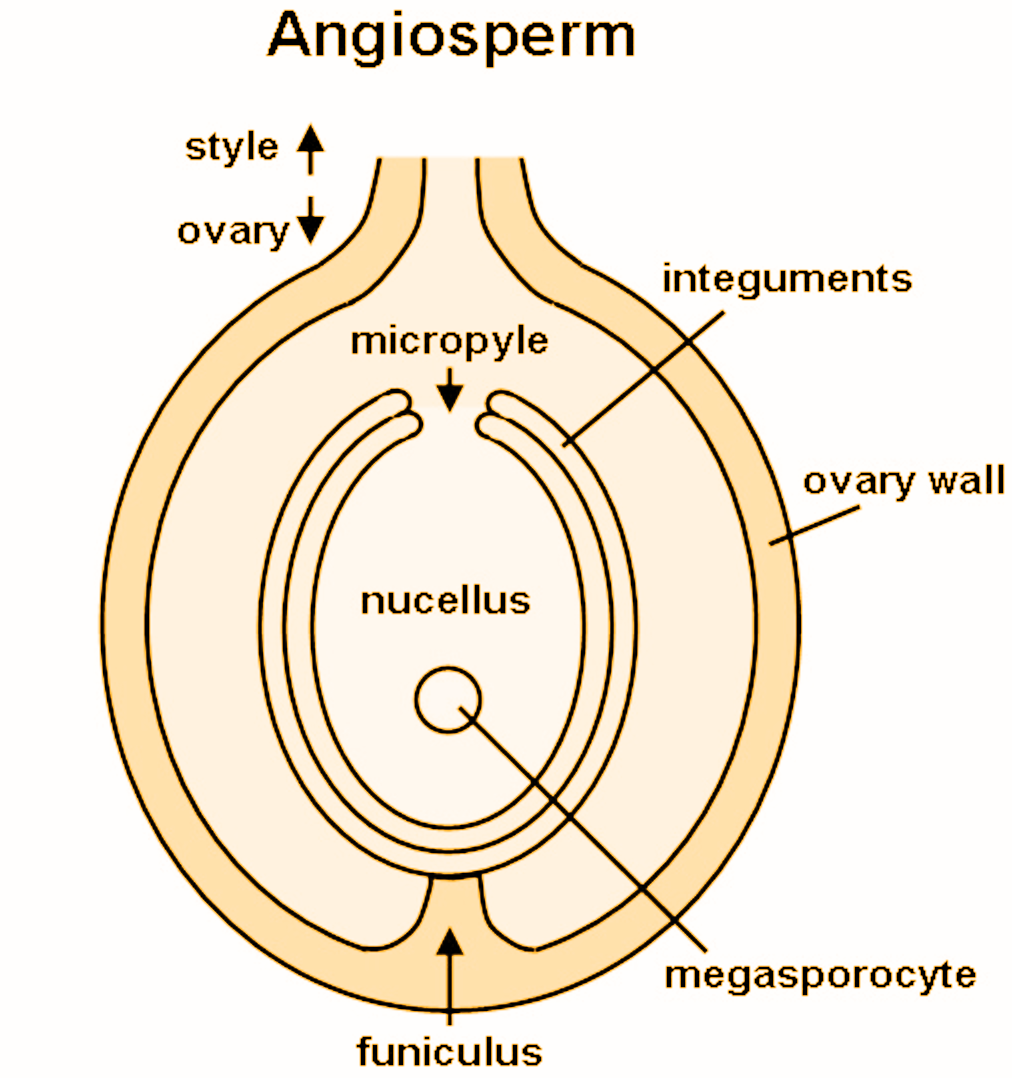
When we observe the distribution of cells inside the embryo sac, we come to know that:
- There is a large central cell.
- At the micropylar end, 3 cells are grouped together to form an egg apparatus. The egg apparatus, in turn, consists of two synergids and one ‘egg cell’.
- Three cells at the chalazal end are together called ‘antipodals’. They are haploid.
Now, during double fertilization one of the male gametes moves towards the egg cell and fuses with its nucleus thus completing the ‘syngamy’. This results in the formation of a diploid cell, which is named as ‘zygote’.
While the other male gamete moves towards the two polar nuclei located in the central cell. Here, a fusion occurs among them to form a triploid ‘primary endosperm nucleus’ (PEN) . As this process involves the fusion of three haploid nuclei, it is called ‘triple fusion’.
So, the correct answer is, ‘(c) Embryo Sac’.
Note:
- Each ovule has one or two protective envelopes. These are called integuments.
- Integuments encircle the nucellus from all the sides except at the tip where a small opening called the ‘micropyle’ is organized.
- Opposite the micropylar end, is the ‘chalaza’. It represents the basal part of the ovule.
- Since two types of fusions, syngamy and triple fusion take place in an embryo sac the whole phenomenon is termed ‘double fertilization’. This event is unique to flowering plants.
Complete step by step answer:
In angiosperms or flowering plants, the megasporocyte produces a megaspore that develops into an embryo sac through two distinct processes megasporogenesis (formation of the megaspore within the nucellus, or megasporangium) , and megagametogenesis (development of the megaspore into embryo sac, or megagametophyte) .
When we observe the distribution of cells inside the embryo sac, we come to know that:
- There is a large central cell.
- At the micropylar end, 3 cells are grouped together to form an egg apparatus. The egg apparatus, in turn, consists of two synergids and one ‘egg cell’.
- Three cells at the chalazal end are together called ‘antipodals’. They are haploid.
Now, during double fertilization one of the male gametes moves towards the egg cell and fuses with its nucleus thus completing the ‘syngamy’. This results in the formation of a diploid cell, which is named as ‘zygote’.
While the other male gamete moves towards the two polar nuclei located in the central cell. Here, a fusion occurs among them to form a triploid ‘primary endosperm nucleus’ (PEN) . As this process involves the fusion of three haploid nuclei, it is called ‘triple fusion’.
So, the correct answer is, ‘(c) Embryo Sac’.
Note:
- Each ovule has one or two protective envelopes. These are called integuments.
- Integuments encircle the nucellus from all the sides except at the tip where a small opening called the ‘micropyle’ is organized.
- Opposite the micropylar end, is the ‘chalaza’. It represents the basal part of the ovule.
- Since two types of fusions, syngamy and triple fusion take place in an embryo sac the whole phenomenon is termed ‘double fertilization’. This event is unique to flowering plants.
Recently Updated Pages
Explain the structure of megasporangium class 12 biology CBSE

Why is chloroform kept in dark coloured bottles class 12 chemistry CBSE
Derive the balancing condition of a Wheatstone bri class 12 physics CBSE
Draw VI characteristics of a pn junction diode Explain class 12 physics CBSE
Is it possible to carry pride in ones language too class 12 english CBSE
In a population at Hardy Weinberg equilibrium the allele class 12 biology CBSE
Trending doubts
Draw a labelled sketch of the human eye class 12 physics CBSE
Which are the Top 10 Largest Countries of the World?
Draw ray diagrams each showing i myopic eye and ii class 12 physics CBSE
One megawatt is equal to how many units of electri class 12 physics CBSE
Which is the correct genotypic ratio of mendel dihybrid class 12 biology CBSE
Give 10 examples of unisexual and bisexual flowers