




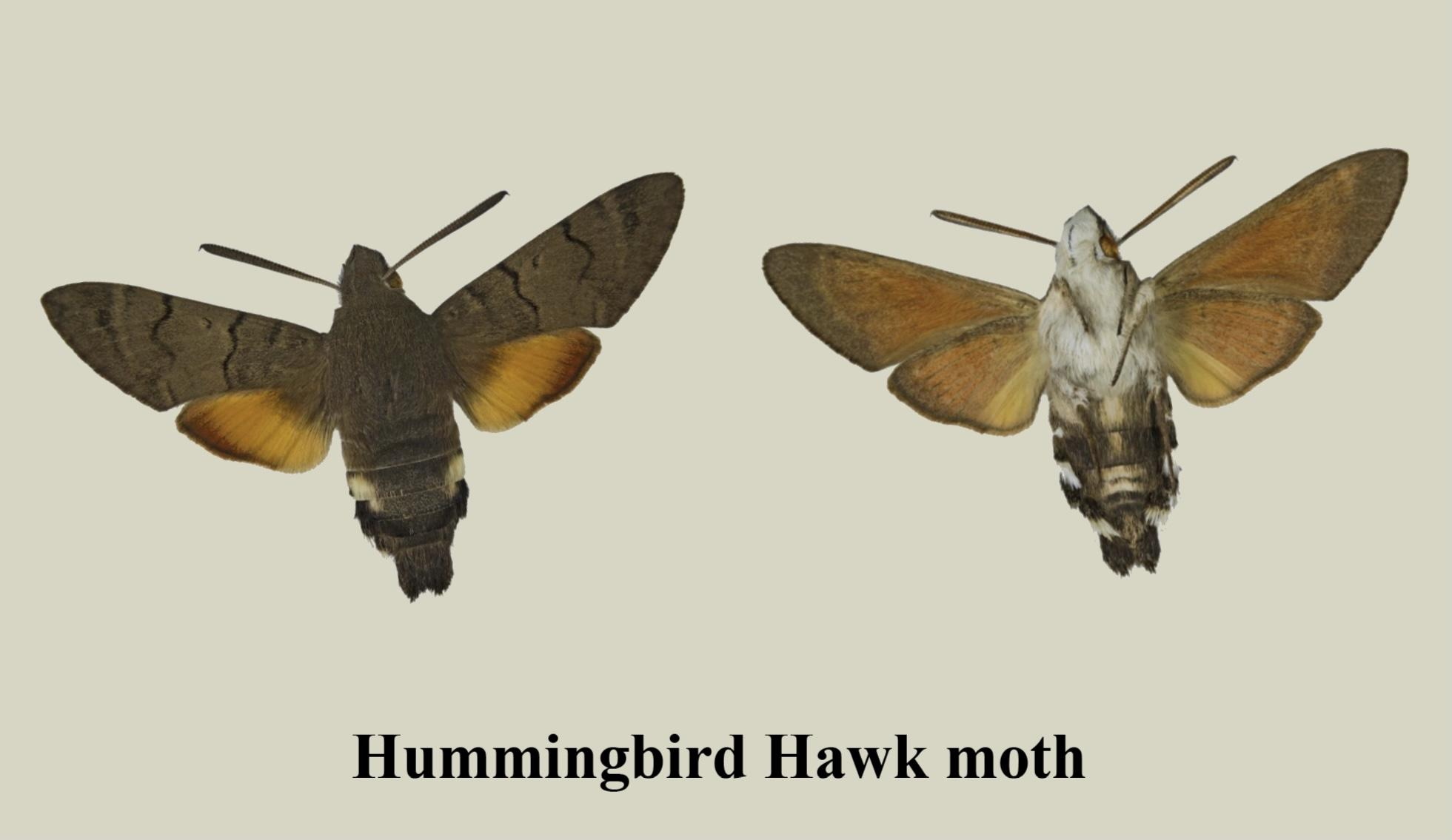
Hummingbird and Hawk illustrate
A)Convergent evolution
B)Humalogy
C)Adaptive radiation
D)Parallel evolution
Answer
 Verified
602.4k+ views
Hint: The hummingbird and the hawk show the evolution in which a trait held by a common ancestor evolved in two different variations over time. The most important consequence of this evolution is speciation.
Complete answer:
During evolution, when an animal or plant grouped into a wide variety of types adapted to specialized modes of life is known as adaptive radiation. They are closely related groups that have evolved in a very short time.
For example -the wings of Hummingbird and Hawk show Adaptive radiation.
-The dormant first explains the phenomenon of adaptive radiation when he travels to a place called Galapagos Island.
-The adaptive radiation is also known as divergent evolution was developed by H.F. Osborn in 1898.
Additional Information: Convergent evolution- having adapted to similar environments or ecological niches, the organisms are independently evolved similar traits. In this, the organisms are not monophyletic means they are not closely related to each other.
-It is just the opposite of divergent evolution in which the different traits are evolved by the species.
-Due to random mutation and related to adaptive changes, adaptive radiation can happen on a molecular level.
-It is also the development of similar cultural adaptations to similar environmental conditions by different peoples with different ancestral cultures.
Example - Wings of insects, birds, and bats, serve the same functions but they are evolved independently.
Parallel evolution - similar characteristics required by an independent species while evolving together at the same time in the same eco-space is known as parallel evolution.
Example - extinct browsing-horses and paleotheres
Homology - organisms share an ancestry between a pair of structures or genes in different taxa.
For example - four limbs of vertebrates, Wings of bats and birds, the arm of primates, flippers of whales, four legs of vertebrates like dogs, and crocodiles all are derived from the same ancestral tetrapod structure.
So, the correct answer is,” Adaptive radiation”.
Note: -A process in which organisms diversify rapidly from an ancestral species into new forms is known as adaptive radiation.
-The change occurs particularly when the environment makes new resources available, creates new challenges or opens a new environmental niche.
For example - due to natural disasters a species becomes extinct and this change in the environment contains many niches for organisms to occupy.
Complete answer:
During evolution, when an animal or plant grouped into a wide variety of types adapted to specialized modes of life is known as adaptive radiation. They are closely related groups that have evolved in a very short time.
For example -the wings of Hummingbird and Hawk show Adaptive radiation.
-The dormant first explains the phenomenon of adaptive radiation when he travels to a place called Galapagos Island.
-The adaptive radiation is also known as divergent evolution was developed by H.F. Osborn in 1898.
Additional Information: Convergent evolution- having adapted to similar environments or ecological niches, the organisms are independently evolved similar traits. In this, the organisms are not monophyletic means they are not closely related to each other.
-It is just the opposite of divergent evolution in which the different traits are evolved by the species.
-Due to random mutation and related to adaptive changes, adaptive radiation can happen on a molecular level.
-It is also the development of similar cultural adaptations to similar environmental conditions by different peoples with different ancestral cultures.
Example - Wings of insects, birds, and bats, serve the same functions but they are evolved independently.
Parallel evolution - similar characteristics required by an independent species while evolving together at the same time in the same eco-space is known as parallel evolution.
Example - extinct browsing-horses and paleotheres
Homology - organisms share an ancestry between a pair of structures or genes in different taxa.
For example - four limbs of vertebrates, Wings of bats and birds, the arm of primates, flippers of whales, four legs of vertebrates like dogs, and crocodiles all are derived from the same ancestral tetrapod structure.
So, the correct answer is,” Adaptive radiation”.
Note: -A process in which organisms diversify rapidly from an ancestral species into new forms is known as adaptive radiation.
-The change occurs particularly when the environment makes new resources available, creates new challenges or opens a new environmental niche.
For example - due to natural disasters a species becomes extinct and this change in the environment contains many niches for organisms to occupy.
Recently Updated Pages
Master Class 12 Economics: Engaging Questions & Answers for Success

Master Class 12 English: Engaging Questions & Answers for Success
Master Class 12 Social Science: Engaging Questions & Answers for Success
Master Class 12 Maths: Engaging Questions & Answers for Success
Master Class 12 Physics: Engaging Questions & Answers for Success
Master Class 9 General Knowledge: Engaging Questions & Answers for Success
Trending doubts
Which are the Top 10 Largest Countries of the World?
Draw a labelled sketch of the human eye class 12 physics CBSE
Differentiate between homogeneous and heterogeneous class 12 chemistry CBSE
Sulphuric acid is known as the king of acids State class 12 chemistry CBSE
Why is the cell called the structural and functional class 12 biology CBSE
Draw ray diagrams each showing i myopic eye and ii class 12 physics CBSE