




What can gel electrophoresis be used for?
Answer
 Verified
519.3k+ views
Hint: Gel electrophoresis is a scientific technique used in research laboratories used in the separation of charged molecules like DNA, proteins and RNA through charge, and molecular size. In this technique, the molecules to be separated are pushed by an electrical field, via a gel, containing small pores. Molecules travel through gel pores at a speed, which is inversely proportional to their respective lengths.
Complete answer
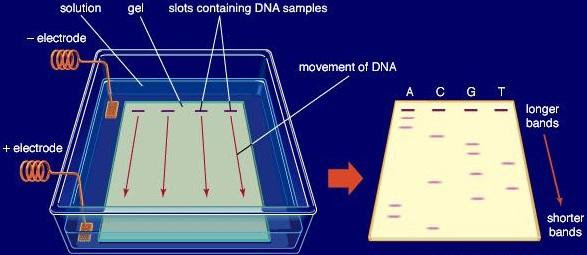
Fig: Parts of an Electrophoresis Apparatus
Gel electrophoresis is used in various fields like molecular biology, genetic engineering, microbiology, forensics, and biochemistry. It is used by DNA fingerprinting to differentiate between samples of genetic materials.
Some of the key applications of gel electrophoresis are given below:
1. In the study of evolutionary relationships through the analysis of genetic similarity among species or populations.
2. In blotting techniques for the analytical purpose of macromolecules.
3. In the analysis of resistance towards antibiotics.
4. In the study of function and structure of proteins.
5. In paternity testing via DNA fingerprinting.
6. In DNA profiling for the taxonomy studies for the differentiation of different specie.s
7. For the analysis of genes associated with a particular illness.
8. For analyzing results of polymerase chain reaction.
9. For the separation of DNA fragments for the use in DNA fingerprinting to investigate crime scenes.
10. Used in immunoelectrophoresis.
11. Used in the separation of different types of proteins and nucleic acids.
12. Quantification of proteins.
13. Checking the purity of proteins.
14. Identification of disulfide bonds between proteins.
15. Purification of isolated proteins.
16. Estimation of molecular weight of proteins.
Note:
Gel electrophoresis is classified into agarose gel electrophoresis, starch electrophoresis, polyacrylamide gel electrophoresis, native polyacrylamide gel electrophoresis and denatured or sodium dodecyl sulfate-polyacrylamide gel electrophoresis (SDS-PAGE). The native variant is run on non-denaturing conditions, leading to preservation of the molecule's native structure. Denaturing conditions unfold the proteins, losing secondary and tertiary structures.
Complete answer
Fig: Parts of an Electrophoresis Apparatus
Gel electrophoresis is used in various fields like molecular biology, genetic engineering, microbiology, forensics, and biochemistry. It is used by DNA fingerprinting to differentiate between samples of genetic materials.
Some of the key applications of gel electrophoresis are given below:
1. In the study of evolutionary relationships through the analysis of genetic similarity among species or populations.
2. In blotting techniques for the analytical purpose of macromolecules.
3. In the analysis of resistance towards antibiotics.
4. In the study of function and structure of proteins.
5. In paternity testing via DNA fingerprinting.
6. In DNA profiling for the taxonomy studies for the differentiation of different specie.s
7. For the analysis of genes associated with a particular illness.
8. For analyzing results of polymerase chain reaction.
9. For the separation of DNA fragments for the use in DNA fingerprinting to investigate crime scenes.
10. Used in immunoelectrophoresis.
11. Used in the separation of different types of proteins and nucleic acids.
12. Quantification of proteins.
13. Checking the purity of proteins.
14. Identification of disulfide bonds between proteins.
15. Purification of isolated proteins.
16. Estimation of molecular weight of proteins.
Note:
Gel electrophoresis is classified into agarose gel electrophoresis, starch electrophoresis, polyacrylamide gel electrophoresis, native polyacrylamide gel electrophoresis and denatured or sodium dodecyl sulfate-polyacrylamide gel electrophoresis (SDS-PAGE). The native variant is run on non-denaturing conditions, leading to preservation of the molecule's native structure. Denaturing conditions unfold the proteins, losing secondary and tertiary structures.
Recently Updated Pages
Master Class 12 Business Studies: Engaging Questions & Answers for Success

Master Class 12 Chemistry: Engaging Questions & Answers for Success
Master Class 12 Biology: Engaging Questions & Answers for Success
Class 12 Question and Answer - Your Ultimate Solutions Guide
Master Class 11 English: Engaging Questions & Answers for Success
Master Class 11 Social Science: Engaging Questions & Answers for Success
Trending doubts
Which are the Top 10 Largest Countries of the World?
Draw a labelled sketch of the human eye class 12 physics CBSE
The end of compass needle which points towards north class 12 physics CBSE
Differentiate between homogeneous and heterogeneous class 12 chemistry CBSE
In order to find out the different types of gametes class 12 biology NEET_UG
Why is the cell called the structural and functional class 12 biology CBSE