




What is the function of the head in the human sperms?
Answer
 Verified
526.5k+ views
Hint: Sperms are produced from testis and they usually consist of three parts. Head, middle piece and tail. Ovulation is the process of the release of ova or ovum from the uterus in a female reproductive system. During ovulation hormonal levels are up and down in the body. When the ovum lets in sperm, fertilization occurs.
Complete answer:
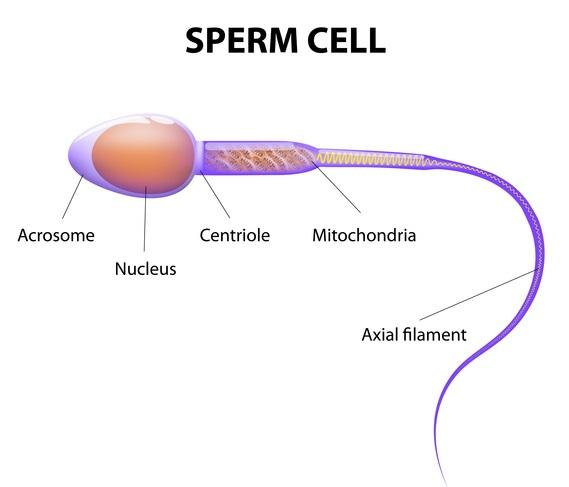
The part that enters the ovum is the head part. Head part includes the acrosome. The acrosomal part of the sperm pierce the ovum in humans. The acrosomal protein mediating this recognition is called Binding, Binding is located specifically in the acrosomal process. Sperm binding does not happen over the entire egg surface. The receptor for the sperm binding into the ovum is vitelline membrane which coats the ovum in a specific manner.
And the middle piece which starts from the back of the head include- neck region till the initiation of the tail. Middle piece has mitochondria inside it which is the key provider for energy and it also helps in motility of the sperm towards the ovum. The acrosome has chemicals which help in piercing the ovum plasma membrane to make its entry smooth.
Ovum has two layers-zona pellucida and zona radiata. Sperms, as we know, lie inside the sperm sacs known as testis and are carried by seminiferous tubules. The tail region of sperm is long and slender and it helps in swimming.
Note:
The fertilization takes place at the isthmus and ampulla junction of the fallopian tube and gets transferred into the uterus and implanted there. Based on the ovulation surge, eggs or ovum is also covered by a plasma membrane or a cell membrane. In most animals’ special protective membrane are deposited outside the plasma membrane. These membranes are described as egg membrane. Based on the egg membrane division is into following types- primary egg membrane and secondary egg membrane.
Complete answer:
The part that enters the ovum is the head part. Head part includes the acrosome. The acrosomal part of the sperm pierce the ovum in humans. The acrosomal protein mediating this recognition is called Binding, Binding is located specifically in the acrosomal process. Sperm binding does not happen over the entire egg surface. The receptor for the sperm binding into the ovum is vitelline membrane which coats the ovum in a specific manner.
And the middle piece which starts from the back of the head include- neck region till the initiation of the tail. Middle piece has mitochondria inside it which is the key provider for energy and it also helps in motility of the sperm towards the ovum. The acrosome has chemicals which help in piercing the ovum plasma membrane to make its entry smooth.
Ovum has two layers-zona pellucida and zona radiata. Sperms, as we know, lie inside the sperm sacs known as testis and are carried by seminiferous tubules. The tail region of sperm is long and slender and it helps in swimming.
Note:
The fertilization takes place at the isthmus and ampulla junction of the fallopian tube and gets transferred into the uterus and implanted there. Based on the ovulation surge, eggs or ovum is also covered by a plasma membrane or a cell membrane. In most animals’ special protective membrane are deposited outside the plasma membrane. These membranes are described as egg membrane. Based on the egg membrane division is into following types- primary egg membrane and secondary egg membrane.
Recently Updated Pages
Master Class 12 Business Studies: Engaging Questions & Answers for Success

Master Class 12 Biology: Engaging Questions & Answers for Success
Master Class 12 Chemistry: Engaging Questions & Answers for Success
Class 12 Question and Answer - Your Ultimate Solutions Guide
Master Class 11 Social Science: Engaging Questions & Answers for Success
Master Class 11 English: Engaging Questions & Answers for Success
Trending doubts
Which is more stable and why class 12 chemistry CBSE
Which are the Top 10 Largest Countries of the World?
Draw a labelled sketch of the human eye class 12 physics CBSE
Differentiate between homogeneous and heterogeneous class 12 chemistry CBSE
What are the major means of transport Explain each class 12 social science CBSE
Sulphuric acid is known as the king of acids State class 12 chemistry CBSE